

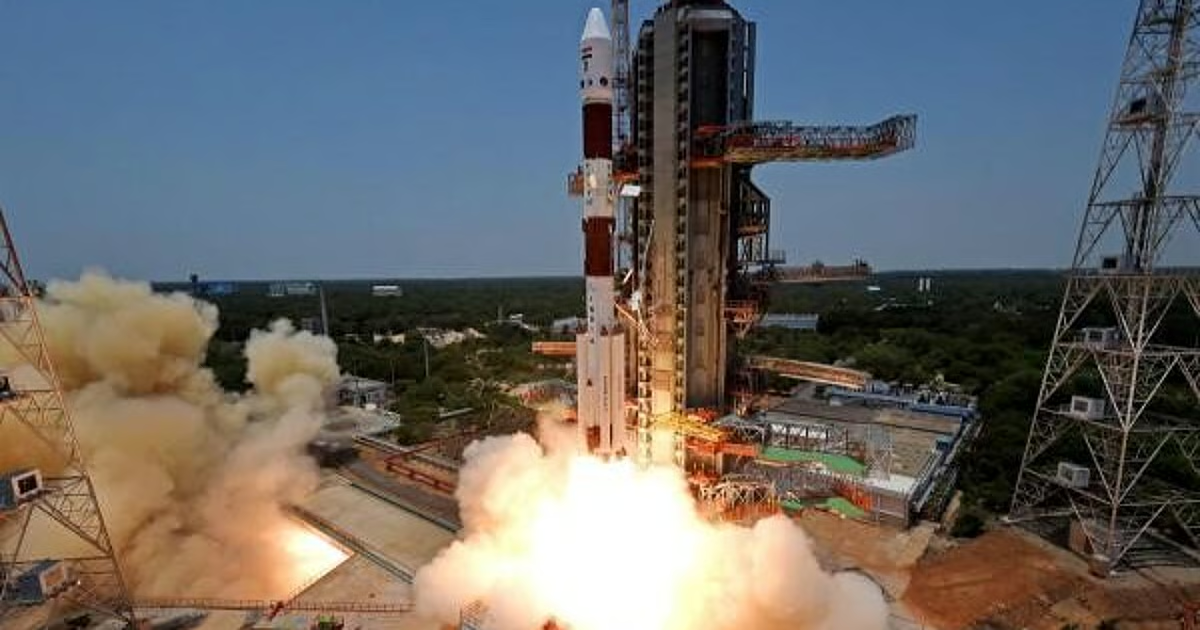
The Indian Space Research Organisation (ISRO) has once again demonstrated its commitment to advancing lunar science and space exploration with an innovative initiative. In a recent move, ISRO has officially invited the global scientific community to submit proposals aimed at analyzing the comprehensive data collected from Chandrayaan-3’s lander and rover modules. This strategic call for collaboration underscores India’s intent to leverage diverse scientific expertise to unlock the Moon’s many secrets, enriching our understanding of our nearest celestial neighbor.
The Significance of Chandrayaan-3 Mission Data
Chandrayaan-3, India’s third lunar exploration mission, marked a significant milestone with its successful soft-landing on the Moon’s surface. The mission was equipped with sophisticated instruments and modules designed for detailed scientific investigation. The lander and rover collectively supplied a vast array of data, including high-resolution images, spectrometer readings, and surface composition analyses. This treasure trove of information provides unprecedented insights into lunar geology, mineralogy, and surface processes.
However, processing and analyzing this immense dataset require specialized expertise. By opening up the data for scientific proposals, ISRO aims to ensure that the findings are comprehensive, accurate, and innovative. It also promotes worldwide collaboration, drawing on the collective strength of researchers from various disciplines and regions.
Why ISRO’s Initiative Matters
The invitation to analyze Chandrayaan-3 data is not just about furthering lunar science; it embodies several vital objectives:
- Global Collaboration: Encouraging the international scientific community to participate fosters diverse perspectives and innovations.
- Enhancement of Scientific Outcomes: Multiple research groups working on the same dataset can lead to richer, more nuanced discoveries.
- Capacity Building: Collaborations promote knowledge transfer and strengthen India’s position in space science.
- Accelerated Discovery: Distributed analysis allows faster interpretation of complex data, enabling timely breakthroughs.
This strategic move aligns with global best practices in space research, where open data and collaborative analysis have proven instrumental in expanding scientific horizons.
Scope and Guidelines for Proposal Submission
ISRO’s call for proposals specifies a comprehensive framework to facilitate effective data analysis. Interested researchers and institutions are encouraged to submit proposals focusing on:
– Surface geology and mineralogy assessments
– Surface-atomic interactions and soil composition
– Selenography and lunar terrain characterization
– Spectroscopic and imaging data analysis
– Potential identification of water ice deposits
– Geophysical data interpretation
The detailed guidelines emphasize the importance of clarity in objectives, methodological approaches, and anticipated outcomes. Proposals are expected to leverage existing analytical techniques or propose innovative methods to maximize scientific output.
Expected Benefits for the Scientific Community
This initiative presents numerous benefits to the scientific community:
– **Access to High-Quality Data:** Researchers will gain access to detailed, high-resolution datasets that are rarely available publicly.
– **Recognition and Collaboration:** Successful proposals may lead to collaborative projects spanning multiple institutions and countries.
– **Contribution to Lunar Knowledge:** Findings can influence future lunar missions, resource exploration, and our understanding of the Moon’s evolution.
– **Educational Opportunities:** The analysis process offers learning opportunities for students and early-career scientists, fostering the next generation of space researchers.
Broader Implications of the Data Analysis Initiative
The proposal invites signify a paradigm shift toward more participatory and transparent space missions. As India continues to build its reputation on lunar exploration, democratizing access to mission data aligns with the global trend of open science. It encourages cross-disciplinary research, where geologists, physicists, chemists, and data scientists collaborate to make sense of complex lunar phenomena.
Furthermore, this approach enhances ISRO’s international standing in the scientific community. By inviting global proposals, India not only broadens the reach and impact of its lunar missions but also establishes itself as a significant contributor to the collective human quest to explore the Moon.
Challenges and Considerations
While the initiative presents exciting prospects, some challenges need to be considered:
– Ensuring Data Quality and Accessibility: Data must be anonymized, well-documented, and easily accessible to facilitate analysis.
– Maintaining Scientific Rigor: Proposals should adhere to strict review and validation standards to ensure meaningful results.
– Managing Data Security: Sensitive information or proprietary methods must be protected, especially for collaborations with industry partners.
– Coordinating Multidisciplinary Teams: Effective collaboration across disciplines and institutions requires clear communication and planning.
Conclusion: A Step Toward Greater Lunar Understanding
ISRO’s call to the global scientific community to analyze Chandrayaan-3’s data marks a significant stride toward more inclusive, collaborative lunar exploration. It highlights India’s commitment not just to pioneering space missions but also to fostering a vibrant, open scientific ecosystem. Through this initiative, valuable insights into the Moon’s mysteries are within reach, promising to deepen our understanding of lunar geology, surface processes, and perhaps even water ice deposits—crucial for future lunar habitation.
As the scientific community responds to this call, we can anticipate a host of groundbreaking discoveries that will elevate our knowledge and inspire future explorations beyond Earth’s orbit.
Final Words
This collaborative endeavor underlines the spirit of shared human curiosity and the importance of combining resources, expertise, and innovative ideas. It exemplifies how space agencies like ISRO are leading the way toward a more open and cooperative approach to space science—paving the path for new frontiers and discoveries.
For more updated news please keep visiting Hourly Prime News.