

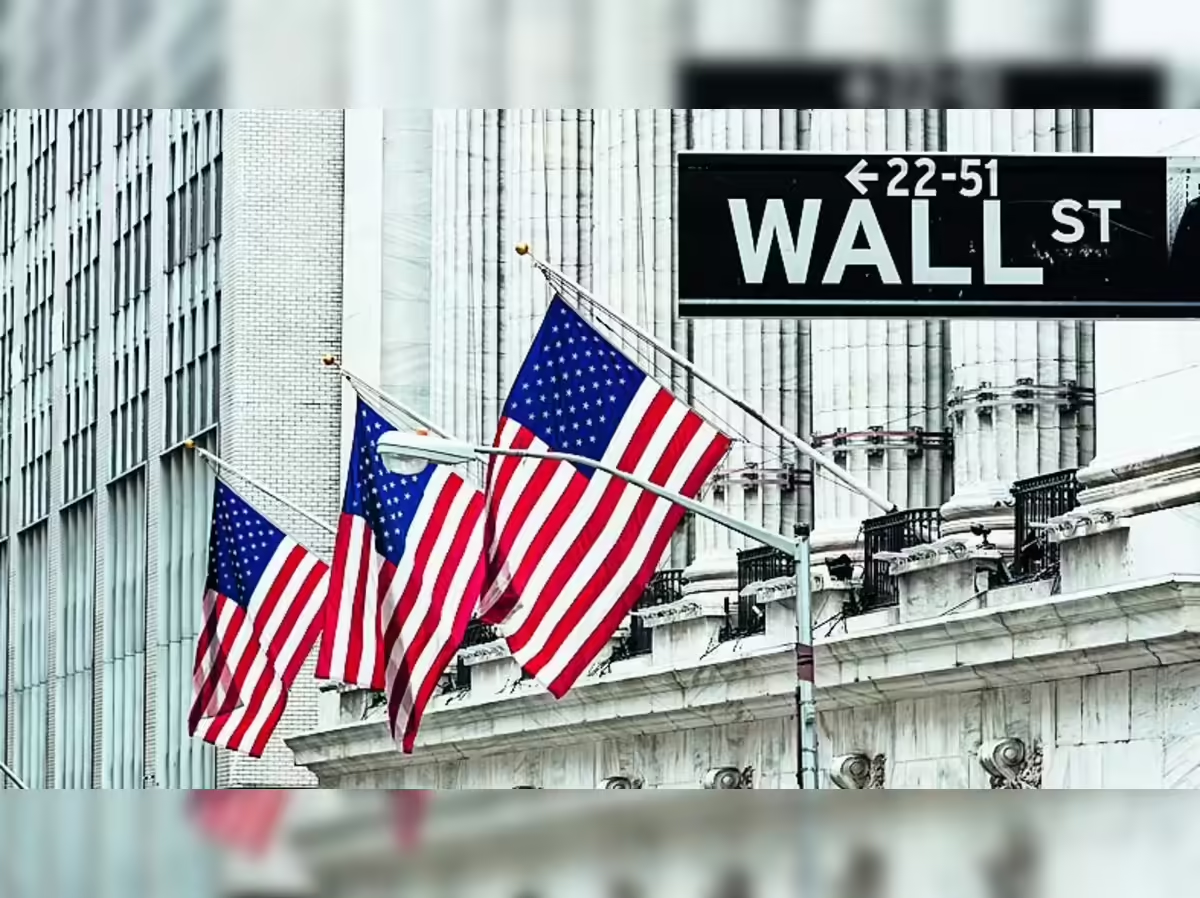
Introduction: The Significance of the Upcoming US Trade Deadline
The financial world is buzzing with anticipation as the **90-day deadline for the US trade deal** draws near. This period marks a critical juncture in international economic relations, with Wall Street closely monitoring developments that could significantly influence markets, investor confidence, and the trajectory of the global economy. Trade negotiations between the United States and its trading partners, especially China, have historically acted as catalysts for market volatility. As negotiations approach their expiry, stakeholders are rightly concerned about potential outcomes—be it an agreement that stabilizes trade relations or continued discord that could trigger disruptions.
The Current State of US Trade Relations
Over the past few months, the US administration has engaged in intense negotiations aimed at resolving trade tensions, particularly with China. These discussions have centered around tariffs, intellectual property rights, technology transfer, and market access. Despite some positive signs, many experts believe that a comprehensive resolution remains elusive as the deadline looms.
The Administration’s stance has been both firm and strategic, attempting to secure favorable terms while avoiding the risk of a breakdown in talks. Meanwhile, China has also shown flexibility, but concerns about enforcement and compliance persist. The upcoming expiration of the deadline raises the stakes, with potential implications including:
- Implementation or removal of tariffs
- Changes in trade policies
- Adjustments in global supply chains
- Market reactions based on the perceived likelihood of a deal
These factors make the period leading up to the deadline a critical focus for investors and policy-makers alike.
Market Sentiment and Investor Expectations
In the face of impending deadlines, market sentiment tends to become more volatile. Investors are weighing the probabilities of an agreement versus a no-deal scenario. Some key sentiments dominate:
– **Optimism**: That the US and China will reach a compromise, leading to a renewed phase of trade stability.
– **Caution**: That negotiations might falter, resulting in increased tariffs and market sell-offs.
– **Uncertainty**: As negotiations are often behind closed doors, there’s little clarity, fueling speculation and risk premiums.
Recent market movements have reflected this ambivalence, with equities experiencing fluctuations aligned with news flow and diplomatic signals. Major indices like the Dow Jones, S&P 500, and Nasdaq are trading in nervous anticipation, as traders brace for possible shocks post-deadline.
Potential Scenarios as the Deadline Approaches
Understanding the possible outcomes helps investors and businesses prepare for what’s ahead. The tenable scenarios include:
1. A Successful Resolution
If negotiators manage to conclude a comprehensive trade agreement before the deadline, markets could rally significantly. A deal might include phased tariff reductions, agreements on intellectual property, and clearer rules for trade activities. Such an outcome would restore confidence, boost corporate earnings, and potentially stimulate economic growth.
2. Partial Agreement or Extension
In some cases, negotiations might lead to partial agreements or a temporary extension of the deadline. This could serve as a buffer, providing more time for detailed discussions. Markets might respond positively to signs of progress, even if the deal remains incomplete.
3. Breakdown of Negotiations
A worst-case scenario involves the failure of talks, leading to the re-imposition or escalation of tariffs, increased market volatility, and a slowdown in global trade. Investors may respond with risk aversion, pushing stock prices down and gold or other safe-haven assets higher.
Impacts on Different Sectors and Global Markets
Trade policy changes induced by the deadline will have ripple effects across various sectors:
– **Manufacturing & Exporters**: Sensitive to tariffs and trade barriers, these sectors could experience disruption or benefits depending on the outcome.
– **Technology**: Intellectual property and export restrictions will heavily influence tech companies engaged in cross-border trade.
– **Agriculture**: Export-dependent farmers and agribusinesses await clarity on tariffs and market access.
– **Financial Markets Globally**: As a major economic power, US trade negotiations significantly influence markets worldwide, affecting currencies, commodities, and bond yields.
Additionally, a deal or its absence could alter geopolitical relations, economic growth forecasts, and currency valuations.
Expert Opinions and Market Strategies
Financial analysts suggest a cautious but opportunistic approach for investors. Some strategic points include:
– Maintaining diversified portfolios to hedge against volatility.
– Monitoring key diplomatic signals for clues on the negotiation trajectory.
– Preparing for heightened market swings, especially around key dates and news announcements.
– Considering defensive assets such as gold or government bonds during uncertain periods.
Market experts underscore that patience and vigilant risk management are vital in the run-up to such pivotal deadlines.
The Broader Economic Implications
Beyond immediate market reactions, the US trade deal’s outcome could shape economic fundamentals for years to come:
– **Global Supply Chains**: A positive resolution might streamline supply chains and reduce costs.
– **Corporate Investment**: Certainty around trade policies encourages long-term investment.
– **Consumer Confidence**: Stability fosters increased consumer spending and economic growth.
– **Policy Environment**: A successful deal could pave the way for more collaborative international trade policies.
Conversely, persistent trade tensions could hinder global economic recovery, especially post-pandemic, and trigger a reassessment of risk by international investors.
Conclusion: Why This Moment Matters
The approaching 90-day deadline for the US trade deal is not just a technicality—it symbolizes a pivotal moment with the power to steer markets, influence economic policies, and redefine global trade dynamics. Wall Street’s focus remains sharply tuned to developments, with numerous stakeholders eager to see if negotiations will culminate in an amicable agreement or drift into prolonged uncertainty.
As the countdown continues, all eyes are on the diplomatic corridors, economic indicators, and market reactions. The importance of this moment cannot be overstated, given its potential to impact financial markets and economic stability worldwide.
For more updated news please keep visiting Hourly Prime News.