

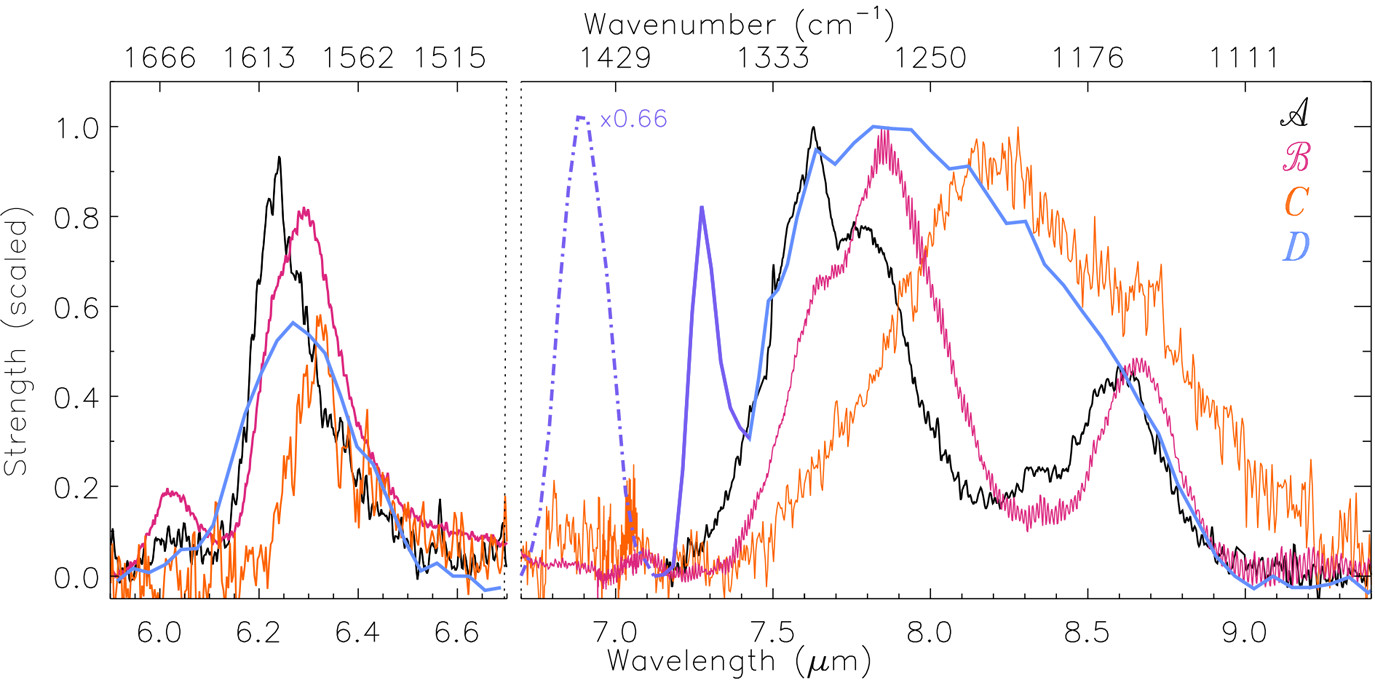
The planetary nebula NGC 7027 has long served as a captivating subject for astronomers and astrochemists seeking to understand the complex processes of stellar evolution and molecular formation in space. Recent studies have shed new light on the intricate spectral signatures of polycyclic aromatic hydrocarbons (PAHs) within this nebula, revealing an impressive diversity that highlights the dynamic nature of aromatic carriers in the interstellar medium. These findings are crucial for understanding how organic molecules evolve in nebulae and, by extension, how the building blocks of life may form and persist in the cosmos.
The Significance of PAHs in Space and Their Role in Astrochemistry
Polycyclic aromatic hydrocarbons, commonly known as PAHs, are large, flat molecules composed of stacked aromatic rings, primarily made up of carbon and hydrogen. They are considered some of the most widespread organic compounds in the universe and are thought to be fundamental components in the lifecycle of cosmic dust and gas clouds. PAHs are known to produce distinctive infrared emission features, notably at wavelengths around 3.3, 6.2, 7.7, 8.6, and 11.2 micrometers, which serve as crucial markers for their presence in various astronomical environments.
Understanding PAH spectral features and their variation provides insights into the physical conditions and chemical pathways active within nebulae. Variations in these features are often indicative of molecular size, structure, ionization state, and interaction with the surrounding radiation fields, thus serving as a window into the evolving chemistry of the stellar environment.
Insights from Spectral Diversity in NGC 7027
The recent comprehensive spectroscopic analysis of NGC 7027 reveals remarkable diversity in PAH features. This variability suggests a complex interplay of processes influencing the aromatic molecules. The spectral signatures differ not only across different regions within the nebula but also with the changing physical parameters such as radiation intensity, density, and temperature.
Regional Variations and Molecular Complexity
- Inner Regions: Here, the PAH features tend to be dominated by ionized species, which exhibit shifts and intensity variations in their characteristic emission bands.
- Outer Regions: Ionization levels decrease, and neutral PAHs become more prominent, resulting in different spectral profiles.
- Spectral Shifts: Accurate spectral measurements indicate that molecular size and structure influence the shifting of emission peaks, with larger PAHs showing distinct features compared to smaller molecules.
This spatial heterogeneity underscores the importance of multi-wavelength, high-resolution spectra to decipher the local chemistry and physical conditions within the nebula. The diversity of spectral features also implies that PAHs in NGC 7027 are subject to ongoing processing, including photochemical reactions, fragmentation, and reformation.
The Evolution of Aromatic Carriers: From Formation to Fragmentation
The formation and subsequent evolution of aromatic molecules in environments like NGC 7027 trace cosmic chemical pathways that are both fascinating and complex. It is believed that PAHs originate from the outflows of evolved stars, where the conditions favor the synthesis of aromatic hydrocarbons. As these molecules are transported into the nebula, they encounter intense ultraviolet radiation from the central star, which drives their ongoing chemical transformation.
Stages of Aromatic Evolution
- Formation: PAHs are thought to form in the stellar outflows through processes involving carbon-rich dust and gas interactions.
- Processing in the nebula: Ultraviolet radiation ionizes and excites PAHs, leading to the characteristic IR emissions observed in spectra.
- Fragmentation and destruction: Intense radiation can break down larger PAHs into smaller fragments or alter their structure, thus contributing to spectral variability.
- Reformation and chemical evolution: Under certain conditions, PAHs can reassemble or grow through surface reactions, continuing a cycle of destruction and creation.
This dynamic cycle influences the spectral features observed and highlights the adaptive nature of organic molecules amid violent astrophysical environments.
Implications for Cosmic Organic Chemistry and Astrobiology
The observed spectral diversity and aromatic evolution within NGC 7027 carry significant implications for the broader understanding of cosmic organic chemistry. They suggest a thriving, adaptive population of complex organic molecules capable of surviving harsh radiation environments, thereby contributing to the pool of prebiotic compounds in space. These insights directly support hypotheses that organic molecules necessary for life might be widespread throughout the galaxy, delivered to planetary surfaces via cometary or asteroid impacts.
Furthermore, the evolution of PAHs and other aromatic molecules influences the spectral characteristics of the interstellar medium and can affect the thermal and chemical balance of nebulae. Recognizing how these molecules change over time aids in constructing more accurate models of star formation and the chemical evolution of galaxies.
Future Directions and Technological Advancements
Broader understanding of PAH diversity in NGC 7027 and similar environments hinges on advanced spectroscopic techniques and high-resolution telescopes. Instruments such as the James Webb Space Telescope (JWST) are poised to revolutionize this field by providing unprecedented sensitivity and spatial resolution. Future research can leverage these tools to:
- Identify specific PAH molecules and their structural variants.
- Map the spatial distribution of various aromatic compounds across nebulae.
- Track the chemical processes and physical conditions driving molecular evolution in real time.
- Establish correlations between spectral features and physical parameters such as radiation field strength and nebular density.
These advancements will refine our understanding of molecular complexity in space and perhaps inch us closer to answering fundamental questions about the origins of life in the universe.
Concluding Remarks
The study of PAH spectral diversity and aromatic evolution in NGC 7027 provides a vivid snapshot of cosmic organic chemistry in action. It underscores the importance of detailed spectral analysis to unravel the lifecycle of complex molecules in space, their formation, transformation, and destruction. The intricate variability seen in this planetary nebula serves as a testament to the dynamic and evolving molecular universe, offering insights into the deep connections between stellar evolution and the chemical precursors to life.
As our observational capabilities continue to improve, future research promises to deepen our understanding of these extraordinary molecules, shedding light on the origins of organic complexity beyond our planet and perhaps even beyond our galaxy.
For more updated news please keep visiting Hourly Prime News.