

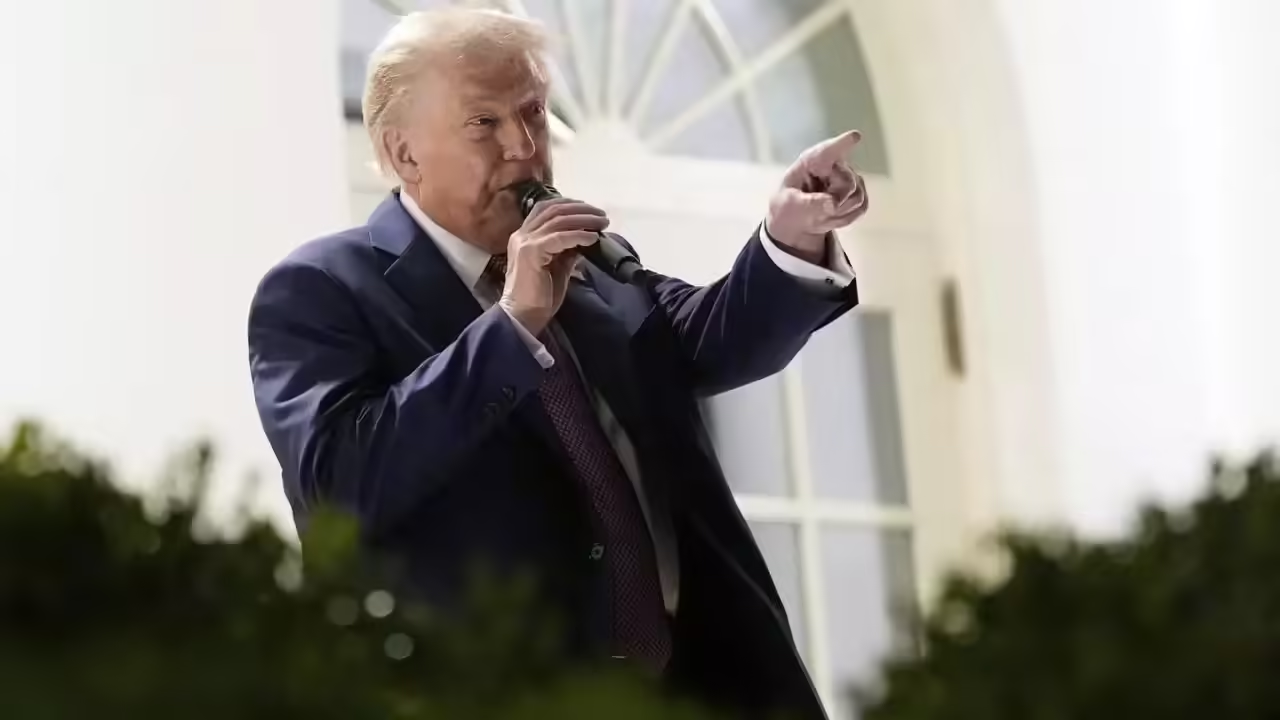
The global landscape of information technology has long been shaped by the dynamic interplay between innovation, globalization, and economic policies. Among the most critical components of this ecosystem is the United States’ outsourcing model, which has seen companies increasingly turn to India for their IT services. However, recent developments suggest a possible seismic shift in this model, led by growing concerns over domestic job security and economic priorities. Prominent political figures, including former President Donald Trump, are contemplating policies that could significantly alter the flow of outsourcing work to India, sparking widespread debate about the future of the American tech industry and its global counterparts.
The Rising Tide of Job Security Concerns
Over the past few years, **job security in the US tech sector** has been a critical issue, amplified by the rapid expansion and outsourcing of IT services. Critics argue that the influx of overseas outsourcing has contributed substantially to job losses in American technology companies, especially in tech hubs like Silicon Valley. These concerns have gained political traction, with some leaders calling for measures to “bring jobs back home” and restrict the offshoring of key information technology functions.
One of the main voices raising alarm about this trend is Laura Loomer, who, according to Business Standard reports, Loomer warns that the potential ban could be a move to protect American jobs from overseas competition.
The Political and Economic Drivers Behind the Potential Ban
Several interconnected factors are driving the push to restrict or altogether ban US companies from outsourcing IT jobs to India:
- National security concerns: There is an increasing emphasis on safeguarding sensitive government and corporate data from foreign access. Critics fear that outsourcing could expose vital systems to cyber threats or espionage.
- Protection of domestic jobs: The US has faced persistent unemployment and underemployment issues, especially in tech-related sectors. Stakeholders argue that keeping jobs within American borders will stimulate economic growth and innovation.
- Political promises and election agendas: Politicians seeking votes often campaign on policies that favor American workers, promising measures that make “call centers American again” and limit offshoring.
- Trade tensions and tariffs: Recent tariffs on imported goods and services, including those related to technology, aim to level the playing field for American companies competing with foreign counterparts.
Implications for the US and Indian Tech Sectors
For the United States
The prospect of banning or heavily restricting US companies from outsourcing to India could have extensive consequences:
- Shifts in employment: Companies may start relocating jobs domestically, which could initially boost local employment but may increase operational costs.
- Innovation and competition: Reduced outsourcing could lead to higher costs for US companies, potentially impacting competitiveness on the global stage.
- Supply chain adjustments: Firms might need to develop new strategies to source talent and infrastructure domestically or seek alternative countries with more flexible policies.
For India
The Indian IT industry, a powerhouse for outsourcing services, faces a potential significant setback:
- Economic impact: A slowdown in outsourcing demand could threaten thousands of jobs and millions in revenue, impacting sectors that rely heavily on international clients.
- Market diversification: Indian firms might accelerate efforts to diversify both their client base and service offerings, including moving higher up the value chain to more innovative fields like AI, cybersecurity, and consulting.
- Strategic reorientation: Indian tech companies may need to pivot toward more domestic and regional markets, reducing dependence on US-based contracts.
Industry Reactions and Market Movements
The news of a potential banning or restriction has sent shockwaves through the stock market, particularly among Indian IT giants like TCS, Infosys, and Wipro, whose shares saw sharp declines within minutes of reports surfacing. CNBC TV18 notes that these falls reflect investor anxiety about the long-term viability of existing outsourcing models if such policies are implemented.
Meanwhile, in the US, tech workers and industry insiders are somewhat divided. While many welcome the move as a way to protect American jobs, others raise concerns about increased costs, delays, and the potential reduction in the quality of services due to shrinking global talent pools.
The Broader Impact and Future Outlook
Though the idea of restricting outsourcing is still under debate, it highlights a broader shift towards “reshoring” or “onshoring” — bringing jobs back to America. This reshoring movement could potentially lead to a restructuring of the global IT industry, influencing policy decisions for years to come.
It also raises questions about the future of international cooperation on technology and innovation. While some see this as a protective measure, others warn of the risk of increasing protectionism, which could hinder technological progress and global economic integration.
Conclusion
The possibility of President Trump and his administration introducing a ban or restrictions on US companies outsourcing to India signals a pivotal moment in the geopolitics of technology. While aimed at safeguarding domestic employment and ensuring national security, such policies could reshape the global tech landscape, with ripple effects felt across industries and economies.
The Indian IT sector, known for its resilience and adaptability, is likely to respond by exploring new markets and investing in innovative solutions. Conversely, US companies may need to adjust their strategies to balance the benefits of global talent pools with the desire to support local employment.
Ultimately, the coming months will reveal how policymakers, industry leaders, and markets navigate this complex issue — one that sits at the intersection of economics, politics, and technological advancement.
For more updated news please keep visiting Hourly Prime News.