

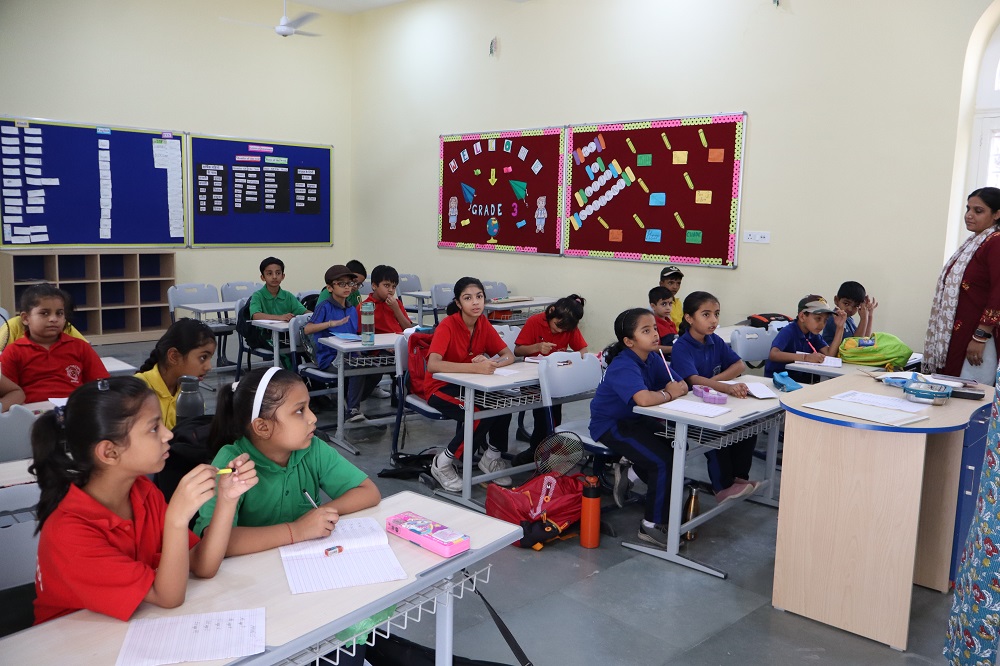
India stands at a pivotal juncture in its educational landscape. With the rapid advancements in technology, shifting pedagogical paradigms, and a growing emphasis on inclusivity, the country’s education system is undergoing a profound transformation. This evolution promises not only to enhance learning outcomes but also to foster a generation equipped to thrive in the complexities of the modern world. As we explore the innovative changes shaping India’s educational future, it becomes evident that a combination of policy reforms, technological integration, and new pedagogical approaches are at the heart of this revolution.
Revolutionizing Traditional Education Models
Historically, India’s education system was characterized by rote learning and rigid classroom settings. However, recent developments are shifting this paradigm towards more student-centric and skill-oriented approaches. The emphasis is now on fostering critical thinking, creativity, and problem-solving abilities rather than merely memorizing facts.
The article “Changing the face of education” from Changing the face of education highlights the ongoing efforts to overhaul traditional teaching methods and integrate innovative practices.
Incorporation of Technology: The Digital Revolution
One of the most transformative trends in Indian education is the widespread integration of digital technology. Digital classrooms, online courses, and e-learning platforms are now commonplace, breaking geographical barriers and democratizing access to quality education.
Key aspects include:
- Mobile learning applications tailored for rural and urban students alike.
- Use of Artificial Intelligence (AI) to personalize learning experiences based on individual student needs.
- Virtual labs and simulations that provide experiential learning without the need for physical infrastructure.
This digital shift was catalyzed further during the COVID-19 pandemic, pushing schools and universities to adopt online modes of instruction swiftly. Moving forward, hybrid models combining in-person and digital learning are expected to become the norm, facilitating greater flexibility and inclusivity.
Focus on Skill Development and Vocational Training
Another crucial development in India’s educational landscape is the emphasis on skill-based education. Recognizing that employability depends not just on theoretical knowledge but also on practical skills, policymakers are promoting vocational training and industry-linked curricula.
Highlights include:
- Introduction of specialized courses in data science, robotics, and digital marketing.
- Partnerships between educational institutions and industry players for internships and real-world projects.
- Skills development programs tailored for marginalized communities to promote inclusivity.
This strategic shift aims to bridge the gap between education and employment, enabling the youth to adapt swiftly to the evolving job market demands and contribute meaningfully to economic growth.
Promoting Inclusive and Holistic Education
India’s diverse population necessitates an education system that is inclusive and caters to all sections of society. Recent initiatives focus on fostering equitable access and holistic development.
Strategies include:
- Implementation of policies for a 4-year multi-sectoral school curriculum emphasizing emotional intelligence, life skills, and cultural sensitivity.
- Integration of special education needs (SEN) programs to support differently-abled learners.
- Promotion of multilingual education to preserve linguistic heritage while ensuring comprehension.
Such measures aim to nurture well-rounded individuals capable of navigating cultural diversity and social challenges, thereby strengthening national cohesion.
Role of Policy Reforms and Government Initiatives
The Indian government’s proactive policies have been instrumental in steering this educational transformation. Key schemes like the New Education Policy (NEP) 2020 emphasize modular curricula, multidisciplinary approaches, and research-oriented learning.
Significant reforms include:
- Revamping teacher training programs to improve pedagogical skills.
- Establishing digital infrastructure in rural schools under programs like the Samskriti Digital Initiative.
- Facilitating international collaborations to enhance research and innovation.
These initiatives reflect a committed vision to make Indian education globally competitive and future-ready.
Challenges and the Way Forward
While significant progress has been made, several challenges remain. These include disparities in digital access, infrastructural deficits, and the need for continuous teacher training. Addressing these issues requires sustained effort and innovative solutions.
Potential pathways forward encompass:
- Expanding rural broadband connectivity to eliminate the digital divide.
- Launching community-based learning centers to supplement formal education.
- Encouraging public-private partnerships to develop affordable educational technologies.
Ultimately, a collaborative approach involving policymakers, educators, industry stakeholders, and communities will be essential to realize the full potential of these reforms and ensure that India’s education system is inclusive, innovative, and impactful.
Conclusion: A Bright Future for Indian Education
India’s journey of educational transformation is truly inspiring. By embracing technology, fostering skill development, promoting inclusivity, and implementing strategic policy reforms, the nation is poised to nurture a future generation that is resilient, innovative, and diverse.
As highlighted in changing the face of education, India is progressively building an education system that is innovative, inclusive, and capable of meeting the demands of the future.
The road ahead is promising, and with continued innovation and dedication, India will undoubtedly turn its vision of transforming education into a reality — creating a knowledge economy that benefits all its citizens.
For more updated news please keep visiting Hourly Prime News.