

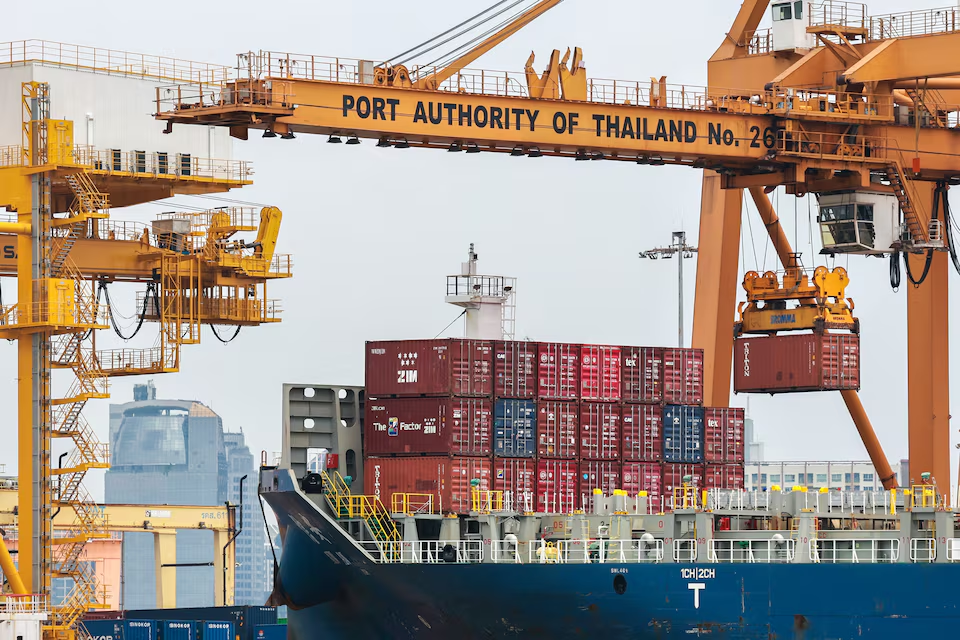
The economic landscape of Southeast Asia is in a constant state of flux, influenced by global trade dynamics and regional cooperation. Recently, Thailand has announced a strategic move that could significantly reshape its international trade relationships—particularly with the United States. According to recent statements by Thailand’s finance minister, the country is actively considering offering zero tariffs on an expanding range of U.S. imports.
Understanding the Move Towards Zero Tariffs
Tariffs, which are taxes imposed on imported goods, have historically been used to protect domestic industries or to negotiate trade terms. However, with the shifting focus towards free trade and economic liberalization, many nations are reevaluating their tariff policies. Thailand’s move to reduce and potentially eliminate tariffs on more U.S. imports marks a clear pivot in this direction.
Why is Thailand considering this move? The primary goal is to enhance trade relations with the United States, which is one of Thailand’s key trading partners. By reducing tariffs, Thailand aims to make its goods more competitive in the U.S. market, encourage more imports from the U.S., and stimulate economic activity both domestically and internationally.
Economic Rationale Behind Thailand’s Tariff Reduction
Boosting Trade Volumes
Lower tariffs typically lead to increased import and export volumes. For Thailand, this means a greater influx of U.S. goods, ranging from raw materials to finished products, which are vital for its manufacturing sector. An increase in trade volume not only benefits Thai businesses but also creates a ripple effect, generating employment, increasing income levels, and stimulating local economies.
Strengthening Bilateral Relations
Economic incentives are often used as diplomatic tools. By offering zero tariffs, Thailand seeks to reinforce its alliance with the U.S., fostering a mutually beneficial relationship that can extend into other areas such as technology exchange, investment, and regional security.
Enhancing Competitiveness
In a highly competitive global marketplace, tariff reductions can be decisive. Thai industries, especially those involved in manufacturing, export, and retail sectors, will find it easier to access the U.S. market without the burden of additional costs, thereby improving their competitiveness globally.
Implications for Thai Economy
Positive Effects
- Increased Export Opportunities: Reducing tariffs makes Thai products more attractive in the U.S., potentially increasing exports and diversifying the country’s trade portfolio.
- Attracting Foreign Investment: A more open trade environment can attract U.S. investors to Thailand, eager to establish manufacturing bases or distribution centers.
- Economic Diversification: Enhanced trade relations can facilitate the growth of various sectors beyond traditional industries, fostering innovation and diversification.
Potential Challenges
- Domestic Industry Impact: Some sectors might face increased competition from U.S. imports, which could threaten local businesses unprepared for the influx.
- Revenue Losses: Tariffs constitute a source of government revenue; reducing them might require Thailand to seek alternative revenue streams.
- Trade Balance Considerations: Increased imports could lead to trade deficits if exports do not expand proportionally.
Historical Context and Future Outlook
This move by Thailand aligns with a broader trend among nations seeking to align their policies with global free trade ideals. It echoes efforts seen across ASEAN and other Asian economies, which are actively reducing barriers to facilitate economic integration.
Furthermore, the U.S. has been actively pursuing trade agreements to bolster export opportunities for its businesses overseas. Thailand’s prospective tariff policy could serve as a catalyst for future bilateral negotiations, possibly paving the way for more comprehensive trade agreements or updates to existing ones such as the US-Thailand Free Trade Agreement (FTA).
Regional Impact and Broader Economic Implications
Thailand’s strategy can influence neighboring countries in Southeast Asia, encouraging a more integrated regional trade environment. If successful, this approach could set a precedent for other nations considering similar tariff adjustments to attract U.S. business interest, thus creating a more competitive Southeast Asian marketplace.
Moreover, with an improving trade environment, Thailand might see a boost in its role as a regional hub for manufacturing, logistics, and trade. As tariffs decrease, logistics costs lower, making the region more attractive for global supply chains.
Government and Industry Response
The Thai government’s proactive stance reflects an understanding of the importance of international trade for economic resilience. Industry stakeholders are optimistic about the potential benefits, emphasizing the opportunities to increase exports and attract more foreign investors.
At the same time, some industry groups remain cautious, underscoring the importance of supporting domestic sectors that may be vulnerable to increased U.S. imports. Policymakers are tasked with balancing these interests to ensure that the tariff reductions benefit the economy without undermining local businesses.
Conclusion: A Strategic Step Toward Economic Prosperity
Thailand’s consideration of offering zero tariffs on more U.S. imports represents a strategic move to invigorate its trade prospects and foster stronger economic ties with the United States. While challenges exist, the overall outlook remains positive, emphasizing growth, competitiveness, and regional cooperation.
This development should be closely monitored, as it has the potential to shape the future economic landscape of Thailand and Southeast Asia at large. Policymakers, businesses, and consumers alike will benefit from a more open and dynamic trade environment, ultimately contributing to a flourishing national economy.
As Thailand navigates this promising path, its success could serve as a model for other countries seeking to leverage trade policies for economic growth and regional integration.
For more updated news please keep visiting Hourly Prime News.