

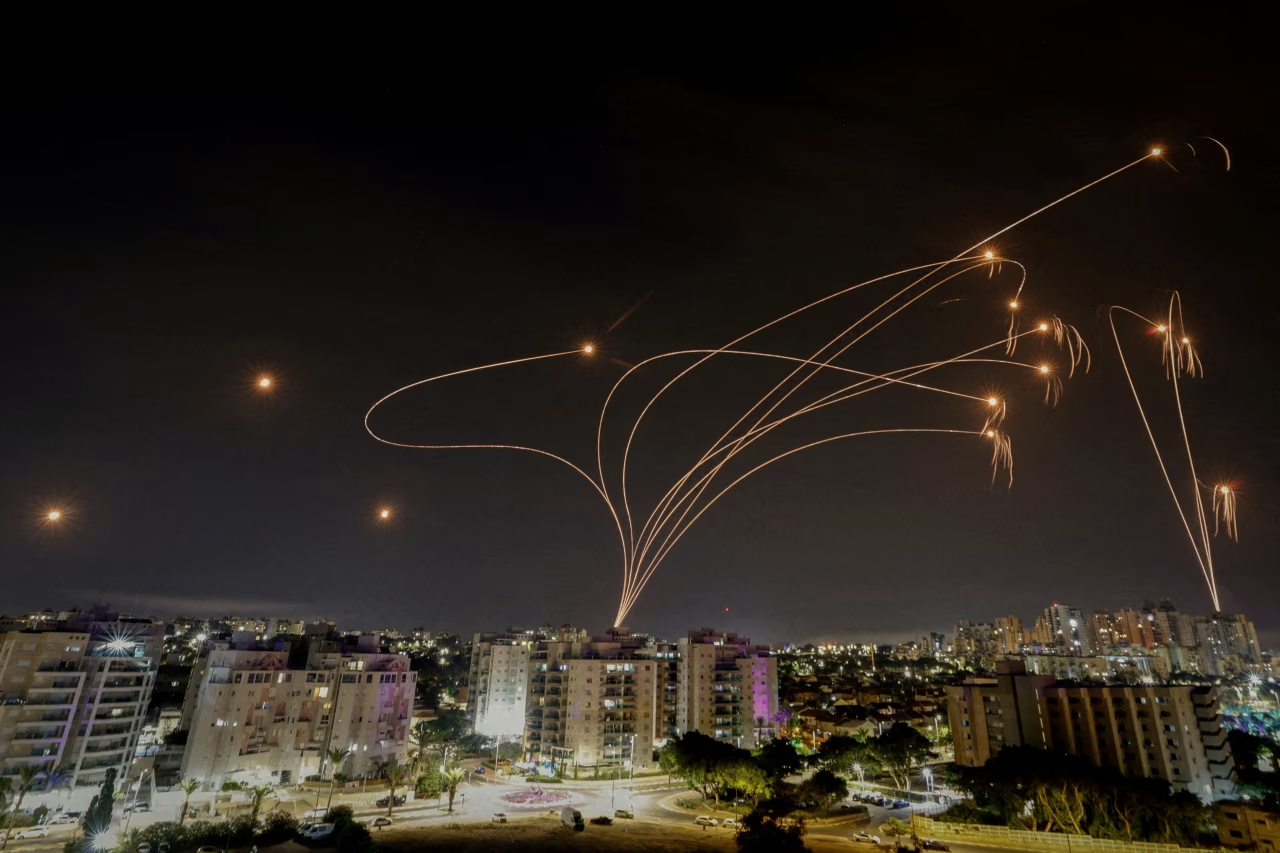
In the face of ever-increasing threats from the People’s Liberation Army (PLA), Taiwan has taken significant strides to bolster its military defenses. Recognizing the importance of a robust and multilayered shield, the island nation has recently unveiled its ambitious plan to deploy a layered air defense system inspired by the renowned Iron Dome technology. This move signals Taiwan’s intent to develop a resilient and adaptive military infrastructure capable of deterring and defending against potential Chinese aggression effectively.
The Rationale Behind Taiwan’s Military Modernization
Taiwan’s geopolitical environment remains unstable, with China asserting its ambitions to reunify the island under its dominion. The PLA’s rising military capabilities, including extensive air, naval, and missile forces, pose a formidable challenge. Consequently, Taiwan’s defense strategy has shifted from reliance on traditional deterrence to establishing a multilayered, technologically advanced defense system that can respond swiftly to various types of threats.
This strategic pivot is driven by several factors:
- Increasing Chinese Naval and Air Activities: As China intensifies its operations near Taiwan, including frequent patrols and missile tests, Taiwan must counter these actions with equally sophisticated defenses.
- Emergence of Modern Warfare Tactics: The PLA adopts hybrid and asymmetric warfare tactics, necessitating a flexible defense architecture.
- International Security Dynamics: With the global geopolitical landscape shifting, Taiwan aims to fortify its sovereignty with tangible military assets rather than mere diplomatic assurances.
Unveiling the T-DOME: Taiwan’s Iron Dome-Inspired Solution
In a major announcement, Taiwan revealed plans for its own layered missile defense system called the T-DOME. Drawing inspiration from Israel’s Iron Dome, T-DOME is designed to integrate multiple layers of anti-missile systems, capable of intercepting threats at various ranges and altitudes. This approach ensures that Taiwan can neutralize both short-range projectiles and sophisticated long-range ballistic missiles.
According to reports from EurAsian Times, the T-DOME system represents a paradigm shift in Taiwan’s strategic defense planning. The system’s core objective is to create a multilayer shield that can:
- Intercept incoming missiles at different stages of their trajectory, preventing successful attacks.
- Engage a variety of aerial threats including aircraft, drones, and cruise missiles.
- Enhance overall resilience of Taiwan’s airspace security, making it more difficult for adversaries to achieve a successful strike.
Technological Features and Strategic Advantages
The T-DOME system employs cutting-edge radar, interceptor missiles, and command-and-control technologies. Several key aspects highlight its potential effectiveness:
- Integrated Sensor Network: A comprehensive sensor network provides real-time data, enabling rapid threat detection and engagement decisions.
- Mobility and Flexibility: Mobile launchers and adaptable deployment allow for quick repositioning based on evolving threat scenarios.
- Networked Defense Capability: T-DOME’s layered architecture is designed for seamless integration with Taiwan’s existing defense infrastructure, including other missile systems and aircraft assets.
- Cost-Effectiveness: Borrowing the successful model of the Iron Dome, Taiwan’s layered system aims to optimize interception costs while maximizing coverage.
The command system coordinates the various layers to prioritize threats and allocate interceptors efficiently, ensuring no gap in the defense shield. The strategic value of such a system lies in its ability to adapt dynamically and respond quickly, crucial in high-intensity conflict scenarios involving China.
Implications for Regional Security Dynamics
The deployment of a layered missile defense akin to the Iron Dome elevates Taiwan’s deterrence posture significantly. It fosters a sense of strategic resilience, making it less attractive for China to consider a full-scale attack, given the high costs and risks involved.
Moreover, Taiwan’s moves are likely to influence regional security perceptions, prompting neighboring nations to reassess their defense strategies:
- Enhancing Deterrence: The presence of sophisticated missile defenses complicates any imminent Chinese attack calculus.
- Encouraging Allied Support: The development of advanced systems may attract assistance and cooperation from allies such as the United States and Japan.
- Shaping Regional Military Tactics: Other Southeast Asian countries might adopt similar layered defense architectures, elevating overall regional military readiness.
This strategy also underscores Taiwan’s commitment to self-reliance in defense, especially in scenarios where diplomatic support might be limited or delayed amid growing tensions.
Operational Challenges and Future Outlook
While the initiative is promising, deploying a multilayered missile defense system like T-DOME poses notable challenges:
- Technical Complexity: Integrating various technological components seamlessly requires cutting-edge engineering and persistent updates.
- Cost and Maintenance: Sustaining such advanced systems entails significant investments and ongoing maintenance efforts.
- Cybersecurity Risks: As with all modern command systems, T-DOME must be protected against cyber intrusions and electronic warfare tactics.
Despite these hurdles, the strategic benefits outweigh the potential drawbacks. Taiwan’s policy reflects a broader global trend: nations are shifting towards layered, technology-driven missile defense systems, capable of countering complex threats and diminishing the effectiveness of enemy attack strategies.
Looking ahead, Taiwan’s investment in T-DOME and similar systems signals a move towards a comprehensive, multi-domain defense posture. Continued technological upgrades, combined with allied support, will be critical in ensuring Taiwan remains resilient in its pursuit of sovereignty.
Conclusion: A New Era of Defensive Posture for Taiwan
Taiwan’s implementation of a layered Iron Dome-style defense system underscores a proactive and sophisticated approach to national security. By investing in the innovative T-DOME system, Taiwan aims to create a formidable, dynamic shield capable of countering diverse threats from China. This strategic development not only enhances Taiwan’s defense capabilities but also influences the broader regional security landscape, emphasizing deterrence through technological superiority.
As tensions in the Indo-Pacific region persist, Taiwan’s move sets a precedent for nations seeking resilient, adaptable defense architectures that prioritize both strategic deterrence and operational readiness. The evolution of Taiwan’s missile defense infrastructure is a testament to the island’s commitment to safeguarding its sovereignty through technology, innovation, and strategic foresight.
Final Thoughts
The deployment of a layered Iron Dome-inspired defense system like T-DOME exemplifies Taiwan’s strategic evolution in military capabilities. This approach presents a significant obstacle to potential aggressors, making any assault costly and risky. Continued advancements in missile defenses and regional cooperation will be vital in maintaining stability and peace in the Indo-Pacific.
For more updated news please keep visiting Hourly Prime News.