

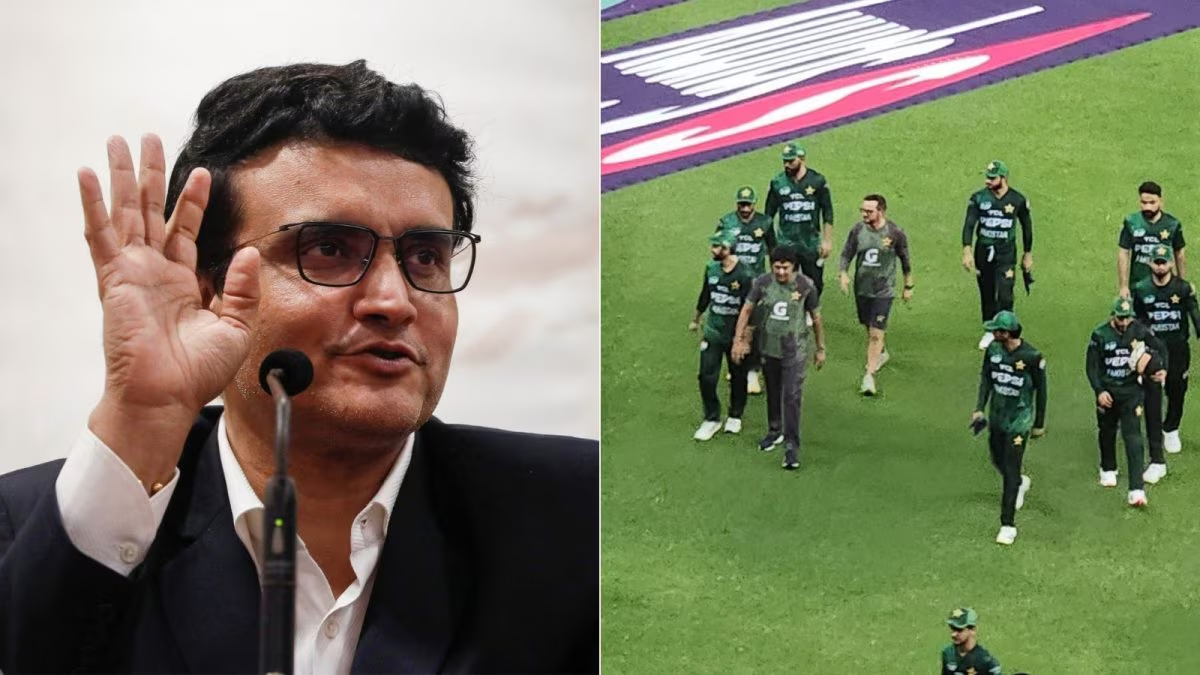
Cricket has long been regarded as more than just a sport in the Indo-Pakistan context; it is a battlefield of national pride, political statements, and cultural identity. The recent Asia Cup controversy has once again thrust this simmering rivalry into the limelight, exposing deep-seated tensions and differing viewpoints surrounding sportsmanship and diplomatic conduct. Central to this discourse is Sourav Ganguly, former Indian cricket captain and influential cricketing figure, who has publicly voiced his opinions criticizing Pakistan amidst the ongoing controversy. His remarks reflect a broader debate about sportsmanship, political influence on cricket, and the role of players and officials in maintaining the integrity of the game.
Sourav Ganguly’s Candid Remarks: A Blow to Pakistan’s Conduct
Recently, Ganguly made a bold statement regarding the handshake fiasco that marred the Asia Cup event. During a televised interview, he expressed his disapproval of Pakistan’s behavior, saying, “I’d rather watch India vs Afghanistan than witness what happened during the handshake row.” (Hindustan Times). This comment was not merely a reflection of personal disappointment but a pointed critique of Pakistan’s conduct, which he termed as unprofessional and unbecoming of the spirit of cricket.
The incident in question involved the Pakistan team’s refusal to shake hands with the Indian squad after their match, leading to widespread criticism. Ganguly’s reaction underscores the importance of sportsmanship and the need for players to uphold the decorum expected at international events. His sharp criticism also indicates a shift in sentiment among cricketing elders regarding Pakistan’s behavior on the field, especially when political tensions are high.
Breaking the Silence: Ganguly’s Honest Confession About India-Pakistan Matches
Adding depth to his critique, Ganguly admitted in an interview with The Times of India that he personally stopped watching India vs Pakistan matches after just 15 overs. His words reveal a disappointment with how political and emotional tensions tend to overshadow the sporting spirit. Ganguly stated, “I stopped watching India vs Pakistan after 15 overs because the match’s rivalry often becomes a spectacle of ego and nationalistic pride rather than genuine sportsmanship.”
This confession resonates with many cricket fans who have observed the increasing polarization and hostility during bilateral cricket engagements between India and Pakistan. It hints at the fatigue and disillusionment among former players and cricket enthusiasts, who wish to see the game played in true spirit—mutual respect and fairness.
Beyond Personal Views: The Broader Implications for Cricket Politics
The controversy has not been limited to on-field incidents but has extended into the domain of cricket politics and governance. The Board of Control for Cricket in India (BCCI) responded to criticisms and incidents surrounding the event, emphasizing the importance of legal and procedural frameworks to manage such situations. In a statement on NDTV Sports, the BCCI mentioned, “If there is no law governing these conduct issues, then we cannot take appropriate actions.” This highlights the ongoing debates about disciplinary measures and the need for clear protocols during international tournaments.
Similarly, Pakistan’s cricket authorities demanded the removal of the match referee, Pycroft, citing procedural irregularities and bias. Reports suggest that both sides are entangled in diplomatic subtleties, with accusations flying about unfair treatment and arbitrary decisions, further complicating the diplomatic aspect of cricket.
Reactions From Other Cricketing Figures and the Public
The controversy has elicited reactions from former players, administrators, and fans worldwide. Notably, Pakistan’s Shahid Afridi launched a tirade against the Board of Control for Cricket in India (BCCI) and criticized Suryakumar Yadav for allegedly snubbing a handshake—calling the incident an “embarrassment on the world stage” (Hindustan Times). Such reactions underscore how cricket-related incidents often become symbolic battlegrounds in the larger political arena.
Moreover, Ganguly’s straightforward approach has been appreciated by many who believe that clarity and honesty are needed to restore the credibility of cricket matches involving these nations.
In parallel, the controversy has also sparked debates about the role of cricket diplomacy, with some advocating for cricket to be kept as a neutral ground free from political interference. Others argue that sports and politics are inherently intertwined in South Asia, and incidents like these expose the ongoing tensions.
Broader Concerns: The Future of India-Pakistan Cricket Relations
The ongoing disputes threaten to undermine the independence of cricket as a sport and challenge the spirit of unity and respect that the game ideally promotes. The refusal to shake hands, accusations of biased officiating, and political posturing suggest that the rivalry is now as much about national pride as it is about winning matches.
Ganguly’s actions and statements could be seen as an appeal to prioritize sportsmanship over politics. If senior figures like him continue to voice discontent, it might influence governing bodies and players to foster a more respectful and dignified cricketing environment.
However, the road ahead remains complicated. Political tensions between India and Pakistan continue to influence sporting interactions, resulting in diminished bilateral series and a rising desire among fans for players and administrators to keep cricket a neutral, unifying sport. The dialogue around these issues indicates a need for balanced diplomacy and firm adherence to the rules of fair play.
Conclusion: Lessons from the Controversy and the Way Forward
The Asia Cup controversy, highlighted by Sourav Ganguly’s pointed remarks and recent incidents, underscores the importance of maintaining integrity and sportsmanship in international cricket. His candid criticism serves as a reminder that cricket should be an arena of mutual respect and a platform to bridge divides rather than deepen animosity.
As cricket enthusiasts and stakeholders look to the future, the priority must be fostering an environment where politics does not overshadow the love for the game. Both India and Pakistan need to work towards dialogue, understanding, and fair conduct to ensure that cricket continues to be a tool of unity and cultural exchange.
The role of legendary players like Ganguly becomes especially critical in setting a tone for professionalism, humility, and respect on the field. Their honest voices can inspire a new generation of cricketers to uphold the true spirit of sportsmanship, transcending political and nationalistic barriers.
For more updated news please keep visiting Hourly Prime News.