

Understanding the Context of the Hindi Language Debate
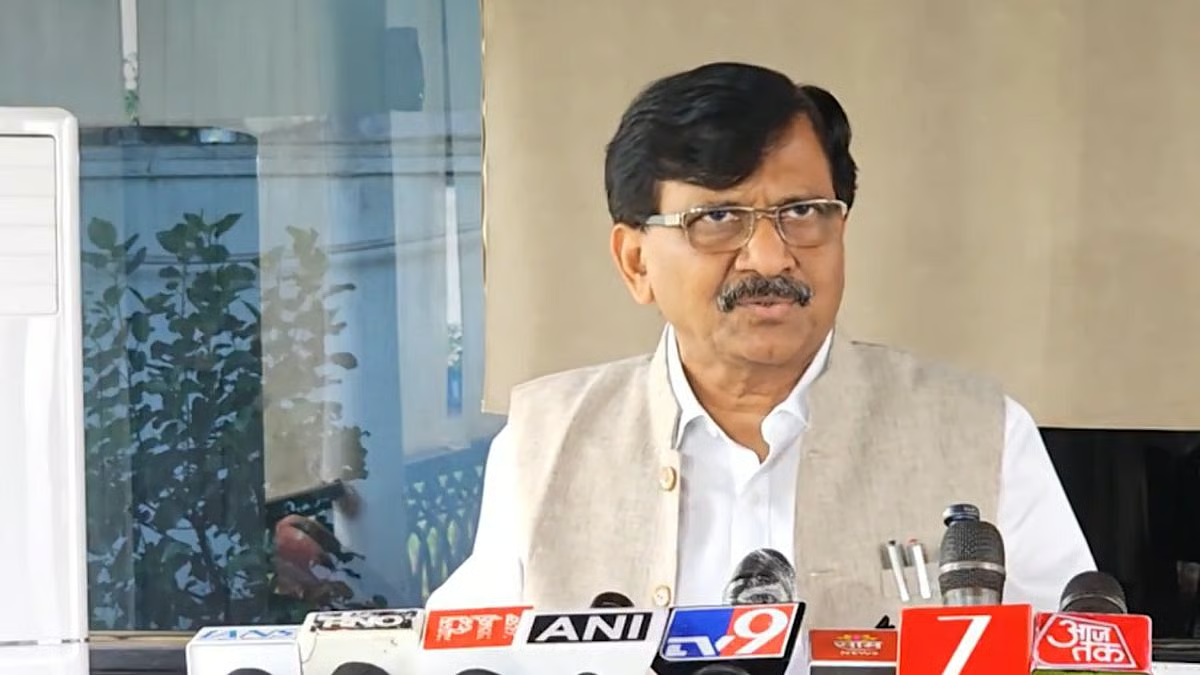
The ongoing discussions surrounding language policies in India have always been a sensitive and complex issue, rooted deeply in the country’s diverse cultural and linguistic fabric. Among these, the debate over the imposition of Hindi in education has garnered significant attention, particularly from political figures who advocate for preserving regional languages and linguistic diversity. One such prominent voice is Sanjay Raut, a senior Member of Parliament representing the Shiv Sena (UBT), who has voiced strong opposition to the forced imposition of Hindi in primary education.
Sanjay Raut’s Stand: A Clear Resurgence Against Language Imposition
The Core Message
Sanjay Raut emphasized that his fight is centered around a fundamental principle:
- Resistance to the imposition of Hindi in primary education, which he considers a move that undermines the linguistic diversity of India.
In a recent statement, Raut clarified, “Our fight is only against the imposition of Hindi in primary education.” This concise yet powerful declaration underscores the primary concern of many regional leaders and communities—protecting their mother tongues and ensuring that education remains accessible in local languages.
The Significance of Language in Education
Language plays a crucial role in shaping a child’s cognitive and cultural development. Raut and like-minded leaders argue that:
- Primary education should be imparted in the child’s mother tongue to ensure better understanding and learning outcomes.
- Forcibly imposing Hindi in regions where it is not a native language can lead to alienation and hinder the natural educational growth of students.
- It risks eroding regional languages, many of which are rich in history and cultural heritage.
The Political and Cultural Backdrop
Historical Perspective on Language Politics in India
India’s linguistic landscape has long been a battleground for political and cultural assertion. The promotion of Hindi has historically been linked to national integration efforts, but it has also faced stiff opposition from non-Hindi speaking states like Tamil Nadu, Maharashtra, and West Bengal. These states have often resisted efforts to make Hindi the sole or dominant language in educational and administrative domains. Sanjay Raut’s stance echoes this sentiment, emphasizing respect for linguistic plurality.
Current Policies and Their Impact
This debate has gained renewed vigor with recent policy proposals that aim to prioritize Hindi as a medium of instruction in government schools across multiple states. Critics argue that such policies may marginalize regional languages and diminish cultural identities. Raut’s opposition comes at a time when there is a growing call to safeguard regional languages and promote multilingual education.
The Role of Regional Identity and Autonomy
Why Language Matters for Regional Identity
For regions like Maharashtra, Tamil Nadu, Bengal, and others, language is more than just a means of communication—it is a vital part of cultural identity. Leaders like Sanjay Raut stress that imposing Hindi without considering regional sentiments can be seen as an encroachment on local autonomy.
Advocacy for Multilingual Education
Instead of forcing a single language, advocates suggest adopting a multilingual approach, which includes:
- Teaching children in their mother tongue at the primary level.
- Introducing regional and national language education mutually to promote linguistic harmony.
- Ensuring that students are proficient in multiple languages, including Hindi, English, and regional languages.
Implications for National Unity
Balancing Unity and Diversity
The challenge lies in fostering national unity without compromising regional identities. Raut’s opposition highlights the importance of respecting linguistic diversity while maintaining a cohesive nation. A singular approach to language policy may deepen regional divides, whereas embracing multilingualism can serve as a bridge fostering understanding and cooperation across communities.
Educational and Social Benefits of Respecting Regional Languages
Numerous studies indicate that children learn and perform better academically when instructed in their first language. Recognizing and promoting regional languages in schools can lead to:
- Enhanced cognitive development.
- Preservation of cultural heritage.
- Greater inclusiveness and social cohesion.
Concluding Thoughts: The Need for Sensitivity and Dialogue
The stance taken by Sanjay Raut exemplifies a broader call for sensitivity in language policymaking. Education should empower students by respecting their linguistic roots, not diminish their cultural identities. As debates continue at the national level, it is crucial for policymakers to engage with regional voices and consider diverse perspectives. A balanced approach—one that promotes national integration without sidelining regional languages—is essential to uphold the constitutional values of unity in diversity.
Ultimately, the fight against the imposition of Hindi in primary education is a reminder of the importance of language rights as a fundamental part of India’s rich democratic fabric. Education policies must evolve in a manner that uplifts all linguistic communities, ensuring a future where diversity is celebrated and preserved.
Final Reflection
As Sanjay Raut and many others continue their advocacy, it is clear that language in education remains a sensitive but vital issue. It’s a call to policymakers to craft inclusive, respectful, and adaptable language policies that reflect India’s pluralistic ethos.
For more updated news please keep visiting Hourly Prime News.