

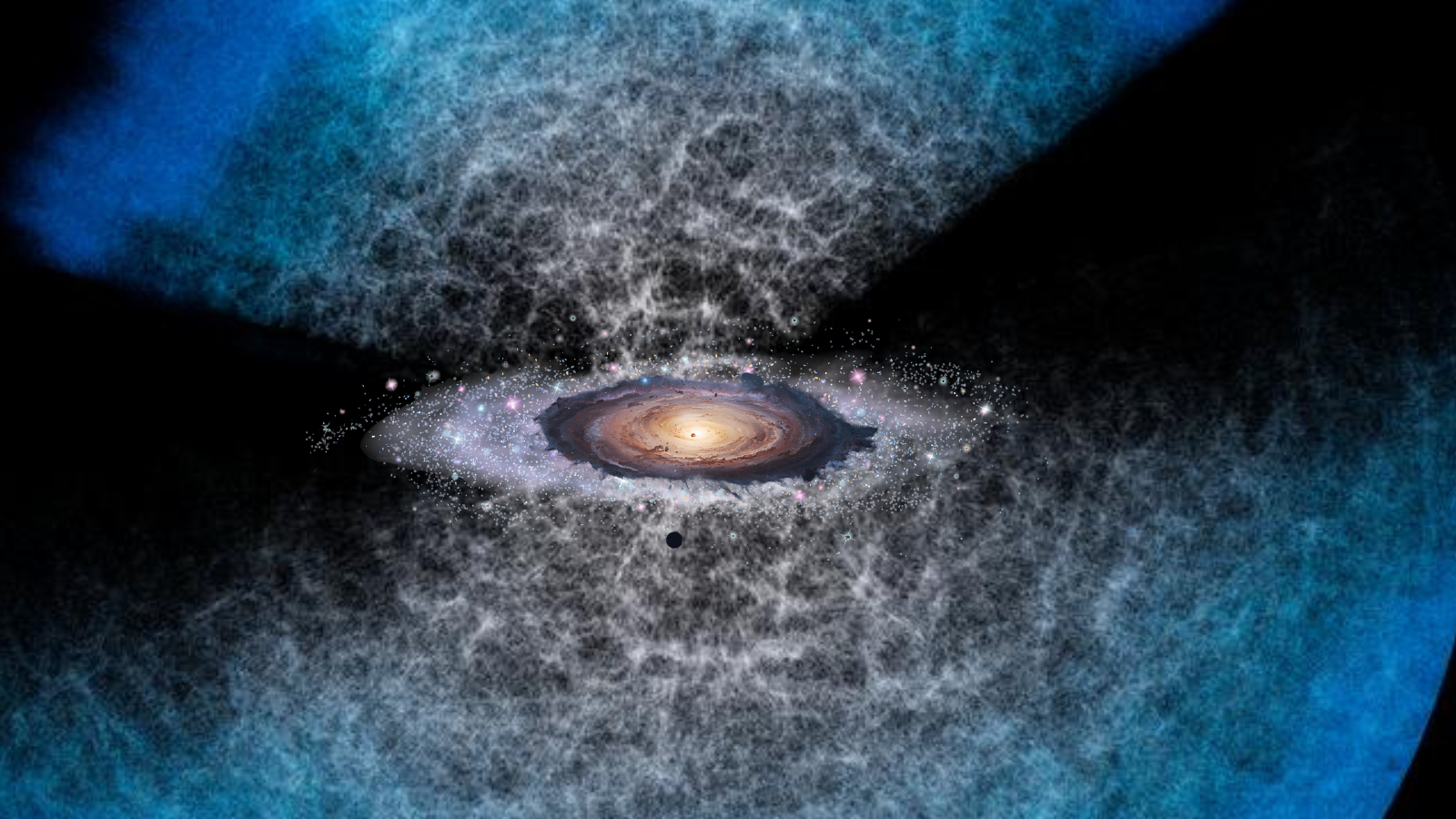
In a groundbreaking achievement that promises to revolutionize our understanding of the universe, scientists have announced the launch of Flagship 2, the most expansive and detailed simulation of the cosmos ever created. This colossal computational project models an astonishing 3.4 billion galaxies, providing unprecedented insights into the structure, evolution, and mysteries of the universe. As technological advancements continue to push the boundaries of scientific exploration, this simulation stands as a testament to human ingenuity and our relentless quest to unravel the cosmos’s deepest secrets.
The Magnitude and Significance of Flagship 2
The scale of Flagship 2 is truly staggering. To put it into perspective, previous models of the universe covered significantly fewer galaxies, limiting the granularity of insights that researchers could derive. Now, with 3.4 billion galaxies represented in this simulation, scientists can analyze cosmic phenomena across an extensive range of scales, from the formation of galaxy clusters to the behavior of dark matter and dark energy. The project essentially acts as a virtual universe, allowing researchers to test theories, observe interactions, and predict cosmic events without the constraints of observational limitations.
This simulation holds particular importance in the context of understanding the dark universe, which comprises dark matter and dark energy—components that constitute over 95% of the total universe but remain elusive to direct detection. By modeling such a vast number of galaxies, researchers can study how these mysterious elements influence cosmic expansion, galaxy formation, and large-scale structures. The insights gleaned from Flagship 2 could be instrumental in solving some of the most profound puzzles of modern astrophysics.
Technological Marvels and Computational Power Behind the Project
The development of Flagship 2 required a formidable array of computational resources. Leveraging state-of-the-art supercomputers, scientists employed advanced algorithms and data processing techniques to simulate the universe at an unprecedented level of detail. According to reports, the project utilized the power of the latest supercomputers pushing the limits of high-performance computing (HPC).
In essence, this project exemplifies how automation, machine learning, and computational physics converge to simulate a universe with remarkable precision. It also underscores an era where simulation-based science supplements observational astronomy, drastically reducing the reliance on physically capturing distant cosmic phenomena, which can be challenging and time-consuming.
Implications for Astronomy and Cosmology
The production of Flagship 2 opens new frontiers in various branches of astrophysics. For cosmologists, it provides a virtual laboratory to probe questions like:
- What influences galaxy formation and evolution?
- How do dark matter and dark energy influence cosmic structures?
- What are the conditions leading to galaxy clusters and voids?
- Can we better understand the large-scale web-like structure of the universe?
Furthermore, the simulation offers invaluable insights into cosmic microwave background (CMB) fluctuations and large-scale gravitational interactions, which are pivotal in understanding the initial conditions of the universe. Researchers can also test the validity of different cosmological models, including modifications to Einstein’s General Relativity and various theories of dark matter and dark energy.
Potential for Future Discoveries and Cosmic Predictions
One of the most exciting prospects of Flagship 2 is its potential to predict cosmic phenomena that have yet to be observed or understood. For instance, it may help identify regions where rare but significant events—like galaxy collisions or black hole formations—are more likely to occur. These predictions can then guide observational campaigns with telescopes like the James Webb Space Telescope or the upcoming Euclid mission.
Additionally, the simulation aids in training artificial intelligence models to recognize patterns in cosmic data, speeding up data analysis from telescopes and surveys. This synergy between simulation and observation accelerates the pace of discovery, making the universe’s vast mysteries a little more accessible.
Challenges and Limitations
Despite its monumental scale, the creation of Flagship 2 is not without challenges. The sheer computational demand necessitates enormous data storage capabilities and energy consumption. Moreover, simulations are inherently limited by the assumptions and approximations embedded within their codes, which may influence the fidelity of results. For example, modeling complex baryonic physics—including star formation, supernova feedback, and magnetic fields—remains highly challenging and introduces uncertainties.
Nevertheless, ongoing developments aim to refine these models, making future simulations even more precise and comprehensive. The continuous evolution of hardware and algorithms promises a brighter future where our virtual universes come ever closer to the real one.
Global Collaboration and Future Plans
This ambitious project exemplifies international collaboration among astrophysicists, computer scientists, and institutions worldwide. Leveraging distributed computing power and shared expertise, the team behind Flagship 2 is paving the way for a new era of data-intensive astronomy.
Looking ahead, scientists plan to update and expand the simulation, incorporating new observational data as it becomes available. Such iterative improvements will deepen our understanding of cosmic evolution, the nature of dark matter and energy, and the universe’s ultimate fate.
Conclusion
The unveiling of Flagship 2 marks a milestone in modern astrophysics, offering a virtual window into the universe’s grand design. As a tool for theoretical exploration and observational planning, this colossal simulation embodies the synergy of technology and scientific curiosity. It brings us closer to answering some of humanity’s most profound questions about the origins, structure, and destiny of the cosmos.
In a universe filled with mysteries and wonders, the creation of such an extensive simulation is a significant leap forward—highlighting our relentless pursuit of knowledge and the incredible potential of science and technology.
For more updated news please keep visiting Hourly Prime News.