

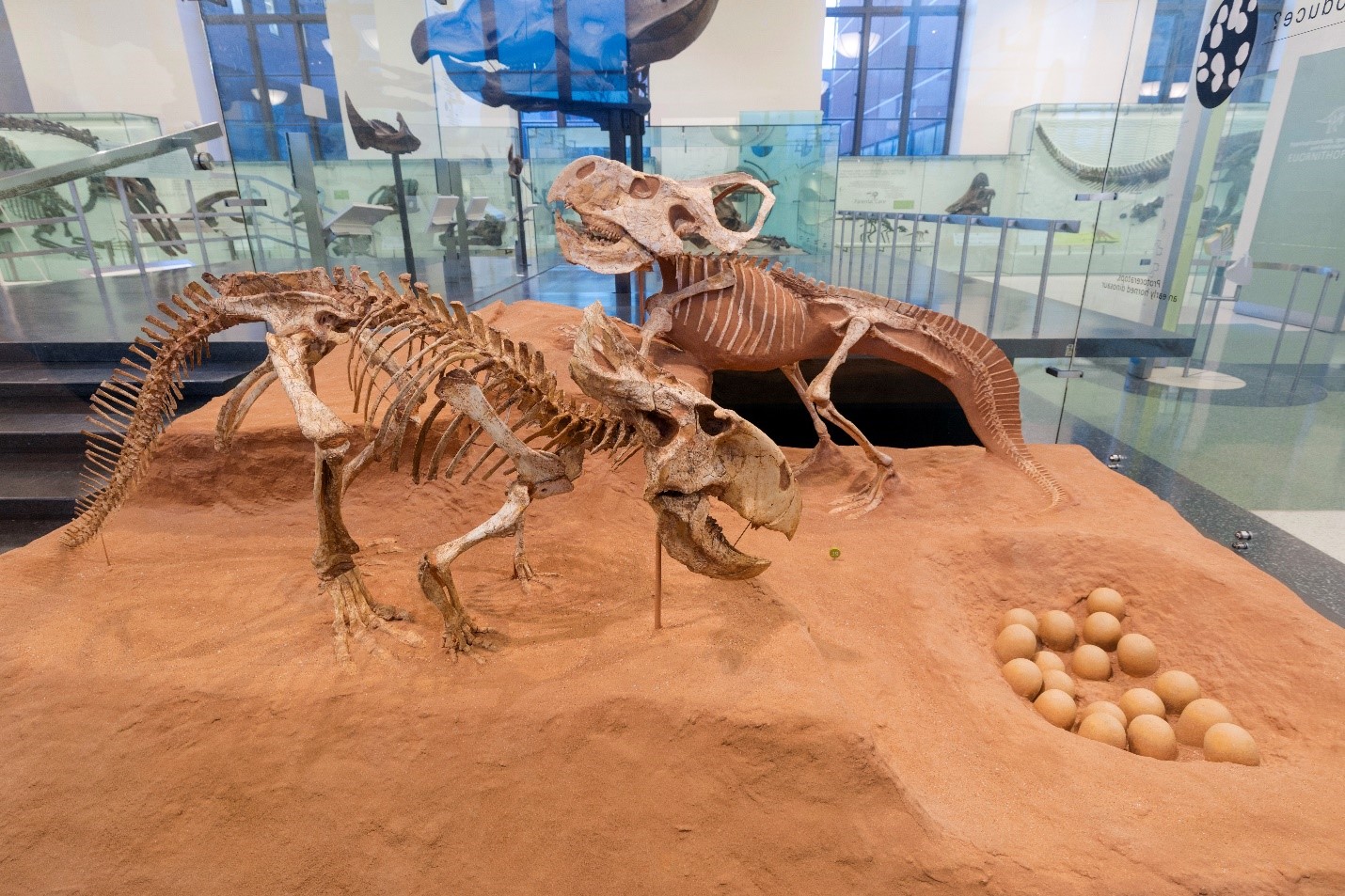
The world of paleontology is abuzz with excitement after the revelation of a groundbreaking discovery from the vast sands of the Gobi Desert. A recently uncovered fossil, described as **stunning and unprecedented in its detail**, is poised to **rewrite the conventional narrative of dinosaur evolution and migration**. As scientists analyze this extraordinary find, it’s clear that this fossil has the potential to **alter long-held beliefs** about the diversity, behavior, and geographical boundaries of dinosaurs that roamed Earth millions of years ago.
This remarkable discovery exemplifies how **every fossil has a story to tell**, especially when it challenges established theories. The Gobi Desert, already famous for numerous significant paleontological finds, now takes center stage with this new revelation, promising to deepen our understanding of prehistoric life on our planet.
The Significance of the Gobi Desert in Dinosaur Research
The Gobi Desert, stretching across northern China and southern Mongolia, is one of the most prolific fossil sites globally. Its arid climate, coupled with its unique geological formations, has historically yielded a treasure trove of fossils dating from the Late Cretaceous period. Past discoveries from this region, such as the famous *Protoceratops* and *Velociraptor*, have provided invaluable insights into dinosaur morphology and behavior.
However, this latest fossil surpasses previous finds in both scope and implications. It challenges existing paradigms about how dinosaurs migrated across continents and evolved over time. As paleontologists have delved into decades of research within this region, this discovery pushes the boundaries of what we thought was possible through fossil evidence from the Gobi.
The Discovery: What Makes This Fossil Unique?
The fossil in question was found in a remote excavation site, hidden beneath layers of sediment that have preserved it remarkably well. What makes this specimen particularly exceptional? Here are some key aspects:
- Distinct Morphology: The fossil exhibits features not seen in other known species from the same period, suggesting the existence of a previously unknown dinosaur lineage.
- Preservation of Soft Tissues: Unusually, some soft tissue remains are also preserved, providing rare insights into the creature’s physiology and possible muscle structures.
- Hybrid Traits: The creature appears to possess traits that bridge evolutionary gaps between different dinosaur groups, implying more complex evolutionary pathways than previously understood.
- Geographical Significance: The fossil’s location indicates that certain dinosaur species might have inhabited areas previously deemed uninhabitable or unsuitable for their survival.
Its discovery was facilitated through advanced imaging techniques and meticulous excavation, which have allowed scientists to study delicate structures without damaging the fossil.
Implications for Dinosaur Evolution and Distribution
This fossil has immediate implications for how scientists interpret dinosaur evolution, especially concerning **migration patterns** and **adaptations**. Traditional models suggest that dinosaurs were largely confined to specific continents, with barriers like vast oceans limiting their movement. However, the evidence from this fossil indicates that:
**Dinosaur species may have been more cosmopolitan** than previously thought, with the ability to adapt and migrate across diverse environments.
This raises several questions:
– **Did dinosaurs traverse land bridges or coastal routes?**
– **Were there undiscovered corridors facilitating migration?**
– **How did climate and geological changes influence their dispersal?**
One of the most intriguing aspects is the possibility that this fossil represents a **missing link**, bridging gaps between known species and revealing **intercontinental connections**. This could suggest that our current models of dinosaur dispersal need significant revision, incorporating complex migration routes that span continents and ecosystems.
Furthermore, the soft tissue preservation offers a window into **dinosaur physiology**, including how they perhaps managed to survive changing climates and habitats. These insights contribute to a **more nuanced understanding** of their adaptive strategies, which is crucial for constructing accurate evolutionary timelines.
Rewriting Dinosaur Behavioral Theories
Beyond physical structure, fossils can shed light on behavior, social organization, and feeding habits. While this particular fossil is primarily skeletal, the context of its discovery hints at broader behavioral implications:
- Group Living or Solitary Existence: Evidence of multiple fossils within the same formation supports theories of herd behavior or solitary habits, depending on the fossil arrangements.
- Dietary Insights: Tooth morphology, preserved stomach contents, or associated fossil remains can reveal dietary preferences, influencing theories on ecological niches.
- Environmental Adaptations: The sedimentary environment indicates whether the creature lived in arid, riverine, or coastal ecosystems, further highlighting their adaptability.
These aspects collectively contribute to a **more dynamic picture of dinosaur ecosystems**, where species were not static but continually adapting and migrating in response to environmental pressures.
The Broader Impact on Paleontology and Science
The discovery from the Gobi Desert is noteworthy not just for its scientific novelty but also for its **potential to influence broader scientific paradigms**. It underscores the importance of exploring and reexamining well-studied regions with fresh perspectives and cutting-edge technologies.
Additionally, this find **reaffirms the significance of the Gobi Desert as a key paleontological hotspot**, encouraging further exploration and excavation in the region. It also emphasizes the interconnectedness of Earth’s prehistoric past, where continents and ecosystems were dynamic, shaping the evolution of terrestrial life.
The implications extend even beyond paleontology — influencing fields such as geology, climate science, and evolutionary biology by providing real-world data on how ancient organisms responded to environmental shifts.
Future Directions: What’s Next?
In light of this discovery, several avenues for future research open up:
– **Detailed genome analysis**: If preserved DNA fragments are found, they could revolutionize our understanding of dinosaur genetics.
– **Further excavations**: Targeted digs in similar stratigraphic layers may uncover more specimens, helping to paint a fuller picture of this new dinosaur species.
– **Comparative studies**: Analyzing similarities and differences with fossils from other regions can elucidate migration and evolutionary pathways.
– **Technological innovations**: Using techniques like 3D modeling and artificial intelligence to reconstruct behavior and movement patterns.
Ultimately, this discovery signifies that **the story of dinosaurs is far from complete**. Each new fossil adds a chapter, challenging long-held beliefs and inspiring ongoing scientific inquiry.
Conclusion: A New Chapter in Dinosaur History
The fossil from the Gobi Desert exemplifies how scientific discoveries can **transform our understanding of prehistoric life**. By unveiling features that challenge existing notions about dinosaur diversity, migration, and adaptation, it propels the field toward a more **comprehensive and accurate narrative** of Earth’s ancient past.
This breakthrough reinforces the importance of exploration and continual questioning in science. As researchers delve deeper into the layers of history preserved beneath the sands of the Gobi, we can anticipate even more revelations that will **reshape the story of dinosaurs forever**.
For those eager to stay updated on this evolving story, be sure to follow the latest findings and analyses from reputable sources.
For more updated news please keep visiting Hourly Prime News.