

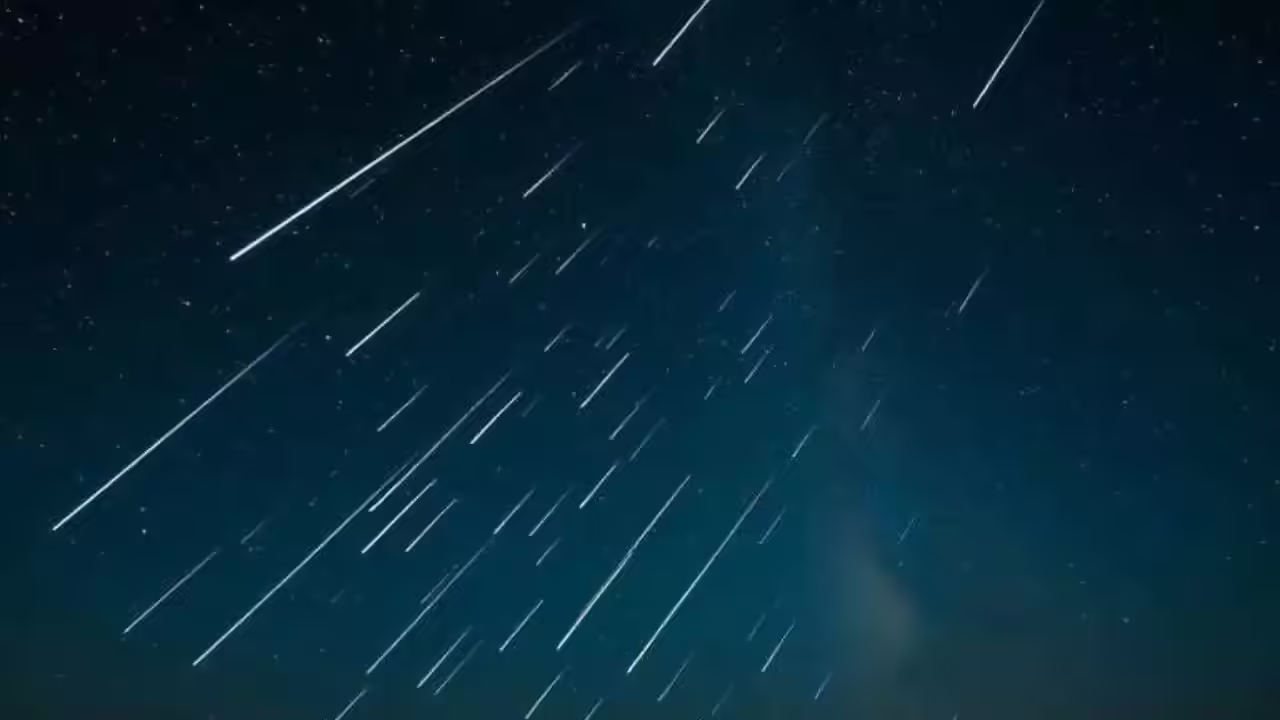
In the world of astronomy, few sights evoke as much wonder and anticipation as the sighting of comets streaking across the night sky. This year, stargazers and skywatchers are in for an exceptional treat—a rare celestial event where **not just one, but two comets** are making their grand appearance amid the peak of one of the year’s most spectacular meteor showers. This convergence of cosmic phenomena offers a unique opportunity for enthusiasts, both amateur and professional, to witness an astonishing display of our solar system’s dynamic beauty.
Rarity of the Comet Duo During Meteor Shower Peak
According to recent findings and reports from reputable sources like The Economic Times and Space, the presence of **two active comets simultaneously visible** in the night sky is an extraordinary event. Typically, comets are elusive visitors, often observable only during specific periods when they are closest to the Sun or Earth. However, current predictions suggest that both Comet C/2025 A6 (Lemmon) and another yet-to-be-named comet are on a trajectory that makes their visibility possible with the naked eye during this upcoming peak of the meteor shower.
This rare confluence is a result of the *comets’ orbital paths aligning with Earth’s position* in a way that enhances their visibility. Such occurrences are infrequent and generally span a brief window—making this an ideal moment for the public’s collective gaze skyward. Astrophotographers and astronomers have already captured stunning images of these icy wanderers, revealing dazzling greenish emissions and luminous tails that stretch across the sky, further fuelling excitement among space enthusiasts.
Details of the Upcoming Celestial Event
When to Watch
- Date: The best observation window falls around the peak nights of the meteor shower, which is typically in mid to late October, depending on your location. This year, detailed forecasts indicate optimal viewing conditions during the nights of October 18th to 21st.
- Time: To catch these comets, it’s recommended to be outside during the pre-dawn hours, generally between 3:00 AM and 5:00 AM local time, when the sky is darkest and the comets are highest in the sky.
- Location: While comets can be seen from most dark-sky locations worldwide, rural areas with minimal light pollution offer the clearest views. Major observation points include desert regions, mountain ranges, and designated astronomy parks.
Where to Watch
Supporting equipment isn’t strictly necessary, but binoculars or a small telescope can significantly enhance your viewing experience, revealing details such as intricate tails and coma structures. For those without optical aids, naked-eye observation still provides an awe-inspiring experience, especially given the brightness of Comet Lemmon, which is suggested to become visible without aid as it brightens during October.
Understanding the Celestial Players
Comet C/2025 A6 (Lemmon)
This comet, discovered in 2025, has been steadily brightening and is predicted to become visible to the naked eye in the coming weeks. Its emerald-green hue is caused by the release of diatomic carbon gas, which fluoresces in sunlight, giving it a distinctive glow against the dark canvas of space. Astrophotographers have captured captivating images, showcasing its vivid tail and luminous nucleus that radiate an enchanting green aura, a sight that captivates both seasoned astronomers and casual skywatchers.
The Second Comet
While reports vary, the second comet of interest is believed to be a long-period comet making a rare perihelion visit. Its trajectory overlaps favorably with Earth’s orbit, providing a fleeting window for close viewing. This comet’s features, such as a bright nucleus and a detailed tail, are subjects of ongoing observation and are anticipated to make this celestial event even more spectacular.
Why This Event Is a Once-in-a-Lifetime Opportunity
Events that feature multiple comets simultaneously are exceedingly rare in the astronomical timeline. Adding to this rarity is the coincidence with a prominent meteor shower—likely the Orionids or the Draconids—whose radiant points and intensity make the night sky alive with shooting stars. Witnessing **both comets and a meteor shower at once** creates an immersive experience, where streaks of meteors intertwine with luminous comets, creating an awe-inspiring display that reminds us of the grandeur of our cosmos.
Moreover, with advances in astrophotography, enthusiasts are capturing intricate images of these comets that reveal colors and details previously unseen, allowing millions around the world to partake in this celestial event virtually, even if they can’t observe it firsthand.
Preparation Tips for Skywatchers
- Check Local Weather: Clear skies are essential. Keep an eye on weather forecasts to ensure minimal cloud cover during the observing nights.
- Find a Dark Sky Location: Light pollution can diminish the visibility of faint celestial objects. Seek out remote areas or dedicated dark-sky parks.
- Use Appropriate Equipment: Although binoculars suffice for many, telescopes can reveal extraordinary details; however, even the naked eye provides a magnificent view during peak conditions.
- Bring Comfort Items: Warm clothing, blankets, and hot beverages make the long hours more enjoyable.
- Stay Informed: Follow reputable astronomical sources and social media channels for live updates and viewing tips.
The Cultural and Scientific Significance
This celestial event isn’t just an amazing visual spectacle—it also carries significant scientific importance. Studying comets helps astronomers learn about the early solar system since these icy bodies are remnants from its formation over 4.6 billion years ago. The chemical composition, tail structures, and behavior of these comets provide clues about the primordial materials that built our planetary neighborhood.
Furthermore, for cultures worldwide, comets have historically been associated with omens, mythologies, and celestial portents. Witnessing a rare duo of comets during a meteor shower can serve as a moment of inspiration and connection to our ancient celestial observations, nurturing curiosity and a deeper appreciation for the universe’s mysteries.
Final Thoughts
This upcoming celestial alignment offers an extraordinary opportunity to witness the universe’s grandeur firsthand. Whether you’re an avid astronomer, a casual skywatcher, or simply someone who loves gazing at the stars, the chance to see **two comets and a meteor shower simultaneously** doesn’t come often. As these icy visitors paint trails across the night sky amid falling meteors, you’ll be part of a rare astronomical symphony that reminds us of our place in the vast cosmos.
Don’t miss this fantastic celestial showcase! Prepare your eyes, find a dark sky haven, and elevate your star-gazing experience to new heights during this extraordinary cosmic event.
For more updated news please keep visiting Hourly Prime News.