

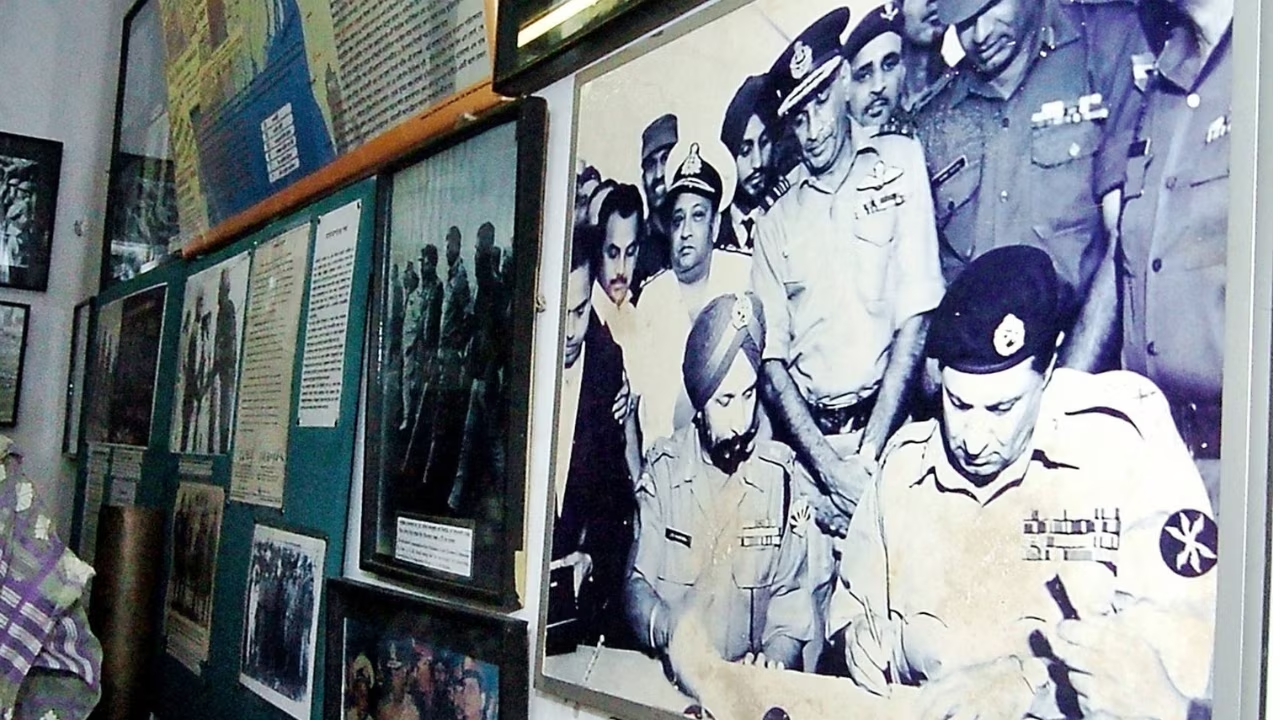
1971 Bangladesh Liberation War Highlights
The geopolitical landscape surrounding South Asia continues to be a mosaic of complex histories, unresolved conflicts, and shifting alliances. Recently, an unprecedented development caught global attention: a Pakistani diplomat resigned from his post amidst an environment of renewed scrutiny and reflection on historical events. Simultaneously, the Indian Army has taken a bold step by sharing a series of historic news reports from 1971 — the year of Bangladesh’s liberation. These events have reignited debates over history, diplomacy, and military narratives, casting a spotlight on the enduring shadows of past conflicts and the possibility of new diplomatic dialogues.
The Resignation of a Pakistani Diplomat: A Sign of Changing Diplomacy?
In a surprising move, a sitting Pakistani diplomat resigned from his position, stirring speculation about internal disagreements and shifting diplomatic strategies. Although official statements remain cautious, sources suggest that this resignation is intertwined with the ongoing tensions and an increased awareness within Pakistan regarding its historical image and diplomatic approach.
This resignation might symbolize a broader reassessment within Pakistan’s foreign service, especially concerning the narratives surrounding the 1971 Bangladesh Liberation War. Over the years, Pakistan has faced criticism and calls for acknowledgment of its role in the war, and this latest development could indicate a desire among some diplomats to take a more introspective or even reformist stance.
Such resignations are rarely isolated but often indicative of deeper currents within a nation’s diplomatic machinery. This departure comes at a time when Pakistan faces mounting pressure to address historical grievances and improve its regional relations. Whether this signals a significant policy shift remains to be seen, but it undeniably adds a new dimension to Pakistan’s diplomatic posture.
Indian Army Shares Historic 1971 Bangladesh Liberation War News
As the diplomatic tensions unfold, the Indian Army has taken an unconventional step that is resonating deeply across political and historical circles. They shared a series of historic news clippings from 1971, the year when India intervened in East Pakistan leading to the creation of Bangladesh. These reports, shared through various media, highlight the narrative of India’s military operations and the geopolitical context of that era.
Remarkably, these reports also include references to U.S. arms supplies to Pakistan, detailed build-up of military forces, and diplomatic intricacies of the period. Such disclosures serve multiple purposes: they reconstruct history, reaffirm India’s role in the liberation, and subtly remind the regional and global audience of past alliances and conflicts.
One significant aspect was the army’s emphasis on the ‘historic build-up’ of 1971, recalled in relation to today’s geopolitical climate. By sharing these archives, the Indian military appears intent on anchoring its narrative of the conflict, ensuring that the lessons and memories of those tumultuous days are not forgotten amid the rapidly changing regional dynamics.
The Significance of Reflecting on 1971
The memories of the 1971 war are not merely historical footnotes but are enmeshed in the contemporary politics and diplomacy of South Asia. For Bangladesh, it is a foundation of national identity and sovereignty. For India, it is a testament to its strategic intervention and regional influence. For Pakistan, it remains a point of national reflection and often denial or contentious debate.
The recent sharing of old news reports by the Indian Army underscores the importance of remembrance and narrative control. It also challenges Pakistan to confront its own history — highlighted by the resignation of the Pakistani diplomat — raising questions about accountability, acknowledgment, and reconciliation.
Moreover, these historic documents expose the international machinations, such as U.S. support to Pakistan during the conflict, which remains a controversial chapter. The narrative of foreign influence and military strategy from that period continues to influence regional alliances today.
Diplomatic Ripple Effects and Regional Reactions
The combined developments of a high-profile diplomat resignation and the Indian Army’s historical disclosures have generated widespread discussions across diplomatic corridors, media outlets, and academic circles. Many see these as signs of an ongoing reassessment of the past, possibly paving the way for new diplomatic approaches or at least a more open dialogue about the events of 1971.
While some regions and countries are cautious, fearing renewed tensions, others interpret these moves as attempts to promote transparency and historical truth. Bangladesh, in particular, views these disclosures with a sense of validation and affirmation of its liberation narrative. Meanwhile, Pakistan faces mounting questions over its official stance and internal debates about its historical narrative and regional strategy.
In Pakistan, the resignation of a diplomat can be seen as an act of protest or an expression of internal disagreement about the country’s approach toward its history, especially regarding Bangladesh and the broader South Asian dynamics. This event could influence future diplomatic policies, either encouraging franker discussions or deepening internal discord.
Historical Narratives and the Power of Media
The role of media in shaping historical and political narratives cannot be overstated. The Indian Army’s decision to circulate historic news clips serves as a strategic move to reinforce India’s narrative of 1971. Conversely, Pakistan’s internal debates, exemplified by the diplomat’s resignation, reflect a possibly evolving perspective within its diplomatic community.
Media archives, news reports, and open disclosures have become powerful tools for nations seeking to influence perceptions and remembrance of history. The battle for narrative dominance continues, influencing diplomatic interactions and regional perceptions.
Looking Forward: Toward Reconciliation or Continued Tensions?
The future trajectory of South Asian diplomacy remains uncertain. Will these historic disclosures and internal resignations serve as catalysts for reconciliation and honest dialogue? Or will they deepen existing tensions, stirring emotional responses rooted in unresolved historical grievances?
The region’s complex history, marked by wars, political upheavals, and deep-seated narratives, demands a nuanced approach. Recognizing and understanding these historical moments is crucial for building a future based on dialogue, mutual respect, and acknowledgment of past wounds.
Ultimately, these recent events serve as a reminder that history remains alive in diplomacy and politics. Both Pakistan and India are at crossroads where confronting their shared past could lead to either reconciliation or renewed conflict.
Conclusion: An Era of Reflection and Transformation
The simultaneous resignation of a Pakistani diplomat and the Indian Army’s sharing of historic 1971 news reports symbolize a turbulent yet potentially transformative period in South Asian geopolitics. They reflect not only a re-examination of history but also a possibility for future diplomacy rooted in acknowledgment and transparency.
Historically charged moments like these serve as opportunities to learn, grow, and perhaps finally bridge long-standing divides. With continued dialogue, openness, and a shared commitment to truth, South Asia can aspire toward a more peaceful and understanding future, motivated by an honest reckoning with its past.
For more updated news please keep visiting Hourly Prime News.