

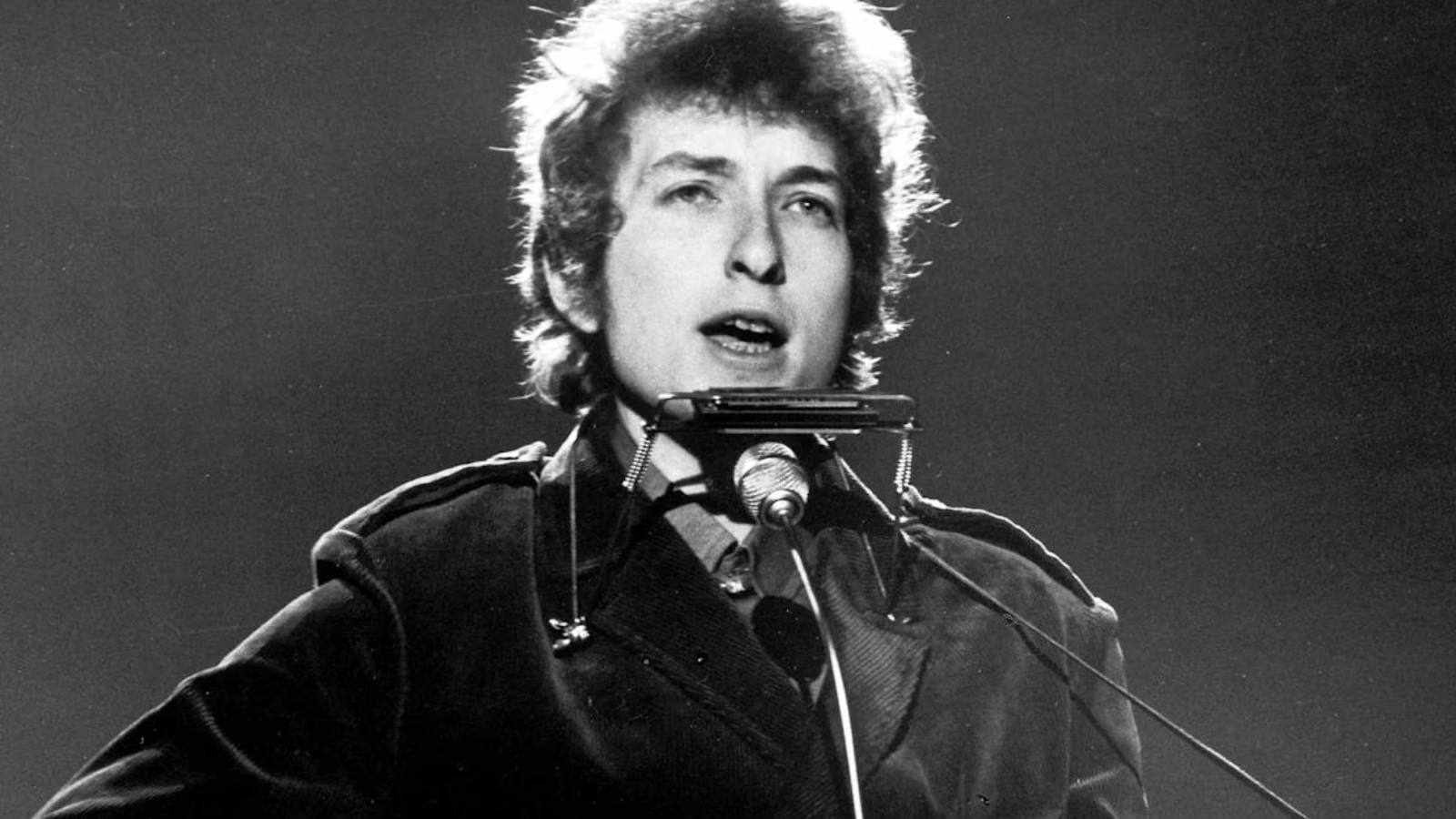
In the ever-evolving landscape of rock music, few moments stand out as profoundly transformative as Bob Dylan’s legendary 1965 concert. Recently, a compelling new documentary has shed light on this pivotal event, diving deep into how Dylan’s performance not only pushed musical boundaries but also fundamentally reshaped the cultural fabric of the 1960s. This film offers audiences an intimate look at the turbulent years when Dylan was breaking free from folk roots and stepping into the electric, rebellious world of rock and roll.
The Significance of the 1965 Concert in Rock History
Setting the Stage: The 1960s Cultural Revolution
The mid-1960s were a time of immense social upheaval. Civil rights movements, anti-war protests, and a revolution in youth culture defined an era that was eager for change. Music, as always, was at the forefront of this transformation—serving as a voice for a generation craving expression, freedom, and authenticity. Bob Dylan emerged as an iconic figure during this time, initially celebrated as a folk singer-songwriter whose lyrics encapsulated the spirit of rebellion.
However, Dylan’s musical journey took an audacious turn when he decided to plug in his electric guitar during his 1965 concerts, a move that ignited controversy and excitement alike. This transition was not merely musical but deeply symbolic—challenging traditional norms and expectations about authenticity and artistic integrity.
The 1965 Concert: A Defining Moment
The documentary intricately details Dylan’s performance at the Newport Folk Festival in 1965, a concert that became a symbol of artistic daring and revolution. In front of a skeptical crowd, Dylan took the stage with electric instruments, performing tracks that would soon dominate rock playlists. This act was more than a mere musical choice; it was a bold statement that signaled the emergence of a new, rebellious form of art.
- Electric Revelation: Dylan’s shift from acoustic to electric guitar challenged perceptions and sparked heated debates about authenticity in folk-rock.
- Public Reaction: The audience’s mixed reactions ranged from enthusiastic applause to outright booing, embodying the tension between tradition and innovation.
- Music Industry Impact: The concert marked the beginning of Dylan’s influence over the evolving rock scene, inspiring countless musicians to experiment beyond conventional boundaries.
The Impact on Rock Music and Cultural Identity
Breaking Musical Barriers
The documentary explores how Dylan’s electrification became a catalyst that propelled rock music into new territory. His willingness to blend poetic lyricism with amplified sound challenged the norms of folk music and paved the way for what would become classic rock and alternative genres. Artists who followed, such as The Beatles, Jimi Hendrix, and The Doors, drew inspiration from Dylan’s fearless innovation, emphasizing that music could be both socially conscious and sonically disruptive.
Redefining Authenticity and Protest
Dylan’s 1965 concert also redefined the role of music as a tool for protest and social commentary. His lyrics, often poetic and layered with meaning, addressed issues such as war, inequality, and political unrest. The documentary emphasizes how this concert signaled a shift where music became a platform for activism, inspiring generations to use their art for social change.
Legacy and Continuing Influence
Decades later, Dylan’s bold move remains a powerful symbol of artistic integrity and innovation. The new documentary highlights stories from musicians, critics, and fans who attest to the enduring influence of that iconic 1965 performance. It also delves into Dylan’s evolution over the years, from folk icon to electric pioneer, illustrating how risk-taking in art can lead to lasting cultural change.
Behind the Scenes of the Documentary
In-Depth Interviews and Rare Footage
The documentary offers an array of exclusive interviews with music historians, fellow artists, and even some audience members who witnessed the event firsthand. These insights provide a multifaceted perspective on Dylan’s performance and its repercussions. Rare footage, still photos, and original recordings bring viewers closer to that historic moment, emphasizing its raw energy and emotional intensity.
Investigating the Myths and Realities
One of the film’s strengths is its nuanced approach that disentangles myth from reality. It explores the preconceptions surrounding Dylan and his electric phase, illustrating how initial resistance eventually gave way to widespread admiration. Through this lens, the documentary advocates for viewing artistic evolution as a natural and necessary process for cultural growth.
Why This Documentary Matters
This film is not just a retrospective on Dylan’s concert; it is a celebration of artistic daring and a reminder that sometimes, the boldest moves lead to the most significant societal shifts. By contextualizing the 1965 performance within the broader narrative of the civil rights movement, the anti-war protests, and the youth-led revolution, the documentary underscores how music acts as a mirror and catalyst for change.
Whether you are a lifelong Dylan fan or a newcomer interested in the roots of modern rock, this documentary offers valuable insights into how one concert redefined what music could be and do. It inspires current and future artists to embrace risk, challenge norms, and use their craft as a powerful voice for societal progression.
Conclusion
As the new Bob Dylan documentary powerfully illustrates, the 1965 concert was more than a musical milestone; it was a cultural upheaval that pushed boundaries and expanded horizons. Dylan’s courage to innovate continues to resonate, reminding us that true art often involves taking risks and challenging established norms. This film stands as a testament to the enduring power of music as a tool for both artistic expression and social change.
For more updated news please keep visiting Hourly Prime News.