

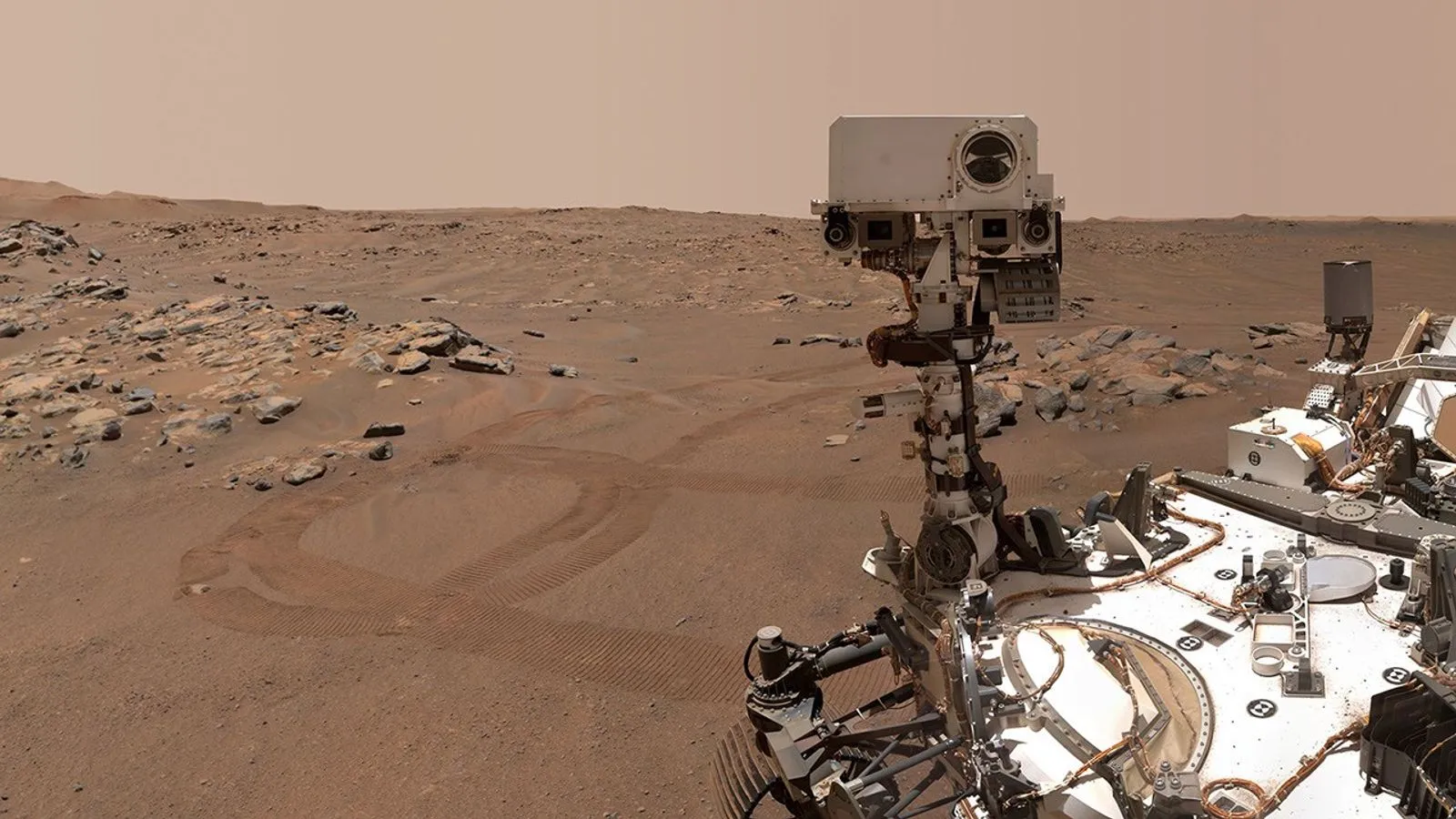
NASA’s Perseverance rover has been on a relentless quest to uncover the secrets of Mars, the red planet that has tantalized scientists and explorers for decades. Since its arrival on the Jezero Crater, a site believed to have once hosted a lake and river delta, Perseverance has been diligently analyzing the Martian landscape for signs of past life and habitability. Recent findings indicate that the rover is closer than ever to potentially discovering definitive signs—or biosignatures—that could confirm extraterrestrial life forms or their remnants on Mars.
Understanding the importance of this mission is crucial. Mars, with its similar geology and environmental conditions to Earth millions of years ago, presents an ideal candidate for discovering traces of past life. If Perseverance finds compelling evidence—such as organic molecules, mineral formations indicative of biological activity, or biosignatures—this could revolutionize our understanding of life’s universality and origins. The potential discovery could also guide future missions, including human exploration and advanced sample-return projects.
Recent Breakthroughs and Key Discoveries
The scientific community and NASA have been closely monitoring Perseverance’s latest discoveries, which are shedding light on the planet’s ancient environment. Among the most significant is the detection of potential biosignatures within Martian rocks. According to reports, the rover has identified complex organic molecules—carbon-based compounds that are essential building blocks for life as we know it.
In addition to organic molecules, NASA scientists have found mineral deposits and chemical markers consistent with redox reactions—processes often associated with microbial life. For instance, the presence of specific mineral and organic associations in the Jezero Crater suggests that the environment once supported life or could have preserved organic material for billions of years.
Understanding the Environment of Jezero Crater
Redox-driven Mineral and Organic Associations
Recent research, notably published in Nature, points to the redox-driven mineral and organic associations present in Jezero Crater. These mineral structures could have been formed in aqueous environments with microbial activity and are considered promising targets for biosignature analysis. The geochemical evidence aligns with the hypothesis that Mars once had a habitable environment capable of supporting microbial life.
Potential Biosignatures and Their Implications
NASA’s ongoing analysis indicates that certain mineralogical formations on Mars could be residual biosignatures—evidence of past biological processes. These are often characterized by fossilized microbial colonies or chemical imprints left in rocks. The rover’s instruments, including the SHERLOC and PIXL spectrometers, are carefully examining these formations, seeking patterns and compositions that resemble those produced by living organisms on Earth.
Significance of Recent Discoveries
The importance of these findings cannot be overstated. As reported by NASA, the detection of potential biosignatures marks a pivotal point in planetary exploration. It enhances the possibility that Mars was once a cradle of life, mirroring early Earth conditions. If confirmed, these signs could be the closest we have ever come to discovering extraterrestrial life—and could fundamentally alter our perception of life’s existence beyond Earth.
What Makes Perseverance’s Mission Unique?
- First Attempt to Collect and Cache Samples for Future Return: Perseverance is not just analyzing surface samples but is also collecting core samples that could someday be brought back to Earth for detailed study.
- Advanced Scientific Instruments: Equipped with cutting-edge technology, the rover’s tools allow for detailed chemical, mineralogical, and organic analysis directly on Mars.
- Targeted Exploration of Habitability Indicators: The mission specifically targets environments where life could have existed, focusing on ancient lakebeds and deltas.
- Integration of Robotic & AI Capabilities: Perseverance’s autonomous operations enable it to explore hazardous or inaccessible terrain efficiently, maximizing scientific yield.
Future Prospects and Next Steps
The ongoing discoveries inspire optimism about what lies ahead. As Perseverance continues its exploration, the next crucial phase involves careful analysis of collected samples and testing hypotheses about Mars’ past habitability. These endeavors will guide NASA’s decisions regarding potential landing sites for future human missions and sample return missions involving more sophisticated laboratories on Earth.
Meanwhile, the broader scientific community eagerly awaits confirmation of biosignatures or evidence of past microbial life. Such a breakthrough could herald a new era in astrobiology, pushing the boundaries of our knowledge about life’s resilience and ubiquity across the cosmos.
The Broader Impact of These Discoveries
The implications extend beyond planetary science. Confirming evidence of past life on Mars would ignite curiosity and inspire generations worldwide. It would also influence future space policies, international collaborations, and the search for life on other celestial bodies like icy moons in the outer solar system.
Despite the profound excitement, experts caution that interpreting biosignatures requires meticulous analysis to differentiate biological signatures from abiotic processes. Regardless, Perseverance’s latest findings are a significant stride towards answering some of humanity’s most profound questions: Are we alone? Did life once flourish on another planet?
Conclusion
As NASA’s Perseverance rover approaches what could be a historic milestone in astrobiology, the world’s eyes are on Mars. The mission exemplifies human ingenuity, curiosity, and perseverance—traits that drive us to explore the unknown. While definitive proof of life remains elusive, each discovery brings us closer to unraveling the mysteries of the red planet and our universe.
With every analysis and sample, Perseverance brings us nearer to unlocking whether life once thrived on Mars or if the planet still holds microbial whispers waiting to be uncovered. The next few years could well be the most exciting in space exploration history.
For more updated news please keep visiting Hourly Prime News.