

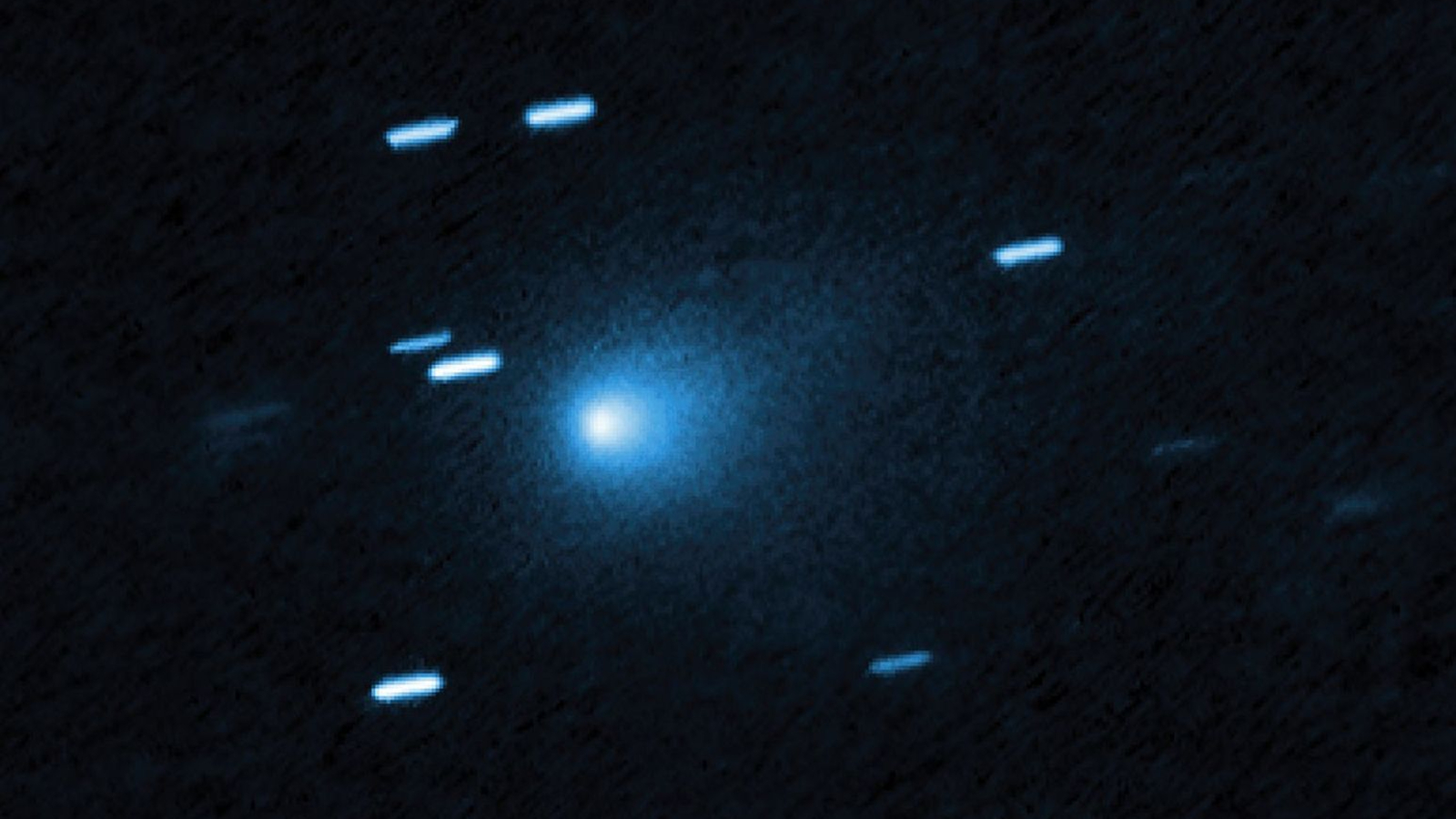
The cosmos continues to surprise and fascinate humanity with its endless mysteries and breathtaking phenomena. Among the most captivating celestial visitors are comets—frozen remnants from the early days of our solar system that occasionally put on spectacular displays when they approach the Sun. NASA, the United States’ premier space agency, is gearing up for a major reveal that promises to deepen our understanding of these icy wanderers. With the upcoming unveiling of new, high-resolution images of comet 3I/ATLAS captured by spacecraft and telescopes, both scientists and space enthusiasts are on the edge of their seats.
Unveiling the Mysteries of Comet 3I/ATLAS
Comet 3I/ATLAS was discovered relatively recently, but it has already become a subject of intense study and interest within the astronomical community. The comet, which was first spotted in 2019, quickly garnered attention due to its unusual activity and potential for a spectacular apparition in 2020. Named after the Asteroid Terrestrial-impact Last Alert System (ATLAS) that discovered it, this interstellar visitor is not just any comet—scientists believe it might have origins outside our solar system, making it akin to the famous ‘Oumuamua that captured global intrigue.
Why Is this Unveiling Important?
- Scientific Insights: The images NASA plans to reveal could shed light on the composition, structure, and behavior of interstellar objects that pass through our neighborhood, offering clues about the composition of other star systems.
- Understanding Cometary Dynamics: Observing how 3I/ATLAS reacts to solar radiation and gravitational forces can help refine models about comet formation and evolution.
- Potential for Discoveries: Unique features observed in these images might point toward phenomena previously unknown, such as unusual ice formations, surface activity, or even signs of alien technology—speculations that ignite curiosity.
The Technologies Behind the Stunning Images
The upcoming image releases will be a fusion of data gathered from NASA’s spacecraft and terrestrial telescopes. These advanced tools combine high-resolution imaging capabilities with spectroscopic analysis, enabling scientists to dive deeper into the comet’s mysteries. For instance:
- Spacecraft-based Imaging: Spacecraft such as the Hubble Space Telescope and specialized missions to comets like Rosetta have set the stage for detailed observances. With new missions targeting interstellar objects, NASA can now capture images with unprecedented clarity.
- Ground-based Telescopes: Large observatories around the world, including the European Southern Observatory, utilize sophisticated adaptive optics to adjust for atmospheric interference, producing clearer images of distant celestial objects.
When and How to Watch the Big Reveal
The excitement around the unveiling is palpable, with NASA announcing specific dates and times for the public to witness this scientific milestone. According to the latest reports:
- April 25th, 2024, at 3 p.m. EST — NASA will host a live stream on their official channels, showcasing the images and discussing their significance.
To watch the event as it unfolds, viewers can tune into NASA’s official YouTube channel or follow their social media updates for real-time information and commentary. This transparent approach allows the global community to partake in this astronomical event, nurturing a greater appreciation for space exploration and discovery.
The Significance of the Upcoming Image Revelation
This event is more than just a gallery opening; it is a window into the universe’s old and mysterious materials that predate our solar system. Each pixel in these images could hold the key to understanding fundamental questions:
- Where did this interstellar comet originate? Is it an object flung from a distant star, or could it even hold clues about planetary formation in other solar systems?
- Is there any evidence of alien technology or extraterrestrial life? While speculative, these questions fuel the scientific community’s curiosity and drive future missions.
- How do interstellar objects differ from native comets? Studying 3I/ATLAS may reveal unique properties that distinguish it from comets originating within our solar system, reshaping our understanding of cosmic diversity.
The Broader Implications for Space Exploration
Discoveries like this have far-reaching impacts beyond academic curiosity. They influence:
- Future Missions: Data gathered will guide the design of spacecraft that could intercept or study other interstellar objects, providing direct samples or images for detailed analysis.
- Astrobiology: Understanding comet compositions aids in assessing the delivery of organic molecules and water to early Earth—key factors in the origins of life.
- Public Inspiration: These discoveries resonate with the human spirit of exploration, inspiring new generations to pursue careers in science, technology, engineering, and mathematics.
What Experts Are Saying
Many renowned astronomers and space scientists are eager to see the new images. Some hint at the possibility that 3I/ATLAS could be more than a simple comet:
Harvard astronomer Avi Loeb suggests that the anomalies observed in 3I/ATLAS might be indicative of alien technology or something completely unfamiliar, unlike typical comets or asteroids.
Similarly, data from European and NASA’s own missions have supplied vital clues on the path and behavior of this interstellar visitor, fueling debates and hypotheses about its true nature.
Final Thoughts
As NASA prepares to unveil these stunning images, the world holds its breath, eager to take a closer look at a visitor from beyond our solar neighborhood. The data derived from these images will undoubtedly deepen our knowledge about the universe, its origins, and possibly, the existence of extraterrestrial life. Whether it is a simple icy body or a relic with a story to tell from distant worlds, comet 3I/ATLAS continues to remind us of the vast, mysterious universe that awaits discovery.
With this incredible event on the horizon, space agencies, scientists, and passionate enthusiasts are encouraged to stay tuned and participate in the scientific dialogue. The universe is speaking, and these images are our window into its silent, majestic story.
For more updated news please keep visiting Hourly Prime News.