

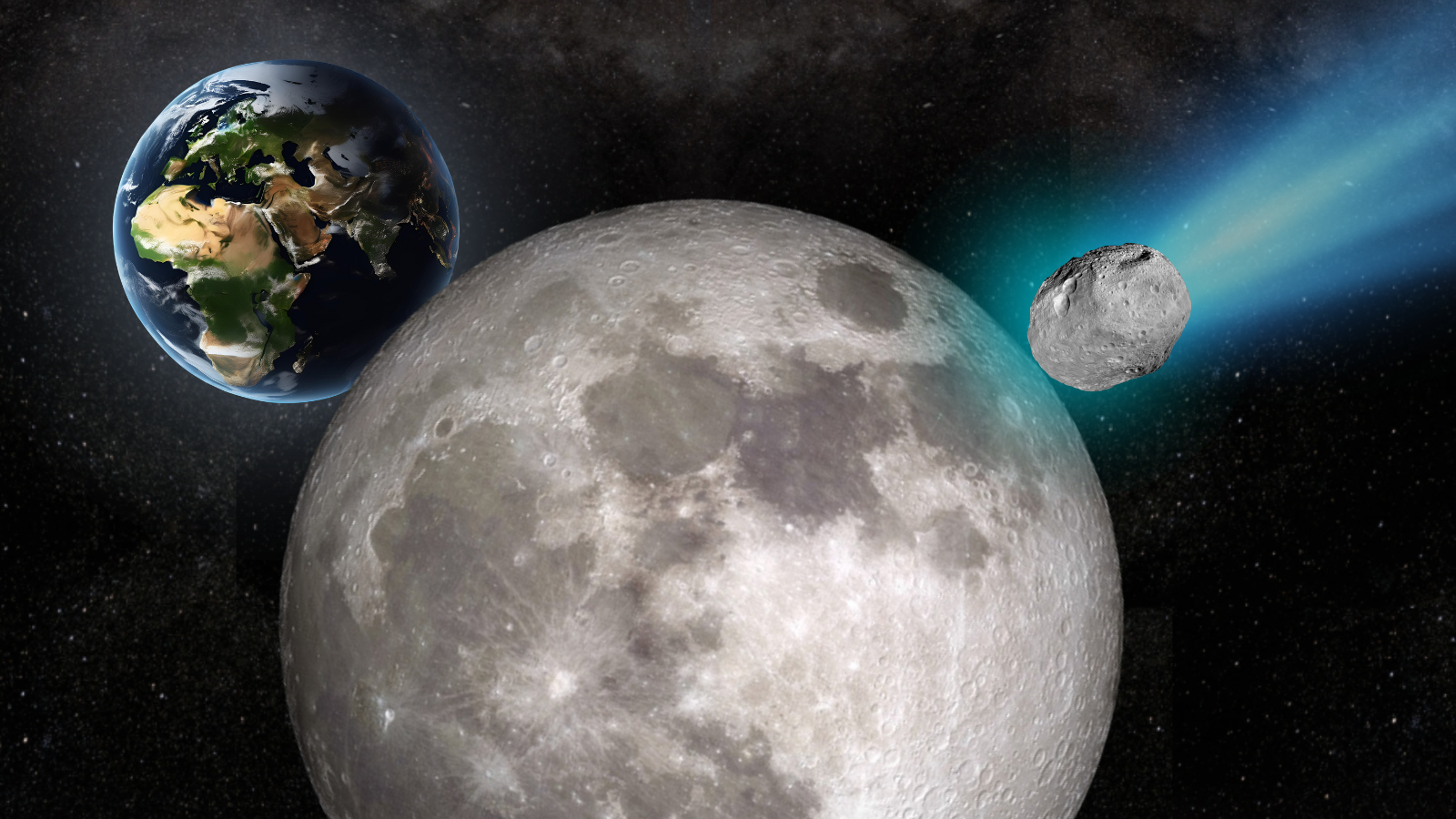
The Moon, long considered a silent, static celestial body, has now revealed itself to be far more dynamic than previously thought. Recent scientific investigations, notably by Chinese scientists, have uncovered evidence that lunar quakes—commonly known as moonquakes—could be responsible for initiating landslides on the lunar surface. This discovery marks a significant advancement in our understanding of lunar geology, with implications for future lunar exploration, habitat stability, and scientific research.
Understanding Moonquakes: Nature and Causes
Moonquakes are seismic activities that occur on the Moon’s surface, similar in concept to earthquakes on Earth but differing in their origin, intensity, and frequency. Unlike terrestrial earthquakes, which are primarily caused by tectonic plate movements, moonquakes result from various lunar-specific factors, including tidal stresses, thermal contraction, and internal planetary processes.
According to recent findings, moonquakes can be divided into several categories:
- Deep Moonquakes: Occur hundreds of kilometers below the surface, often linked to tidal forces exerted by Earth’s gravity.
- Shallow Moonquakes: Happen closer to the surface and tend to be more intense, potentially affecting the lunar landscape directly.
- Thermal Moonquakes: Caused by the expansion and contraction of the lunar crust due to extreme temperature variations between lunar day and night.
What makes recent research particularly intriguing is the discovery that these moonquakes aren’t just isolated seismic events but can actively induce geological instability on the lunar surface, leading to landslides and other debris movements.
Chinese Scientists’ Breakthrough: Linking Moonquakes to Landslides
Multiple sources, including reports from News18 and the NDTV, cite Chinese scientific teams’ recent breakthroughs in lunar geology. These teams have used advanced remote sensing, seismic data, and lunar surface analysis to establish a link between moonquakes and landslides.
Key findings include:
- The identification of numerous recent landslides on the lunar surface, particularly near known seismic activity zones.
- Evidence that moonquakes are acting as natural triggers, destabilizing loose regolith and causing mass movements of lunar material.
- Documentation of landslides occurring in regions with a history of shallow moonquakes, indicating a causal relationship.
This discovery is significant because it suggests that the lunar surface is more geologically dynamic than previously considered. It also implies that continued seismic activity could pose hazards for future lunar bases, rovers, and exploration missions.
The Mechanics of Lunar Landslides Triggered by Seismic Activity
Unlike Earth, where water, weathering, and human activity heavily influence landslide phenomena, lunar landslides are primarily driven by seismic stresses and gravitational effects. The Moon’s surface is covered with loose, fragmented debris—regolith—that is susceptible to movement if perturbed sufficiently.
When a moonquake occurs, seismic energy propagates through the lunar crust, applying stress to the overlying loose material. If the stress exceeds the stability threshold of the regolith, it can mobilize, resulting in a landslide.
Additional factors amplifying this process include:
- Differences in gravity: Lunar gravity is about 1/6th of Earth’s, which influences the dynamics and speed of landslides.
- Crack propagation: Seismic waves can open or extend surface cracks, creating pathways for debris to slide.
- Thermal effects: The extreme temperature variations cause the surface to expand and contract, weakening the structural integrity of surface layers over time.
Implications for Lunar Exploration and Settlement
This revelation raises critical considerations for the future of lunar exploration, habitation, and scientific exploration. As efforts to establish sustainable lunar bases accelerate, understanding the seismic activity and potential landslide zones is essential for safety and infrastructure planning.
Potential implications include:
- Site Selection: Identifying stable regions with minimal seismic activity will be vital for establishing permanent structures.
- Structural Design: Lunar habitats and scientific instruments need to be designed to withstand seismic vibrations and possible mass movements.
- Rover Navigation: Adjusting navigation routes to avoid landslide-prone areas, especially in regions near known tectonic activity.
- Long-term Geological Monitoring: Continual seismic monitoring could help predict and mitigate hazards resulting from moonquakes.
Future Directions and Research
The Chinese scientists’ findings open numerous avenues for future research:
- Developing detailed seismic maps of the lunar interior to better understand quake-prone zones.
- Studying the mechanical properties of lunar regolith and how seismic waves influence its stability.
- Simulating landslide scenarios to assess risks for lunar habitats and equipment.
- Investigating whether similar seismic-triggered landslides occur in other extraterrestrial bodies, such as Mars or asteroids.
Furthermore, the ongoing Lunar Reconnaissance Orbiter (LRO) and upcoming missions like China’s Chang’e series and NASA’s Artemis program will provide invaluable data to deepen our understanding of lunar geodynamics.
Conclusion
The recent discovery that moonquakes can trigger landslides signifies a paradigm shift in lunar geology. While the Moon may appear serene from afar, beneath its surface lies a world of active geological processes, posing both challenges and opportunities for future explorers. Recognizing and understanding these seismic phenomena will be crucial for safeguarding human endeavors on the lunar surface, ensuring sustainable and safe exploration.
As science continues to peel back the layers of lunar mysteries, one thing is clear: the Moon is not just a silent witness to Earth’s history but an active, evolving body with its own dynamic story to tell.
For more updated news please keep visiting Hourly Prime News.