

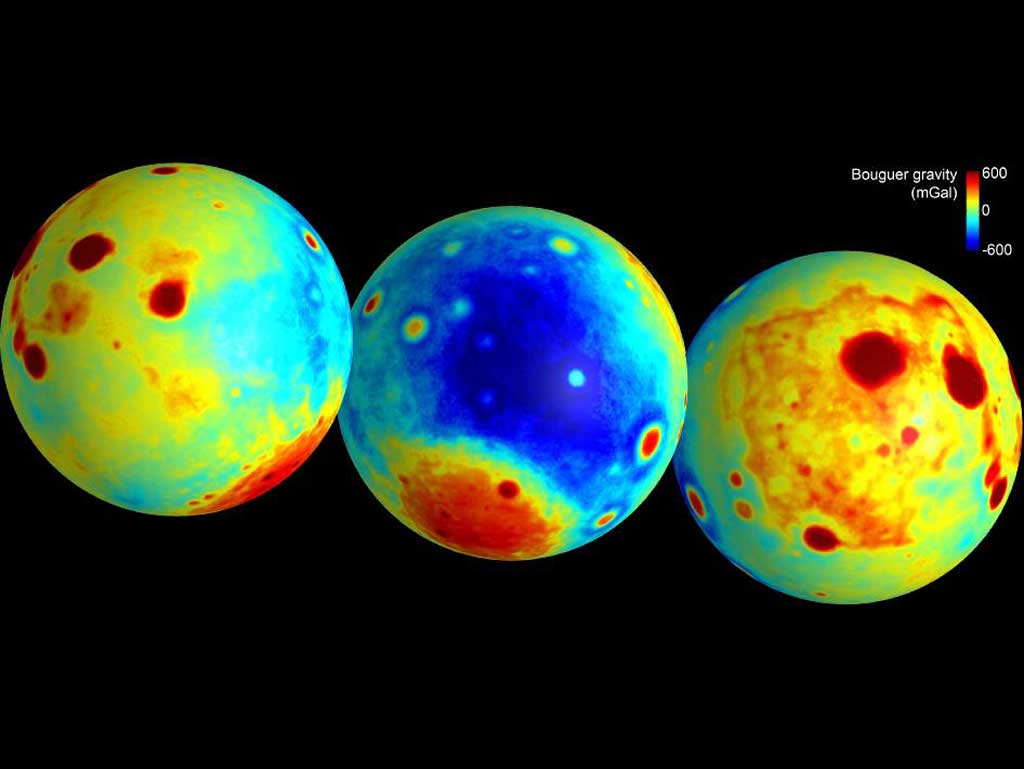
The Moon has long been a celestial body of intrigue for scientists and astronomers. Despite decades of exploration, many aspects of its internal structure remain a mystery. Central to understanding the Moon’s geological history and evolution is the study of its crustal thickness. Recent advancements in seismic and gravity data collection have dramatically improved our knowledge of this vital characteristic. In particular, data from the Apollo lunar seismic experiments and NASA’s Gravity Recovery and Interior Laboratory (GRAIL) mission have offered unprecedented insights into the lateral variations in lunar crustal thickness. This detailed exploration combines these datasets to paint a clearer picture of the Moon’s internal makeup and geological evolution.
The Significance of Crustal Thickness in Lunar Geology
The crust of the Moon plays a crucial role in shaping its geological features and understanding its formation and evolution. Variations in crustal thickness influence volcanic activity, tectonic movements, and the distribution of minerals and other resources. By measuring the differences in crustal thickness across the lunar surface, researchers can identify regions with unique geological histories and processes.
Understanding these variations also provides context for the Moon’s thermal history, the composition of its mantle, and the mechanisms that shaped its surface over billions of years. Fine-scale mapping of crustal thickness enhances our knowledge about impact crater formation and helps evaluate potential landing sites for future lunar missions.
Data Sources and Methodologies
Apollo Seismic Data
During the Apollo missions, seismometers were deployed on the lunar surface, providing invaluable seismic data. These instruments recorded moonquakes, meteorite impacts, and other seismic activities. The seismic data allowed scientists to infer subsurface structures, particularly crustal thickness, by analyzing seismic wave propagation through the Moon’s interior.
Key aspects of Apollo seismic analysis include:
- Analysis of seismic wave travel times
- Modeling of seismic wave velocities in lunar materials
- Mapping of internal layering and crustal boundaries
GRAIL Gravity Data
NASA’s GRAIL mission, launched in 2011, used two spacecraft flying in tandem to measure the Moon’s gravity field with extraordinary precision. Variations in gravitational pull across the lunar surface reflect internal density distributions, which correlate with crustal thickness and mantle composition.
Through gravity modeling, scientists derive density contrasts and establish lateral variations in crustal thickness. This gravity data complements seismic measurements by providing a global perspective and high-resolution gravity maps that identify mass anomalies below the surface.
Combining Seismic and Gravity Data
By integrating Apollo seismic data with GRAIL gravity measurements, researchers can achieve a more comprehensive and accurate assessment of the lunar crust. The seismic data provides direct constraints on wave velocities and layering, while gravity data supplies density and mass distribution information. This synergy enhances the resolution and confidence in crustal thickness models.
Key Findings on Lunar Crustal Variations
Major Lateral Variations
The combined analysis of Apollo and GRAIL datasets reveals significant lateral heterogeneity in the lunar crust. Notably:
- The lunar highlands exhibit an average crustal thickness ranging from approximately 30 to 50 kilometers, with some regions showing even thicker crusts. These regions are characterized by complex geological histories involving extensive crustal differentiation and volcanic activity.
- The lunar maria, in contrast, generally possess thinner crusts, often less than 30 kilometers thick. These basaltic plains reflect large-scale volcanic episodes that partially melted and resurfaced the lunar surface.
Regional Variations and Anomalies
Research highlights specific regions where crustal thickness significantly deviates from the average:
- South Pole-Aitken Basin: The largest and oldest impact basin on the Moon exhibits anomalously thin crustal regions, possibly due to crustal excavation and thinning caused by massive impacts.
- Procellarum KREEP Terrane: Known for its enriched mineralization, this region shows notable gravity anomalies correlating with localized crustal thinning and volcanic activity.
- Northeastern Highlands: These areas demonstrate a deep crust that indicates complex impact history and geological layering.
Implications for Lunar Formation and Evolution
The observed variations support models of lunar formation involving a mixture of differentiated layering, impact events, and volcanic resurfacing. The presence of thick and thin crustal regions reflects heterogeneous accretion and subsequent geological activity. Moreover, the influence of large impact basins demonstrates how impact processes have reshaped the lunar interior over millions of years.
Impact on Future Lunar Research and Missions
This detailed understanding of crustal variations informs future lunar exploration efforts. Accurate models of crustal thickness are critical for:
- Landing site selection, especially for subsurface resource extraction and scientific research
- Designing drilling and excavation strategies for lunar bases
- Interpreting other geophysical datasets, including heat flow and magnetic measurements
Furthermore, these insights foster the development of refined planetary differentiation and impact models, enriching our comprehension of planetary science in general.
Conclusion
The integration of Apollo seismic data with GRAIL gravity measurements has significantly advanced our knowledge of the Moon’s internal structure, particularly its lateral crustal thickness variations. Recognizing the heterogeneous distribution of crustal thickness across the lunar surface underscores the complexity of its geological past and provides a foundation for ongoing exploration. As technology progresses and more data becomes available, our understanding of lunar geology will continue to deepen, unveiling more secrets held beneath the Moon’s surface.
For more updated news please keep visiting Hourly Prime News.