

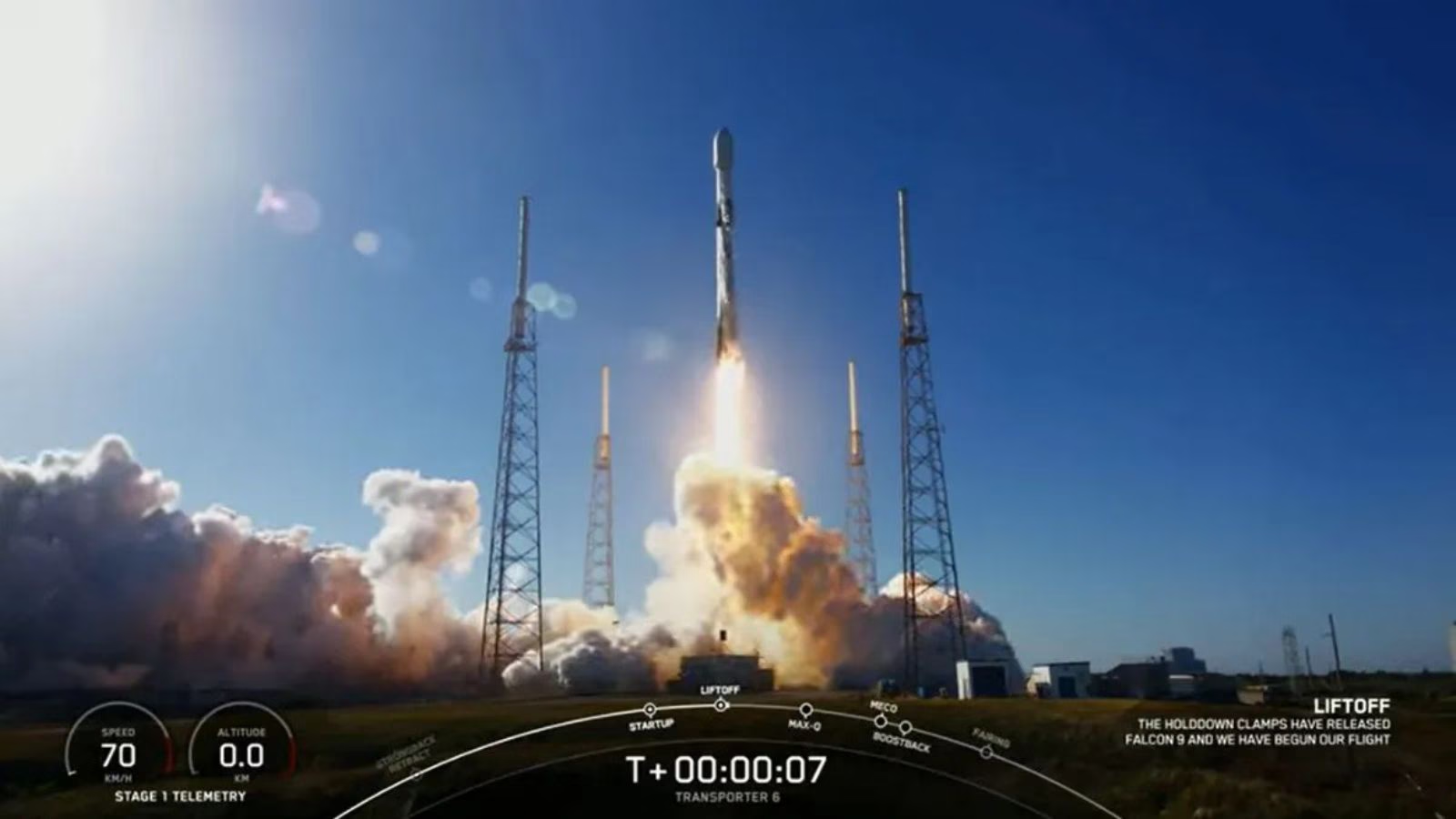
SpaceX, the pioneering aerospace manufacturer founded by Elon Musk, continues to revolutionize space technology with its consistent and ambitious launch schedule. Their Falcon 9 rockets and Starlink satellite constellation are at the forefront of today’s space missions, enabling both commercial and government organizations to access space like never before. In this article, we delve into the recent launches, technological advancements, and the broader implications of SpaceX’s endeavors.
Understanding SpaceX Falcon 9: The Workhorse of Modern Space Travel
At the heart of SpaceX’s success is the Falcon 9 rocket, celebrated for its reusability and cost efficiency. The Falcon 9 is a two-stage rocket designed to carry satellites, cargo, and even humans into space. Its first stage is capable of landing vertically, allowing for rapid reuse, which significantly reduces launch costs and environmental impact.
Recently, SpaceX has achieved several notable Falcon 9 launches, each marking a milestone in space technology. These launches not only demonstrate technological prowess but also expand the capabilities of satellite deployment and space infrastructure.
Starlink: The Global Internet Revolution
Starlink remains one of SpaceX’s most ambitious projects, aiming to provide high-speed, low-latency internet across the globe. With thousands of small satellites orbiting Earth, Starlink is designed to bridge the digital divide, especially in remote and underserved regions. Recent launches have seen SpaceX deploying dozens of Starlink satellites in a single mission, increasing coverage and network robustness.
Recent Starlink Missions: Highlights and Impact
- Massive Deployment of Satellites: SpaceX has launched batches of 24 and even 28 Starlink satellites in a single mission, significantly boosting network capacity. For instance, a recent launch from Florida saw 28 satellites lifted into orbit on a single day, further enhancing global connectivity.
- Adding to the Network During Outages: When faced with an unexpected network outage, SpaceX responded swiftly by deploying more satellites—28 in one go—to restore and strengthen the Starlink network. This agility underscores the reliability and resilience built into their satellite constellation.
- Live Tuning and Monitoring: SpaceX provides live streams for these launches, allowing enthusiasts and stakeholders to witness the deployments in real-time and understand their significance.
Recent Launches: A Detailed Overview
1. SpaceX Falcon 9 & Starlink Missions
According to Jagran Josh, recent updates have shed light on several crucial launches. These missions highlight SpaceX’s ability to deploy multiple satellites in quick succession, maintaining their schedules and achieving milestones that were once deemed unachievable.
2. Live Stream and Community Engagement
One of the key aspects of SpaceX’s launches is their transparency and engagement with the global community. They often host live streams, allowing space enthusiasts and the general public to witness history in the making. The recent deployment of 28 Starlink satellites, for instance, was streamed live, showcasing the precision and coordination of the launch team.
3. Upcoming Launches and How to Tune In
SpaceX frequently schedules new launches, often within days of previous missions. The Indian Express reports that a new batch of 24 Starlink satellites is planned for deployment, with live streams available for viewing. Such transparency fosters global interest in space exploration and demonstrates SpaceX’s commitment to open communications.
The Significance of These Missions
Each launch carries multiple implications:
- Accelerating Global Internet Access: Starlink’s expanding constellation promises to provide reliable internet to remote areas, significantly impacting education, business, and emergency services worldwide.
- Reducing Costs and Increasing Sustainability: SpaceX’s reusability approach reduces launch costs, making space more accessible for diverse applications.
- Advancing Space Technology: Innovations like rapid satellite deployment, real-time monitoring, and network resilience set new standards for space missions.
Challenges and Future Outlook
While SpaceX’s progress is impressive, it is not without challenges. Regulatory hurdles, space debris concerns, and technological complexities pose ongoing risks. Nonetheless, SpaceX’s vision remains ambitious: to create a fully reusable rocket system, expand its satellite network, and eventually enable human colonization of Mars.
Upcoming launches are expected to focus on deploying larger batches of Starlink satellites, testing new rocket variants, and supporting NASA’s Artemis missions. Their strategy emphasizes sustainability, scalability, and affordability, ensuring that space remains accessible for future generations.
Conclusion
SpaceX’s latest Falcon 9 launches and the relentless expansion of the Starlink constellation exemplify their leadership in commercial spaceflight. These missions are more than just technological feats; they are steps towards a more connected and sustainable future. By consistently pushing the boundaries of innovation, SpaceX is shaping the future of space exploration and terrestrial connectivity.
Whether you are an enthusiast, a researcher, or a casual observer, the ongoing developments provide a fascinating glimpse into humanity’s journey into the cosmos and the technological marvels driving this adventure.
For more updated news please keep visiting Hourly Prime News.