

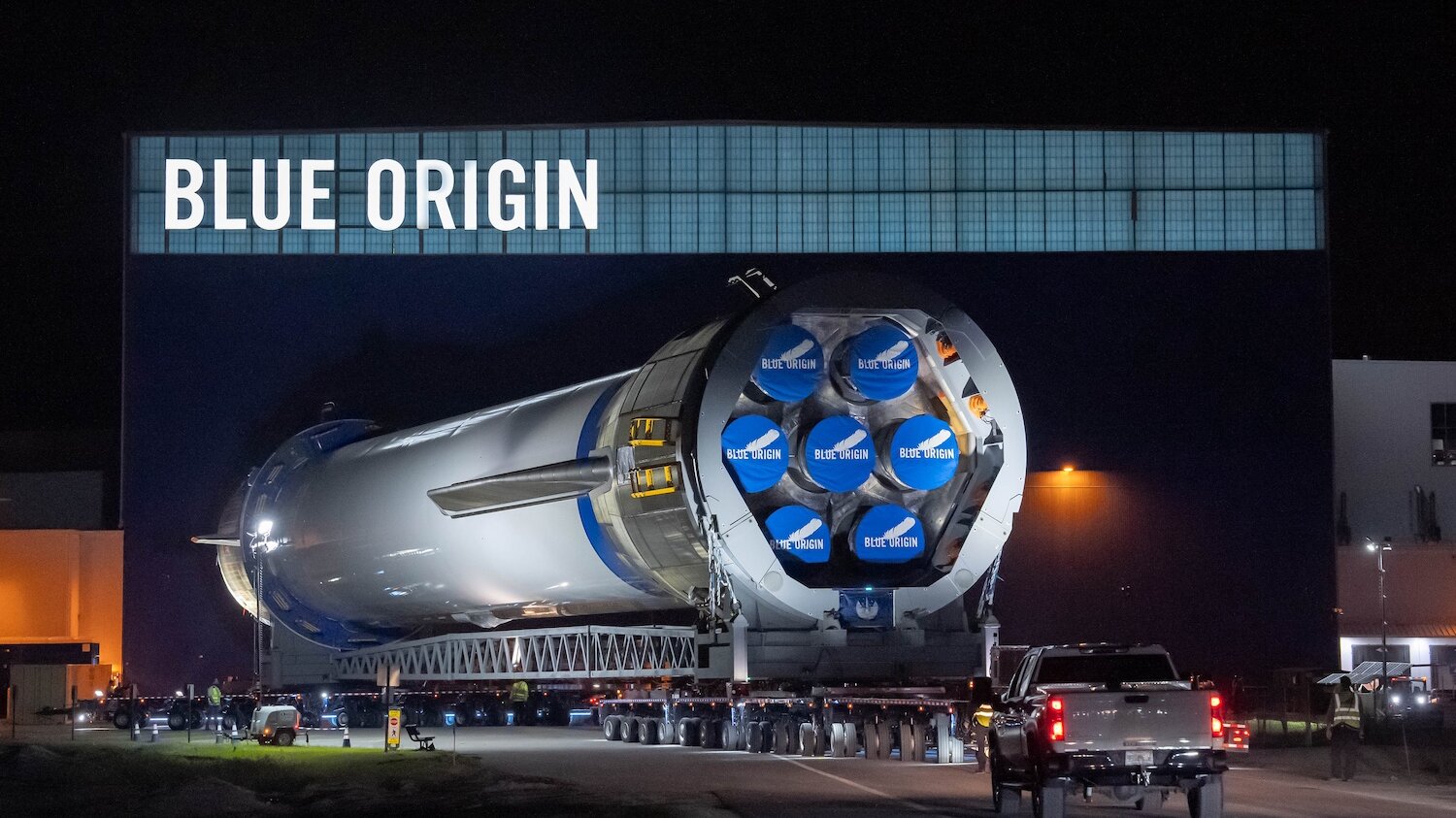
In recent developments that have set the space community abuzz, Jeff Bezos’s Blue Origin is aggressively gearing up for a major milestone: launching a rocket destined for Mars. This ambitious venture marks a significant leap forward in private space exploration, fueling hopes that humanity might soon expand its presence beyond Earth’s orbit. Blue Origin, renowned for its innovative rocket technology and visionary goals, has been silent but persistent about its plans, which are now approaching realization. As the countdown begins, experts and enthusiasts alike are eager to understand the implications of this mission and what it signifies for the future of interplanetary travel.
Upcoming Launch Details and Timeline
According to recent reports from India Today, the launch is scheduled very soon—within a timeline that suggests Blue Origin is making practical strides toward its interplanetary ambitions. While an exact date has yet to be officially announced, industry insiders indicate that plans are firmly on track for a launch window in the near future.
The Technology Behind the Mission
Central to Blue Origin’s Mars mission is their powerful new rocket, the New Glenn. The recent rollout and testing of New Glenn have generated excitement as the rocket is now being fine-tuned for interplanetary travel. According to Space, the rocket is equipped with cutting-edge propulsion systems capable of traversing vast distances in space, ensuring payload delivery to Mars. The company has also been testing booster stages and other critical components in the lead-up to the launch, emphasizing reliability and safety at every step.
International Collaboration and Media Engagement
In an increasingly interconnected era of space exploration, Blue Origin is collaborating with esteemed agencies like NASA. As reported by NASA (.gov), the media are being invited to witness this historic launch. This transparent collaboration bodes well for the future of shared knowledge and technological advancements in space missions.
Future Prospects: Moving Toward Human Settlement on Mars
The blueprint for Blue Origin’s Mars mission involves not only deploying satellites or unmanned probes but ultimately paving the way for human colonization. With the development of large-scale payload capacities and sustainable life support systems, the company envisions a future where humans set foot on Mars, establishing permanent settlements. The unveiled booster for the Mars mission, as covered by WESH, underscores this progressive step toward interplanetary colonization, laying down the technological groundwork necessary for human survival on Mars.
Challenges and Considerations
Despite the enthusiasm and technological marvels, several challenges must be addressed before humans can safely land and thrive on Mars. These include:
- Long-duration space travel — ensuring crew health and safety during months-long journeys
- Life support systems — creating sustainable habitats with reliable supplies of air, water, and food
- Radiation protection — shielding astronauts from cosmic rays and solar radiation
- Surface operations — developing robust rovers and infrastructure for resource extraction and habitat construction
Blue Origin’s ongoing tests and developments indicate a rigorous approach to overcoming these hurdles. The successful launch and subsequent missions will provide critical data, shaping strategies for safer, more efficient Mars exploration.
The Broader Context of Space Race
Blue Origin’s plans are part of a larger movement that includes other space agencies and private companies like SpaceX. As the “space race” shifts from government-led efforts to ambitious private sector initiatives, the landscape of interplanetary travel is fundamentally changing. These efforts are driven not only by scientific curiosity but also by commercial incentives, future resource extraction, and the desire for humanity to become a multi-planetary species.
Jeff Bezos’s vision, in particular, emphasizes the importance of sustainability, innovation, and regional collaboration to ensure that space becomes an accessible frontier for future generations. The upcoming Mars launch is a testament to how far human ingenuity has come—and how much more lies ahead in this exciting journey.
Conclusion
The upcoming launch of Blue Origin’s rocket to Mars symbolizes a pivotal moment in space exploration history. With technological advancements, strategic collaborations, and a pioneering spirit, the company is charting a path toward making extraterrestrial habitation a reality. While challenges remain, the progress made so far indicates a promising future where human footprints could soon inhabit the red planet.
As we await the launch, the scientific community, policymakers, and space enthusiasts must stay engaged and supportive of these endeavors that could define the next era of human exploration and expansion.
For more updated news please keep visiting Hourly Prime News.