

Iran has long been known for its rigorous enforcement of Islamic dress codes, especially the mandatory hijab for women. The country’s policies are rooted in conservative religious values that dictate not only attire but also social behaviors and personal freedoms. Central to this enforcement is the role of officials and their families who often symbolize the state’s stance on morality and societal discipline.
In this environment, any deviation from the prescribed norms—particularly by those directly connected to enforcement authorities—receives intense scrutiny and often fuels widespread debate regarding personal freedoms, gender rights, and the societal expectations imposed by the government.
The Controversy Unfolds: The Wedding Dress Revelation
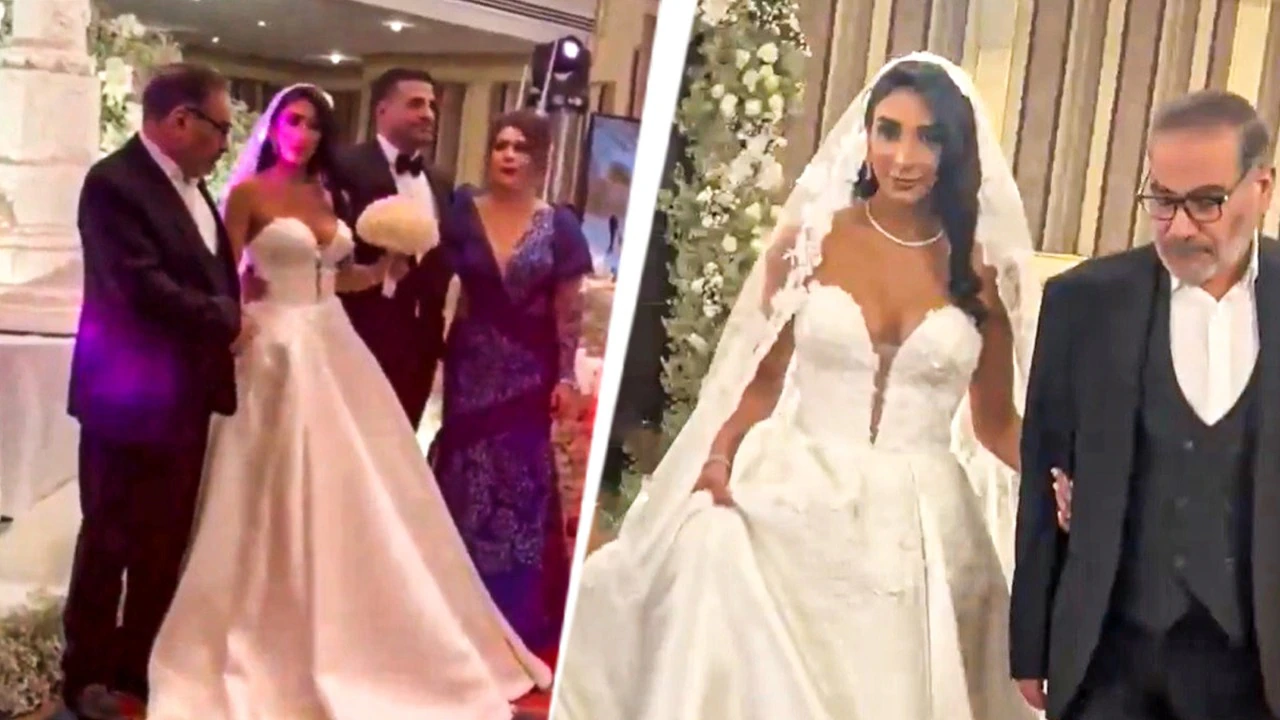
Recently, a controversy erupted across Iranian social media and news outlets when the wedding photos and videos of the daughter of one of Iran’s prominent hijab enforcers surfaced publicly. What made this revelation so provocative was not merely the decor or the wedding ceremony itself but her choice of attire—specifically, her wedding dress.
Unlike the traditional conservative expectations often associated with public appearances in Iran, her dress was notably modern, strapless, and seemingly revealing—a stark contrast to the strict dress codes advocated by her parent and the state authorities. This apparent defiance has ignited fierce discussions online and in public forums, illustrating a society grappling with conflicting values of modernity and conservatism.
Public Reaction: Outrage and Divisions
The reaction to her wedding dress was swift and polarized. Many critics viewed this as a provocative act—a blatant challenge to societal norms and government policies. Social commentators and activists argued that such displays undermine the moral fabric that the regime seeks to uphold. They expressed concern that these actions could incite others to question the authority of the enforcement agencies and the state’s moral standards.
On the other hand, some segments of the population and international observers viewed this incident as a sign of changing attitudes among Iranian youth and elites, especially women. For them, her decision was seen as an act of personal liberation and an assertion of individual rights against oppressive societal expectations.
Such contrasting viewpoints highlight the growing cultural divide within Iran, where generations and social groups are increasingly polarized between traditional values and liberal aspirations.
Implications for Iranian Society and International Perception
The controversy surrounding the wedding dress has broader implications beyond just a single family. It shines a spotlight on the ongoing tensions within Iranian society regarding gender equality, personal freedoms, and the state’s role in regulating individual choices.
Furthermore, the incident has garnered international media attention, contributing to the global image of Iran as a nation caught between conservative religious governance and a society eager for change. The visuals of a daughter of a prominent hijab enforcer in such a revealing dress challenge the regime’s narrative of moral authority and raise questions about the sincerity and consistency of its moral enforcement policies.
The Role of Social Media and Viral Content
Social media platforms played a pivotal role in amplifying the controversy. Videos and photographs of her wedding became viral, sparking widespread discussion and backlash. The viral nature of this content has both empowered individual expression and intensified debates about morality, double standards, and social control in Iran.
Platforms like Twitter, Telegram, and Instagram have become arenas for Iranians to voice dissent, share personal stories, and critique the state’s policies. The viral spread of this wedding revelation exemplifies how digital media challenges traditional authority and fosters cultural dialogue—even in highly restrictive environments.
Responses from Authorities and Public Figures
The reaction from authorities has been predominantly defensive, with some officials condemning the act as inappropriate. Certain conservative voices have labeled such behavior as disrespectful to Islamic values and a threat to societal stability.
Meanwhile, some reform-minded activists and women’s rights advocates used this incident to push for greater individual freedoms and challenge the hypocrisy they perceive in the regime’s dress code enforcement. They argue that personal expression, even in a traditional society, should be respected and that double standards exist when officials or their families breach moral codes without repercussions.
Potential Future Developments and Societal Shifts
This controversy may mark a turning point in discussions about morality, gender roles, and state authority in Iran. It underscores a society divided—where conservative forces push for strict adherence to Islamic norms, and progressive voices push for reform and personal liberties.
It is plausible that such incidents could catalyze further debates, protests, or demands for social change, especially among the youth who increasingly seek freedom of expression and personal choice. Conversely, the regime could respond with tighter restrictions, attempting to reassert control over public morality.
Conclusion: A Society at a Crossroads
The wedding dress reveal of the daughter of Iran’s hijab enforcer is more than just a celebrity scandal; it is emblematic of larger societal tensions. It acts as a mirror reflecting the profound struggles within Iran—balancing tradition with modern aspirations, morality with personal freedom, and state authority with individual rights.
As Iran continues to navigate these complex issues, incidents like this will likely remain focal points for debate, activism, and societal evolution. The world watches with keen interest as Iran’s cultural landscape shifts—sometimes subtly, sometimes dramatically.
For more updated news please keep visiting Hourly Prime News.