

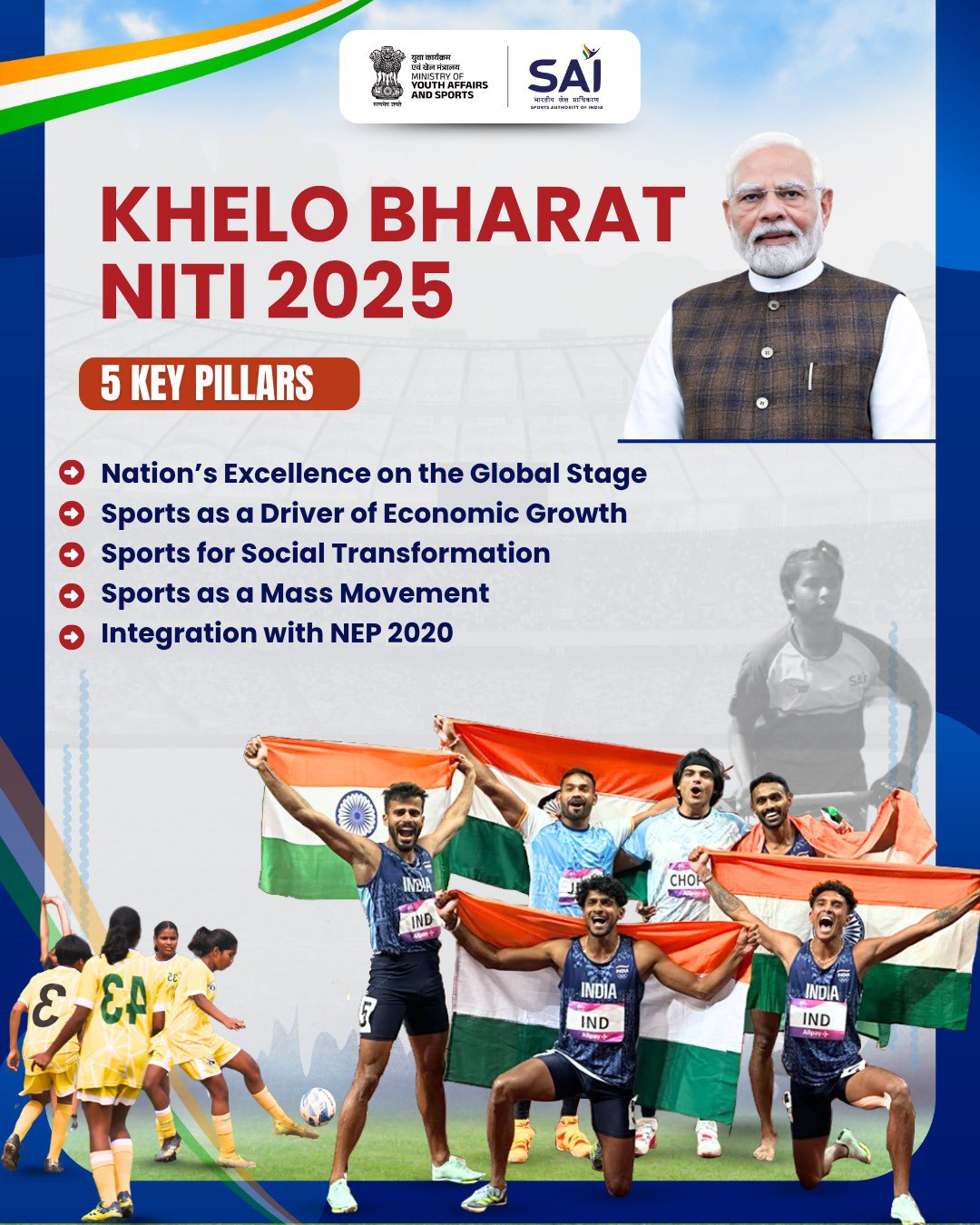
In a major stride towards transforming its sports ecosystem, the Indian government has recently announced the approval of the Khelo Bharat Niti—a comprehensive national sports policy aimed at catapulting India into the top 5 countries in the global sports arena. This ambitious initiative, backed by the Cabinet’s nod, signifies India’s renewed focus on nurturing athletic talent, infrastructure development, and fostering a vibrant sporting culture across the country.
Understanding the Vision Behind Khelo Bharat Niti
The Khelo Bharat Niti is more than just a policy; it embodies a strategic vision to establish India as a dominant force in world sports within the next decade. The government recognizes the immense potential that sports hold—not only as a tool for fostering national pride and unity but also as a catalyst for economic growth and youth engagement.
According to officials, the initiative aims to:
- Enhance India’s sporting infrastructure at the grassroots, state, and national levels.
- Identify and nurture talent through systematic scouting and training programs.
- Improve athletes’ performance with access to advanced scientific coaching and facilities.
- Promote sports literacy and physical education among students.
- Encourage private sector participation and corporate sponsorships in sports development.
Strategic Components of Khelo Bharat Niti
The success of this ambitious plan hinges on several strategic components designed to create a sustainable and inclusive sports ecosystem in India:
1. Infrastructure Development
One of the key pillars of the initiative is massive investment in building state-of-the-art sports facilities across urban and rural India. This includes constructing new stadiums, athletic tracks, swimming pools, and training centers equipped with modern amenities. Special focus is placed on underserved regions to ensure equitable access to sports infrastructure.
2. Talent Identification and Development
The policy emphasizes early detection of sporting talent through school-level programs, regional talent hunts, and national-level competitions. Selected athletes will be provided with tailored training modules, scientific coaching, nutritional support, and mental health services to enhance their performance.
3. Performance Enhancement and Scientific Support
Recognizing the importance of technology and innovation, the scheme plans to integrate sports science, data analytics, and sports medicine to optimize athlete performance. Collaborations with international sports research institutions are also envisaged.
4. Education and Awareness
To foster a sports-friendly culture, government agencies will collaborate with schools and colleges to incorporate structured physical education curricula. Awareness campaigns will promote healthy lifestyles and dispel myths related to sports participation.
5. Promoting Private Sector and International Collaboration
Leveraging the expertise and investments of private entities is crucial for ensuring sustainable growth. The policy encourages partnerships with global sports organizations and companies to facilitate training, infrastructure, and event hosting.
Anticipated Impact of the Khelo Bharat Niti
The government is optimistic that the implementation of Khelo Bharat Niti will:
- Boost India’s medal tally at upcoming international competitions such as the Olympics, Asian Games, and Commonwealth Games.
- Elevate grassroots sports participation across socio-economic backgrounds.
- Create employment opportunities in sports management, coaching, healthcare, and related sectors.
- Enhance India’s global sporting reputation as a nation committed to excellence and inclusivity.
Challenges and Road Ahead
While the declaration is indeed promising, several challenges could influence the effectiveness of Khelo Bharat Niti:
- Funding and resource allocation must be sustained and strategically managed to ensure infrastructure and program rollouts.
- Talent retention and consistent training are vital, especially in competitive sports where slight margins decide outcomes.
- Coordination among multiple stakeholders including state governments, private partners, and educational institutions requires robust governance frameworks.
- Cultural shifts towards valuing sports equally alongside academics are necessary to nurture sporting aspirations among youth.
Nonetheless, with committed leadership and strategic execution, these hurdles can be surmounted. The policy’s success hinges on long-term planning, inclusivity, and continuous evaluation.
Global Context: Where Does India Stand?
India’s current standing in global sports is evolving. While the country boasts a rich history in traditional sports and has produced outstanding athletes in disciplines like cricket, badminton, and wrestling, it remains behind top-tier nations in Olympic medal counts.
Countries like the USA, China, Russia, and European nations dominate the international sports scene largely due to extensive infrastructure, talent pipelines, and sports science integration. India’s ambition to break into the top five globally is thus ambitious but achievable, provided it accelerates its efforts and learns from international best practices.
Conclusion: A New Era of Indian Sports
The approval of the Khelo Bharat Niti marks a significant milestone in India’s quest for sporting excellence. It reflects a holistic approach that intertwines infrastructure, talent development, scientific support, and cultural change. As India prepares to host and participate in more international sports events, this initiative could very well shape the future of the nation’s sports landscape.
By fostering a culture of health, discipline, and national pride, the Khelo Bharat Niti stands to transform India from a sports participant to a global sports powerhouse. The journey ahead is challenging but laden with immense possibilities—a future where Indian athletes shine brightly on the world stage.