

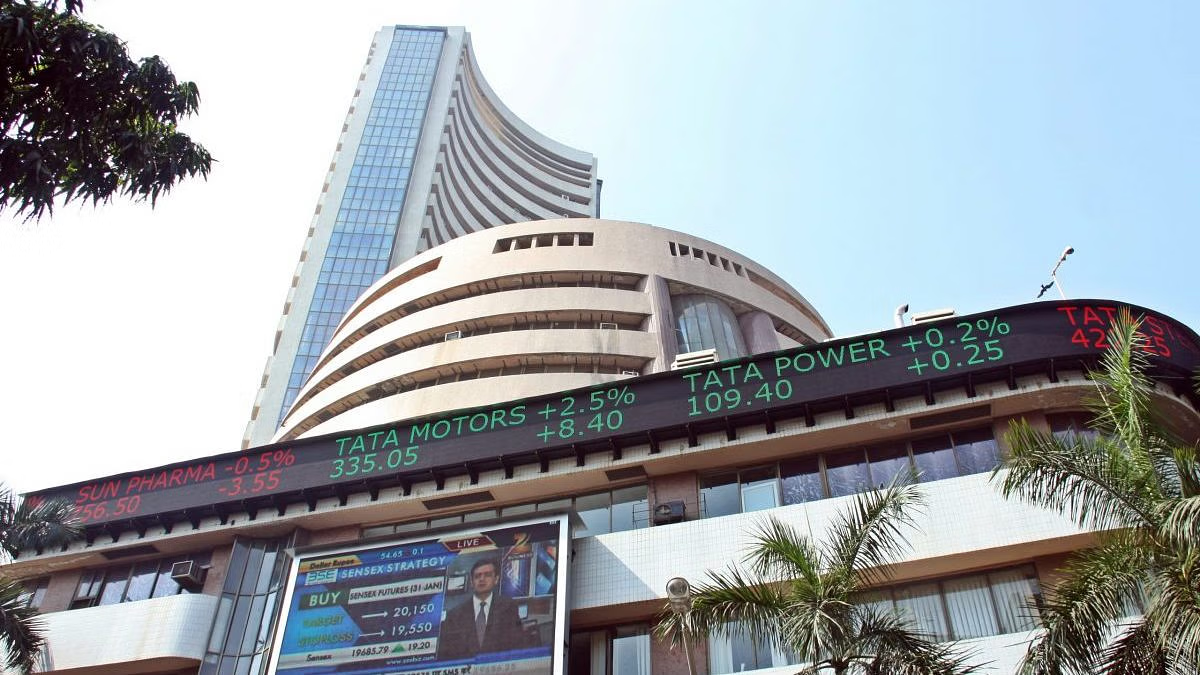
India’s Dominance in Global Index and Stock Options Market: An Unprecedented Achievement
India has emerged as a **behemoth in the global financial landscape**, securing an extraordinary 80% market share in index and stock options trading worldwide. This remarkable feat not only underscores India’s rapid ascent in the financial sector but also reflects the country’s strategic reforms, technological advancements, and investor confidence that have propelled its stock market to unprecedented heights. According to Uday Kotak, a prominent figure in the financial industry, this dominance is a result of various interconnected factors that have positioned India distinctly ahead of other economies.
Understanding the Magnitude of India’s Market Share
The statement made by Uday Kotak, as reported by The Economic Times, emphasizes the sheer scale of India’s influence in this sector:
“India has a staggering 80% market share in global index and stock options,” said Uday Kotak. This statistic is not just a number but a testimony to India’s strategic initiatives, growth-focused policies, and a burgeoning base of innovative market participants that collectively contribute to such dominance.
While at first glance, an 80% market share might seem implausible for an emerging economy, it’s crucial to consider the context:
- **Massive participation by Indian investors** in global trading platforms.
- Introduction of innovative trading technologies and platforms that have made access seamless.
- Growing confidence of international investors in India’s economic stability and growth potential.
- Robust regulatory frameworks that ensure transparency and security for traders.
- Expansion of derivative products, especially index and stock options, which have seen exponential growth in demand.
Factors Driving India’s Market Supremacy
1. Increasing Retail Investor Participation
Over the past few years, India has witnessed a surge in retail investor participation, driven by the proliferation of mobile trading apps, ease of account opening, and targeted financial literacy initiatives. The younger demographic, tech-savvy and eager to diversify their investment portfolios, has played a pivotal role in boosting market volumes, particularly in index and stock options trading.
2. Technological Advancements and Infrastructure
Indian stock exchanges have invested heavily in upgrading their technological infrastructure, resulting in faster trade executions, minimal downtime, and enhanced security. These improvements have made global trading platforms more accessible and reliable for Indian investors, fueling domestic participation in international derivatives markets.
3. Policy Reforms and Regulatory Support
The government and regulatory bodies like SEBI (Securities and Exchange Board of India) have introduced reforms aimed at making the market more transparent and investor-friendly. Initiatives such as increased margin limits, better settlement systems, and stricter compliance norms have created a conducive environment for trading in derivatives.
4. Growing Role of Institutional Investors
Institutional players, including some of the largest mutual funds, pension funds, and foreign institutional investors, have increased their exposure to Indian assets. Their active participation has amplified liquidity and contributed significantly to India’s global market dominance.
Implications of India’s Market Dominance
The exceptional control India has over the global index and stock options market brings several strategic advantages:
- Enhanced Global Influence: India’s economic policies and market trends now can influence global markets more significantly than ever before.
- Boost to Domestic Economy: Increased trading activity translates to higher liquidity, better price discovery, and more robust economic growth.
- Attraction of Foreign Investment: The perception of a strong, liquid derivatives market attracts more foreign investors, further fueling India’s economic growth.
- Innovation and Market Development: Dominance spurs continuous innovation in product offerings, trading infrastructure, and investor outreach programs.
Challenges and Future Outlook
Despite these positives, India’s market dominance does present certain challenges that need strategic handling:
- Market Volatility: Heavy concentration in derivatives can sometimes lead to increased volatility, necessitating robust risk management protocols.
- Regulatory Oversight: Maintaining transparency and preventing market manipulation demand vigilant regulatory oversight, especially with such dominance.
- Global Competition: While currently dominant, other emerging economies are continually refining their markets; maintaining leadership will require ongoing innovation and reforms.
- Technology Risks: As trading becomes more digital, cybersecurity threats and system failures could impact market stability.
Looking ahead, India’s prospects in the global index and stock options domain seem bright. The government’s focus on financial inclusion, fintech innovation, and international collaborations positions the country for sustained growth in this sector. Additionally, continuous expansion of derivatives offerings, such as commodity options and currency futures, could further deepen India’s footprint in global markets.
Conclusion
India’s reported 80% market share in global index and stock options highlights a transformative phase in its financial journey. It exemplifies how strategic reforms, technological advancements, and increased participation—both domestic and international—have synergized to make India a dominant player in derivatives trading. This achievement not only reflects India’s rising economic clout but also sets a benchmark for emerging markets seeking to carve their niche on the global stage.
As the Indian market continues to evolve, stakeholders—including policymakers, traders, and investors—must focus on sustainable growth, regulatory integrity, and technological resilience to sustain this momentum and maximize benefits for the wider economy.
For more updated news please keep visiting Hourly Prime News.