

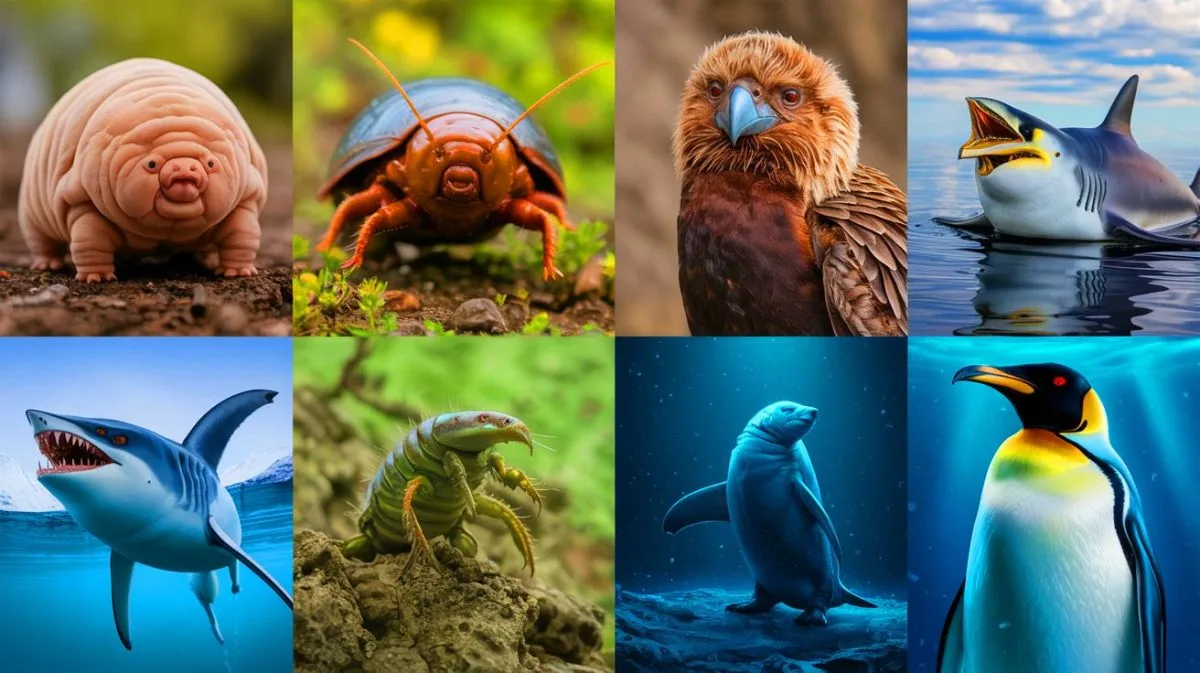
Earth is a planet of astonishing diversity, with ecosystems ranging from the lush rainforests and vibrant coral reefs to the arid deserts and frozen polar regions. While many life forms require hospitable conditions to survive, a fascinating subset of organisms have evolved the remarkable ability to thrive in some of the most extreme and inhospitable environments known to science. Recent discoveries continue to challenge our understanding of life’s resilience, revealing that complexity and adaptation can flourish even under conditions previously thought impossible for sustaining life.
Life in the Most Extreme and Unforgiving Places
Discoveries from the Antarctic and Arctic Regions
One of the most surprising revelations pertains to life beneath the icy sheets of the Arctic and Antarctic. Researchers have uncovered thriving microbial populations and microalgae that exist in environments with brutal temperatures and intense pressure. For example, scientists have identified active diatoms moving silently beneath Arctic ice, enduring temperatures as low as –15°C. These minute algae are not only surviving but actively migrating within the ice, a process once believed improbable at such frigid temperatures.
Similarly, studies focusing on Arctic ice have unveiled gliding algae at record lows in temperature, capable of moving within the ice’s internal structures. These organisms have developed unique biochemical adaptations, such as antifreeze proteins and specialized cell membranes, allowing them to function and propagate in conditions that would be lethal to most other forms of life. Their survival strategies include altering their metabolic pathways to operate efficiently at low temperatures and forming protective biofilms that shield them from extreme cold and UV radiation.
Exploring the Depths of the Earth’s Subsurface and Deep Ocean
Beyond the polar caps, life extends deep beneath our feet and into the ocean’s abyss. Scientists have found remarkable life forms thriving kilometers beneath the Earth’s surface, in hot, mineral-rich volcanic vents and in the deep-sea trenches. These extremophiles have adapted to utilize inorganic compounds like hydrogen sulfide and methane as energy sources, enabling them to survive in environments devoid of sunlight and oxygen. These discoveries expand the boundaries of where life can exist, suggesting that life might be more widespread in the universe than previously envisioned.
Incredible Organisms of the Deserts and High-Altitude Regions
Adaptations of Desert Creatures
The deserts, despite their lack of water and pervasive heat, are teeming with life. Creatures such as the desert beetle and various lizard species have evolved remarkable survival mechanisms. The **desert beetle**, for example, collects water from fog and dew, channeling it directly to their mouths using their uniquely structured exoskeletons. Likewise, many desert animals are nocturnal, reducing water loss and avoiding the extreme daytime heat.
High-Altitude and Cavern-Dwelling Creatures
High-altitude ecosystems present another set of challenges: low oxygen, high UV exposure, and temperature fluctuations. Yet, organisms like the Himalayan snowcock or the resident fauna of high-altitude caves demonstrate incredible adaptability. These animals have evolved physiological mechanisms such as increased hemoglobin affinity for oxygen and protective skin pigmentation to withstand harsh UV rays.
Microbial Marvels and Their Role in Extreme Environments
Microorganisms have proven to be the most resilient life forms, capable of surviving in conditions lethal to larger organisms. In the icy depths of the Arctic and Antarctic, microbes survive by producing antifreeze compounds, shielding themselves from freezing temperatures. They also engage in unique metabolic processes such as chemosynthesis, converting inorganic molecules into organic matter without sunlight. Recent research indicates that these microbes can remain dormant for extended periods, “coming alive” when conditions become temporarily favorable, thereby perpetuating their incredible resilience.
This microbial survival not only contributes to the ecological balance in extreme environments but also offers insights into potential biotechnological applications, including the development of cold-active enzymes and novel medicines.
The Significance of These Discoveries
The ongoing exploration of Earth’s most extreme habitats redefines our understanding of the possibilities of life. It demonstrates that life is incredibly adaptable, capable of co-opting even the harshest conditions for survival. These findings have profound implications beyond Earth; they suggest that extraterrestrial environments previously deemed uninhabitable—such as the icy moons of Jupiter and Saturn—could harbor microbial life.
Moreover, understanding how organisms survive in extreme environments can inspire innovations in medicine, biotechnology, and environmental management. For example, studying antifreeze proteins from Arctic microbes could lead to improved cryopreservation techniques, and insights into drought-resistant microbes may help develop crops capable of thriving in arid conditions amidst climate change.
The Role of Continual Exploration and Future Research
Despite the remarkable progress made, the Earth still holds countless secrets beneath its ice sheets, soil layers, and ocean depths. Advanced technologies, such as autonomous submarines, deep-drilling equipment, and remote sensing, are essential for exploring these hidden biomes. As scientists continue to uncover new microorganisms and adaptation strategies, our understanding of life’s potential grows more profound.
These endeavors not only satisfy scientific curiosity but also foster a broader appreciation of Earth’s resilience and the interconnectedness of life. Each discovery underscores the vital importance of preserving these fragile ecosystems, which harbor extremophiles that might one day provide solutions for human challenges or reveal extraterrestrial life possibilities.
Conclusion
In summary, **incredible creatures** are thriving in Earth’s harshest environments, showcasing nature’s extraordinary ability to adapt and thrive under conditions once thought impossible for life. Whether beneath polar ice, within deep ocean vents, or in arid deserts, these organisms exemplify resilience and innovation. Their existence challenges traditional notions of habitability and expands the horizons of astrobiology, biotechnology, and ecological conservation.
The continued study of these extremophiles reveals the profound capacity of life to persist against all odds, inspiring hope and curiosity about the resilience of nature. As science delves deeper into these hidden worlds, it is clear that our planet still holds many secrets, waiting to be uncovered by explorers with the spirit of discovery.
For more updated news please keep visiting Hourly Prime News.