

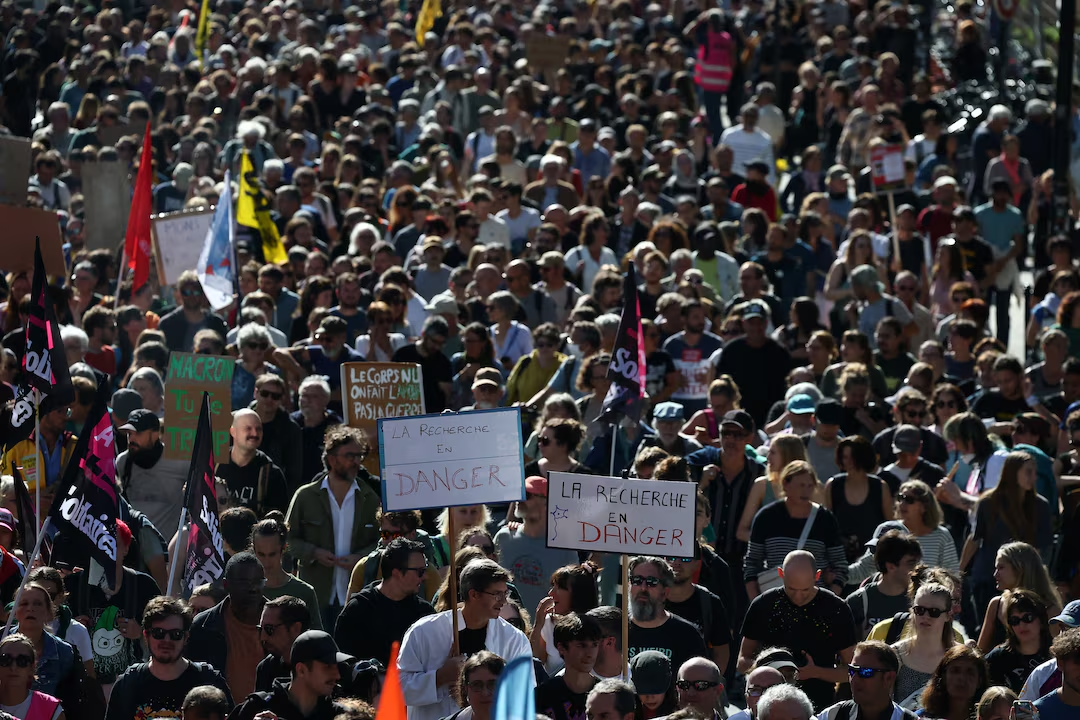
French Unions Strike Against Austerity Policies Targeting Macron Introduction: A Surge of Discontent in France In recent weeks, France has been witnessing an unprecedented wave of strikes and protests initiated primarily by **trade unions and civil society groups**. These collective actions are directed against the government’s escalating austerity measures and budget cuts, which many citizens and organizations perceive as detrimental to their livelihoods and social welfare.
The striking unions and the wider populace have intensified their demands, urging President Emmanuel Macron to reconsider and halt policies that threaten to deepen economic hardship for ordinary French citizens. Background: Economic Policies and Public Outrage Over the past year, Macron’s administration has pushed forward a series of austerity policies aimed at reducing public expenditure and reforming worker rights. While ostensibly designed to stabilize the economy and reduce public debt, these policies have faced fierce opposition from unions, workers, and opposition parties alike. Critics argue that these austerity measures disproportionately impact vulnerable groups, threaten public services, and exacerbate social inequalities.
This rising tension has culminated in mass mobilizations across France, with the central focus being on the ** September 18 nationwide strike**, which is poised to be one of the most significant protests in recent French history. Unions Lead Massive Strikes and Demonstrations The frontline of resistance comprises major French unions such as the CGT, FO, and other local and national labor groups. These organizations have called for widespread walkouts, marches, and industrial actions that have disrupted multiple sectors of the economy. Transport disruptions, including strikes by train conductors and airport personnel, have caused significant delays and cancellations, affecting both commuters and travelers. Historians and analysts note that the strikes extend beyond transportation, affecting sectors like education, healthcare, and public administration.
The protests have escalated into large-scale marches in Paris and other major cities, drawing thousands of citizens determined to make their voices heard. According to Reuters, the extent of unrest was clear as authorities reported over 94 arrests during recent marches. Government Response and Political Tensions President Macron’s government maintains that these austerity measures are necessary for France’s economic stability. However, the persistent strikes have put immense pressure on Macron’s leadership, exposing cracks in his economic reform agenda. The government has attempted to negotiate with union representatives, but the negotiations have so far failed to satisfy the protesters’ demands.
Reacting to widespread disruptions, many political analysts suggest that this wave of protests could undermine Macron’s authority and challenge his reform plans further. The upcoming strikes threaten to cause significant economic and social upheaval, raising questions about the future trajectory of France’s economic policy. Public Sentiment and the Broader Social Impact The protests reflect broader frustrations among the French populace, especially workers and middle-class citizens feeling that austerity policies threaten their job security, social services, and overall quality of life. These sentiments have been amplified by the government’s perceived insensitivity to public grievances. Furthermore, the ongoing unrest has led to confrontations with police, heightened media coverage, and debates across French political circles. The activism demonstrates the deep-rooted opposition to government austerity, especially at a time when economic recovery post-pandemic remains fragile.
What to Expect Moving Forward Analysts predict that the tension will persist in the coming weeks, culminating in the planned September 18 nationwide strike. This could potentially serve as a turning point in France’s socio-economic landscape: **Heightened unrest and possible escalation**: If the government does not address union concerns, protests may intensify, possibly leading to more violent clashes or widespread disruptions. **Political ramifications**: Macron’s popularity may decline further, with opposition parties gaining momentum by aligning with protester demands. **Economic impact**: Strikes affect transportation, tourism, and public services, with potential repercussions on the national economy, especially if they prolong or expand. Some experts suggest that Macron might be compelled to reconsider or soften some austerity policies to restore stability and public confidence.
The Significance of These Movements in Contemporary France These protests are not isolated events but are emblematic of wider challenges faced by European countries dealing with economic restructuring. France’s situation underscores the tension between austerity measures aimed at fiscal responsibility and the social obligation to safeguard workers’ rights and social protections. In essence, the unfolding labor unrest reflects the **urgent need for dialogue and compromise**—a test for Macron’s leadership and the resilience of French democracy. Conclusion The wave of strikes and demonstrations across France signals a critical juncture in the nation’s socio-political landscape.
The unions’ unwavering stance against austerity policies highlights growing public resistance and the potential implications for Macron’s government. As September 18 approaches, all eyes are on France to see whether the government will heed the demands of its citizens or face prolonged turmoil.The power struggle between economic reform and social justice remains at the forefront of French political discourse, with the outcome likely to influence policy directions for years to come. For more updated news please keep visiting Hourly Prime News.