

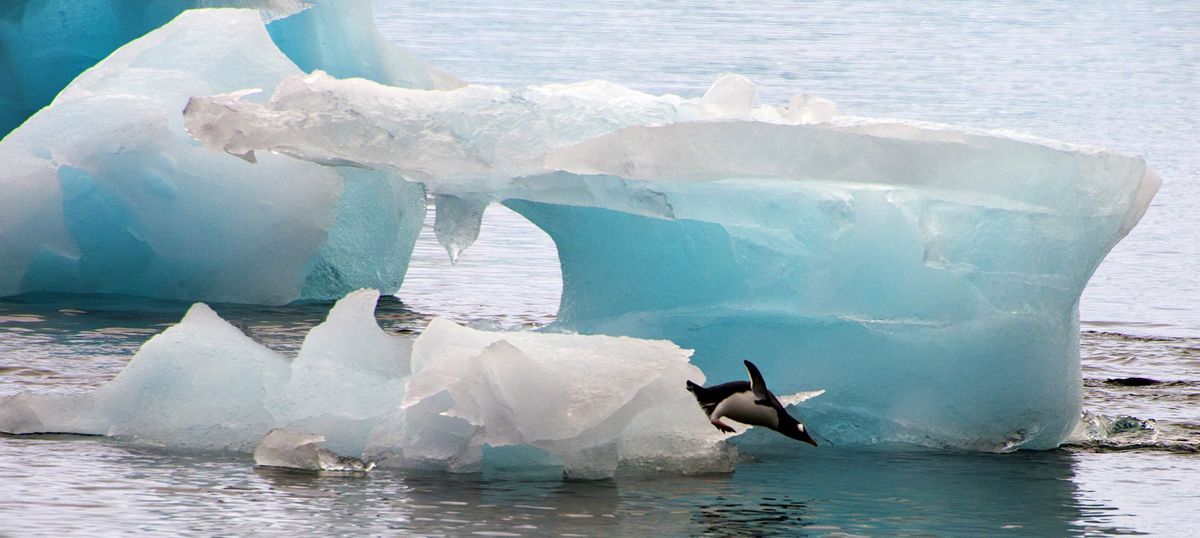
The icy continent of Antarctica has long been a mysterious and largely unexplored region. Its vast, frigid landscapes hide precious clues to Earth’s climatic past—clues that are now being uncovered by modern scientists and explorers. Recent expeditions aim to retrieve ancient ice samples from deep within the icy depths, promising vital insights into the history of our planet’s climate and warnings for its future.
The Significance of Ancient Antarctic Ice
Antarctic ice cores serve as natural time capsules, preserving a detailed record of Earth’s climate spanning millions of years. These frozen archives contain trapped air bubbles, particles, and isotopic compositions that reveal atmospheric composition, temperature variations, and even volcanic activity from epochs gone by. By analyzing these samples, researchers can piece together how the Earth’s climate has shifted over time, helping us understand natural variability and human impact.
Why is this important today? Because the current climate crisis demands a comprehensive understanding of Earth’s climatic history. The delicate balance of greenhouse gases, temperature fluctuations, and ice sheet dynamics recorded in these ancient ice cores are critical to predicting future climate scenarios. As scientists seek to understand the natural patterns, they also aim to identify how current rates of change compare and anticipate potential future outcomes.
Recent Expeditions and Discoveries
A series of recent exploratory missions, as highlighted by France 24—have revealed some groundbreaking findings:
- The pursuit of 6-million-year-old ice samples has unlocked a record of Earth’s warm periods in the distant past. These ancient samples show how high global temperatures once reached and the associated atmospheric conditions, providing a critical perspective on what ancient Earth’s climate was like and how it responded to natural and periodic stressors.
- Scientists also discovered evidence pointing to climate fluctuations that match well with Earth’s known geological record, indicating periods of significant warming and cooling over millions of years. Such insights are vital for comprehending how Earth’s climate might respond to current and future anthropogenic influences.
- Recent ice cores suggest that past warm periods often coincided with high greenhouse gas concentrations, underscoring the potent role of CO2 and methane in driving Earth’s temperature.
Unlocking Earth’s Climate Past: The Scientific Approach
The process of extracting these valuable ice cores is a complex and perilous endeavor. Researchers employ advanced drilling technologies capable of reaching depths of several kilometers, where the oldest ice resides. Once retrieved, these cores are transported to specialized laboratories for analysis.
Advanced techniques, such as mass spectrometry and isotope analysis, allow scientists to determine past atmospheric compositions with astonishing precision. They examine the trapped gases, aerosols, and organic matter, reconstructing a detailed picture of Earth’s climate at different times in history.
What the Ancient Ice Tells Us About Today’s Climate Crisis
The information from these ancient ice cores paints a compelling narrative. It demonstrates that Earth’s climate is highly sensitive to changes in greenhouse gases and that warm periods in Earth’s history often resulted in significant ice sheet melting, sea-level rise, and ecological shifts.
One of the key warnings from these findings is that current rates of greenhouse gas emissions are unprecedented and could push the climate system beyond natural variability thresholds. The lessons embedded in these icy records warn us that without urgent mitigation efforts, we risk triggering irreversible changes similar to past extreme warming events.
Moreover, the cores show that once the climate crosses certain tipping points, recovery may take thousands of years—much longer than human lifespans or political cycles. These ancient records serve as a stark reminder of the importance of taking decisive action today.
The Future of Antarctic Geological and Climate Research
Scientists continue to push the boundaries of exploration into the frozen continent. As technology advances, so does our capacity to uncover longer and more detailed climate records. The next phase involves drilling deeper and identifying more pristine samples that can shed light on Earth’s climate through different epochs, including periods of rapid change.
Collaborative international efforts are underway, involving governments, research institutions, and environmental organizations. These collaborations aim to develop sustainable methods of operation, minimize environmental impact, and expand our ability to monitor Earth’s climate system effectively.
Implications and Call for Action
The revelation of Earth’s history through Antarctic ice cores motivates a sense of urgency. Our planet’s climate has experienced shifts in the past—sometimes even more dramatic than what we are witnessing today—but these transitions happened over millennia, allowing ecosystems and societies to adapt or recover.
Today, the pace of climate change is unprecedented in human history. The ancient ice records underline the importance of reducing greenhouse gas emissions, conserving polar environments, and implementing policies based on scientific evidence.
In conclusion, exploring and studying these ancient ice layers not only satisfy scientific curiosity but also act as a vital tool in our understanding of Earth’s climate. As explorers and scientists continue to uncover more secrets from Antarctica, their work becomes ever more critical in guiding humanity toward sustainable actions.
By learning from the distant past documented in these icy vaults, we can attempt to steer our future toward a more stable and resilient global climate.
For more updated news please keep visiting Hourly Prime News.