

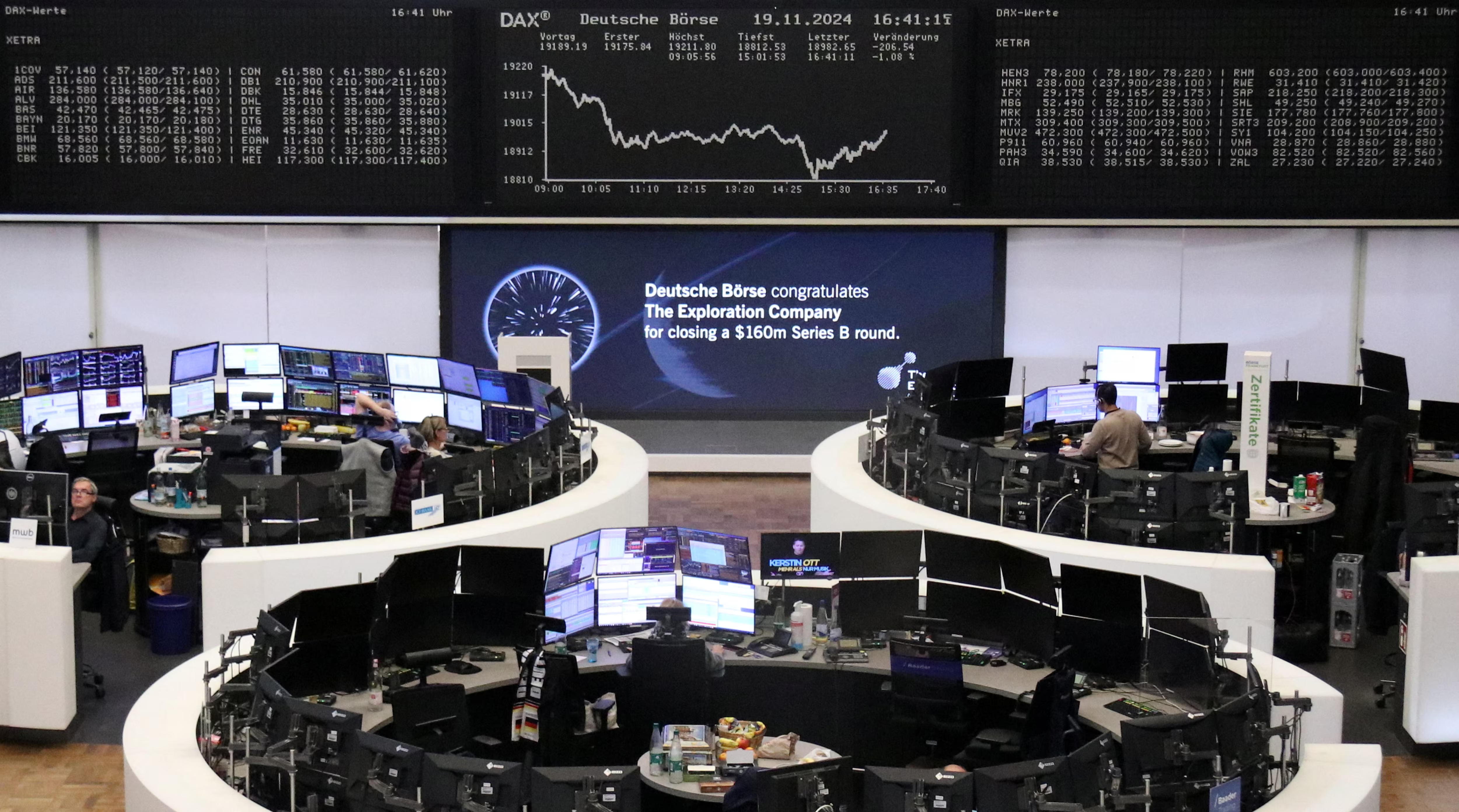
European Stock Markets Fall as U.S. Tariff Risks Loom
The financial landscape across Europe has experienced a significant downturn recently, driven largely by looming uncertainties surrounding U.S. trade policies, particularly the threat of tariff implementations. As investors globally react to potential shifts in trade dynamics, European stock exchanges have not been immune, showcasing a decline that underscores the interconnectedness of global markets.
Understanding the Current Market Dynamics
European stock markets, including major indices such as the FTSE 100, DAX, and CAC 40, have recently recorded declines amid escalating concerns over potential U.S. tariffs. These fears are rooted in ongoing trade negotiations and policy signals from Washington that hint at increased tariffs on various imports. The uncertainty surrounding these policies often results in market volatility, as investors brace for potential disruptions to global trade flow and economic growth.
Key catalysts for the recent decline include:
- Rising Tariff Risks: Speculations and official statements hinting at imminent tariffs on European goods and other imports into the United States.
- Global Trade Tensions: Escalating disputes between the U.S. and other major economies exacerbate fears of a trade war.
- Economic Uncertainty: Concerns over how tariffs could impact corporate earnings, supply chains, and overall economic stability.
The Broader Impact on European Markets
Market Sentiment
Sentiment among European investors has turned cautious, with many adopting a risk-averse approach. The prospect of increased tariffs threatens to hinder export revenues, a vital component of many European economies. As a result, stock indices have seen notable declines, reflecting investor worries about the potential slowdown in economic activity.
Sector-Specific Effects
While the overall market has been impacted, specific sectors are bearing the brunt more than others:
- Automotive Industry: European automakers, heavily reliant on exports, are particularly vulnerable. Concerns over tariffs on vehicles and parts threaten to diminish profit margins.
- Manufacturing & Industrials: Supply chains could be disrupted, increasing costs and delaying production schedules.
- Technology & Consumer Goods: These sectors could face decreased international demand, especially if tariffs lead to higher consumer prices.
Implications for Investors and Policy Makers
Investor Strategies
In times of heightened uncertainty, investors tend to recalibrate their portfolios to mitigate risks. Common strategies include:
- Shifting to Defensive Assets: Increasing holdings in bonds, gold, or other safe-haven assets.
- Reducing Exposure to Vulnerable Sectors: Minimizing investments in industries most affected by tariffs.
- Seeking Diversification: Spreading investments across different regions to hedge against localized shocks.
Policy Responses
European policymakers are closely monitoring the situation. While some advocate for diplomatic engagement to de-escalate trade tensions, others emphasize the importance of preparing for economic shocks. Measures under consideration include:
- Strengthening Economic Resilience: Implementing policies to support sectors most at risk.
- Facilitating Trade Negotiations: Engaging with U.S. counterparts to seek mutually beneficial agreements.
- Enhancing Market Stability: Employing mechanisms to mitigate volatility and maintain investor confidence.
Future Outlook
The path ahead remains uncertain, with several key factors influencing the trajectory of European markets:
- Diplomatic Developments: Progress in trade negotiations could ease market tensions.
- Economic Data Releases: Indicators such as GDP growth, industrial output, and trade balances will provide insights into economic health.
- Federal Policy Signals: U.S. policy announcements regarding tariffs and trade could significantly sway investor sentiment.
Despite current setbacks, some analysts believe that markets may eventually stabilize if negotiations lead to clarity and reduced trade barriers. However, the prevailing sentiment suggests a cautious approach is prudent until there is clearer evidence of a resolution.
Conclusion
The recent decline in European stock markets highlights the fragile nature of global economic interconnectedness, especially amid rising U.S. tariff risks. Investors, policymakers, and corporations must navigate these turbulent waters carefully, balancing short-term risks with long-term strategic planning. While market dips can present buying opportunities for some, risk management remains paramount in such uncertain times.
As trade tensions evolve, continuous monitoring and adaptable strategies will be essential for those looking to safeguard their investments and economic stability in the coming months.
For more detailed insights and up-to-date analysis, stay tuned to reliable financial news sources and expert commentary.