

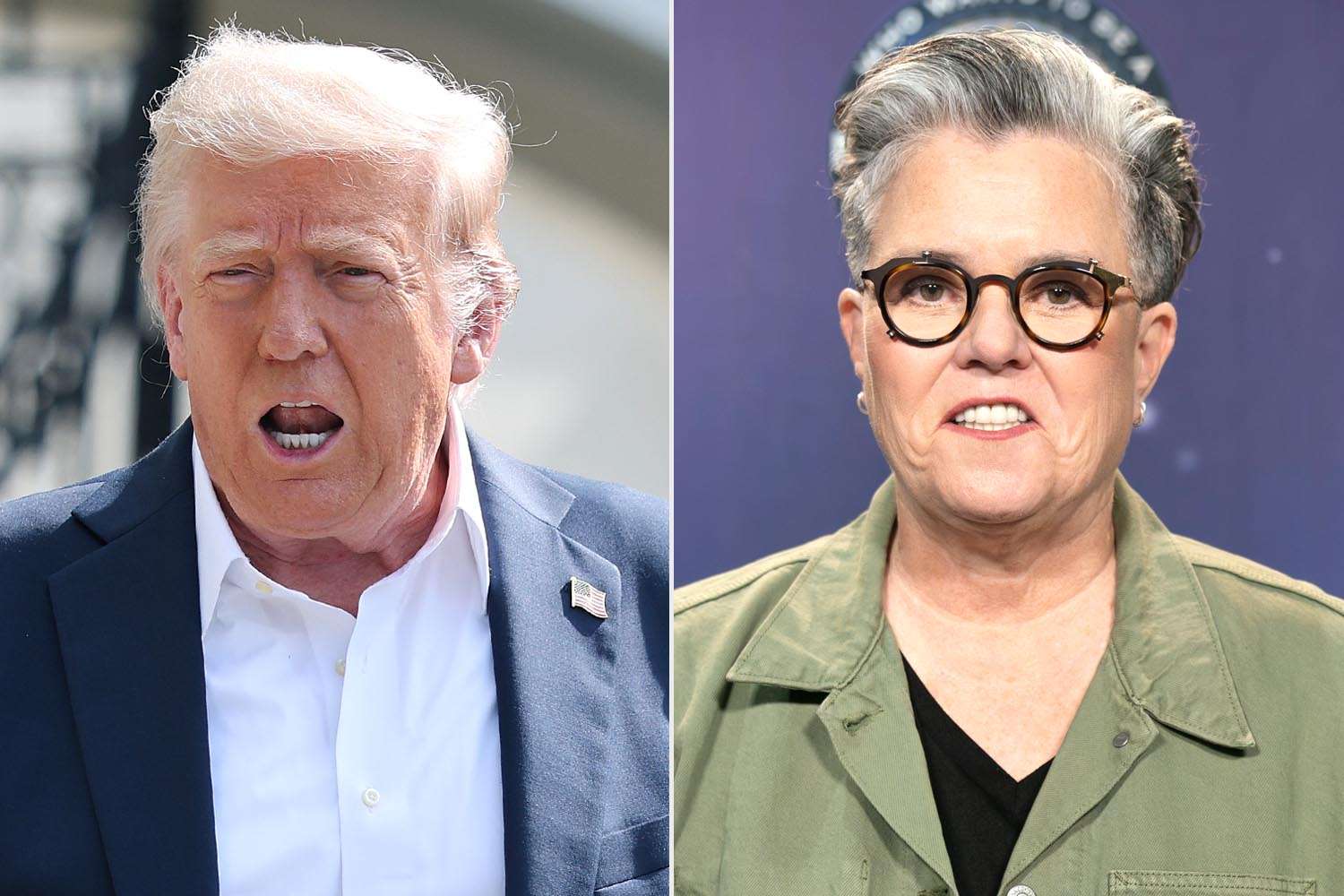
The world of celebrity politics often intersects with mainstream political discourse, but rarely do we see such public and unprecedented threats as the one issued by former President Donald Trump against comedian and actress Rosie O’Donnell. Following her decision to relocate to Ireland, Trump openly declared his intention to revoke her U.S. citizenship, igniting a media frenzy that sheds light on the complex relationship between celebrity activism and national identity. This incident represents more than just a spat between two entertainment figures; it underscores the tense political atmosphere and the evolving nature of citizenship in the contemporary era.
The Background: Rosie O’Donnell’s Move to Ireland
Rosie O’Donnell, well-known for her outspoken political views and advocacy work, surprised many when she announced her move to Ireland. Her decision fueled speculation about whether it was driven by personal reasons, tax considerations, or political disillusionment with the current state of American affairs. In recent years, numerous American citizens have contemplated relocating overseas due to political polarization, taxation policies, or their desire for a different lifestyle. O’Donnell’s choice to move to Ireland, a country often associated with cultural richness and scenic beauty, sparked a flurry of media attention and public debate.
While the move itself was framed as a personal decision, it soon became a political controversy after Trump’s reaction, which took the form of a direct threat to her citizenship status.
Donald Trump’s Threat: An Unprecedented Public Declaration
In a statement that stunned many, Trump publicly announced his intention to revoke Rosie O’Donnell’s U.S. citizenship, citing her relocation as justification. Such a declaration is extraordinary because, under U.S. law, citizenship revocation is a complex legal process that cannot be initiated unilaterally by a private citizen or a former president without proper legal grounds. The threat, however, was rooted in Trump’s rhetoric about loyalty, patriotism, and citizenship, themes he often emphasized during his political campaigns and presidency.
Some key points regarding his threat include:
- His claim that relocating abroad could be considered an abandonment of citizenship.
- Potential legal ramifications for citizenship revocation, which involves strict legal standards and judicial approval.
- The political implications of such a threat on U.S. immigration and citizenship policies.
While critics argued that Trump’s threat was more symbolic than legally actionable, it nevertheless heightened tensions over the boundaries of free speech, celebrity activism, and national allegiance.
Legal and Constitutional Context
Can Citizenship Be Revoked in Such Circumstances?
In the United States, revoking U.S. citizenship is regulated by the Immigration and Nationality Act (INA). According to this law, naturalized and natural born citizens can only lose their citizenship under specific and legally defined circumstances—such as concealing material facts during the naturalization process or obtaining citizenship through fraudulent means. Simply moving abroad, even if done with disaffection or disillusionment, does not legally justify revocation.
Furthermore, the U.S. Supreme Court has emphasized that citizenship is a fundamental right protected by the Constitution, making involuntary revocation exceedingly difficult without due process.
If Trump’s threats were to be pursued legally, Rosie O’Donnell would likely have to go through a lengthy judicial process, and her status would only be revoked if proven to have engaged in activity that legally justified such action under the law.
Reactions from the Public and Political Figures
The public response to Trump’s threats has been mixed. Many viewed it as another example of his confrontational style, often characterized by rhetoric that blurs the line between political strategy and personal vendetta.
Some notable reactions include:
- Advocacy groups emphasizing that citizenship is a protected right that cannot be revoked on a whim.
- Legal experts highlighting that such threats are more symbolic and unlikely to translate into actual policy or legal action.
- Critics arguing that Trump’s approach undermines the very principles of citizenship and democracy.
- Supporters, however, framing the move as a tough stance against celebrities who criticize or oppose him publicly.
The incident also sparked broader conversations about the role of public figures in political discourse and the extent to which celebrities should be protected under legal and constitutional frameworks.
Implications for Celebrity Culture and Politics
Celebrity Activism and Political Power
Rosie O’Donnell’s decision to move abroad might be viewed as a form of protest or defiance against certain political figures or policies. Her outspoken activism, particularly on issues like liberal policies, social justice, and anti-Trump sentiments, has often made her a controversial but influential figure. The backlash from such outspoken criticism, including threats from high-profile politicians, highlights the contentious relationship between celebrity activism and political power.
This incident also underscores how celebrity culture can influence public dialogue on national issues, sometimes leading to sensationalized disputes that ripple through media and political spheres.
The Power Dynamics Between Celebrities and Politicians
While celebrities typically possess significant cultural influence, their capacity to impact policy or enforce political consequences is limited. Nonetheless, when high-profile figures like Rosie O’Donnell publicly oppose political figures such as Trump, it can elicit strong reactions and even policy threats, as seen in this case. Such exchanges reveal the increasingly blurred lines between entertainment, politics, and legal sovereignty.
Moreover, the incident demonstrates how political figures often leverage their platform to send a message of disapproval, sometimes resorting to inflammatory rhetoric that fuels polarization.
Public Perception and Future Outlook
The incident has ignited a wider debate about the limits of free speech, citizenship rights, and the boundaries of political retaliation. For many Americans and observers worldwide, the threat to revoke someone’s citizenship based solely on personal decisions raises serious constitutional questions.
Looking ahead, legal experts expect that any actual move toward revoking O’Donnell’s citizenship would face significant legal hurdles, and likely, considerable public scrutiny. It also opens the door for ongoing discussions about the role of the judiciary in monitoring such threats and the importance of protecting individual rights against political threats.
As Rosie O’Donnell continues her life in Ireland, the episode serves as a reminder of how political rhetoric can escalate quickly and how the intersection of celebrity and politics remains a volatile space.
Conclusion: A Reflection on Citizenship, Free Speech, and Political Tensions
This extraordinary incident between Donald Trump and Rosie O’Donnell encapsulates the current era’s complex interplay between politics, celebrity culture, and national identity. While legal pathways exist to challenge threats like revocation of citizenship, the symbolic power of such statements often fuels ongoing discourse on freedom, loyalty, and the limits of political expression.
Ultimately, the episode underscores the importance of preserving constitutional rights and exercising democratic principles, even amidst heated political conflicts. It also highlights how celebrity activism continues to challenge and shape political narratives in the modern world.
For more updated news please keep visiting Hourly Prime News.