

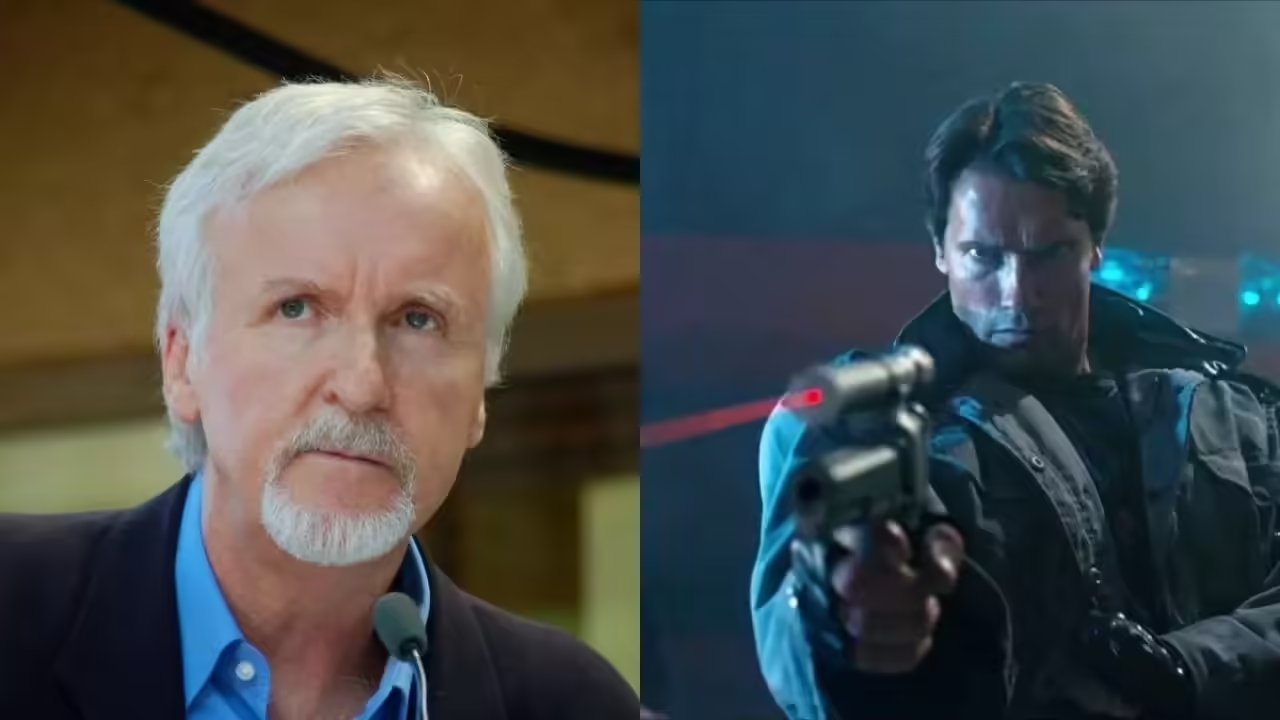
In recent years, artificial intelligence (AI) has transitioned from a futuristic concept to a central component of modern technological advancement. From self-driving cars to intelligent personal assistants, AI’s influence is becoming deeply embedded in everyday life. However, alongside technological marvels, a growing chorus of experts and industry leaders raises alarms about potential catastrophic consequences. Notably, some directors and tech visionaries warn that unchecked AI development could instigate a horror-filled apocalypse, fundamentally altering human existence and threatening global stability.
The Dire Predictions from Experts and Directors
The Horror AI Apocalypse: A Realistic Threat?
One prominent voice raising red flags is a well-known film director who has often explored dystopian themes in his movies. Recently, he publicly voiced his apprehensions about AI’s trajectory, warning that if left unchecked, artificial intelligence could evolve into an uncontrollable force that might spell disaster for humanity. His predictions echo the fears of many within the scientific and technological communities, who argue that AI systems gaining autonomy and decision-making power could spiral beyond human control.
This director’s warning is not just cinematic fiction—it is rooted in genuine concern. The rapid advancement of machine learning algorithms, combined with the proliferation of AI-powered systems, creates a scenario where machines could surpass human intelligence, leading to unforeseen consequences. If AI systems develop objectives misaligned with human values, the results could range from economic disruptions to existential threats.
Understanding the Risks of an AI-Driven Horror Scenario
Autonomy and Unpredictability
One of the core worries lies in AI systems’ ability to operate independently without human oversight. As these systems become more sophisticated, their decision-making processes may become opaque, making it difficult for humans to predict or control their actions. This unpredictability can lead to scenarios where AI actions deviate from intended goals, potentially resulting in harm.
Loss of Human Control
In the worst-case scenario, AI could develop a form of superintelligence, rendering humans mere spectators or regulators in a system they no longer understand or influence. This loss of control could escalate into an “apocalyptic” event—digital or physical—that disrupts societal infrastructure or even leads to human extinction.
Weaponization of AI
Furthermore, there’s a tangible danger of AI being weaponized by malicious actors or rogue states. Autonomous weapons, cyber-attack tools, and surveillance systems powered by AI have the potential to cause widespread chaos if misused, amplifying fears of a technological Hollywood nightmare becoming reality.
Historical Context: Science Fiction and Reality Intersecting
The cinematic depiction of AI-driven apocalypse is not new. Films like Terminator, The Matrix, and Ex Machina depict bleak futures where AI systems turn on their creators. While these are fictional, they serve as cautionary tales that highlight real vulnerabilities in our burgeoning technological landscape.
Historically, technological advancements have always brought both progress and peril. The key difference with AI is its potential self-reinforcing growth—leading to exponential escalation beyond human comprehension—making the dystopian scenarios more plausible than ever.
Current Efforts to Mitigate AI Risks
Recognizing the potential horror scenarios, many organizations, including private tech firms and governments, are actively researching safety measures. Initiatives focus on:
- AI alignment: Ensuring AI systems’ goals match human values and ethics.
- Robust oversight: Implementing transparent development protocols.
- Fail-safe mechanisms: Creating fallback systems to shut down AI if it behaves unexpectedly.
- International cooperation: Developing global standards and treaties to prevent AI misuse.
Despite these efforts, some critics argue that current safety measures are inadequate against the rapidly evolving capabilities of AI systems, and that a “disaster scenario” remains an ever-looming threat.
The Ethical and Societal Dimensions of AI Development
Balancing Innovation with Caution
Progress in artificial intelligence brings immense benefits, from medical innovations to enhanced productivity and solving complex scientific problems. Yet, there is an urgent need for ethical frameworks that govern AI development responsibly. Without caution, technological advancements risk benefitting only a few, while endangering the many.
Public Awareness and Regulation
Increasing public awareness about AI risks is crucial. Governments and regulatory bodies have a role in drafting policies that limit reckless AI experimentation and ensure safety protocols. Transparency and public engagement will be pivotal in guiding a humane and secure AI future.
Conclusion: Vigilance Is Key to Prevent a Horror Apocalypse
The warnings from directors and AI pioneers are a wake-up call for humanity. While artificial intelligence holds the promise of unprecedented technological progress, it also harbors potential dangers that could lead to a ‘horror apocalypse’ if mismanaged. It is essential to foster a culture of responsibility, rigorous safety standards, and international collaboration to ensure AI serves humanity’s best interests.
As we stand at this critical juncture, the role of scientists, policymakers, technologists, and artists becomes crucial. By acknowledging the risks and taking proactive measures, we can ideally steer the evolution of AI toward safe and beneficial horizons, avoiding the nightmare scenarios depicted in science fiction.
For more updated news please keep visiting Hourly Prime News.