

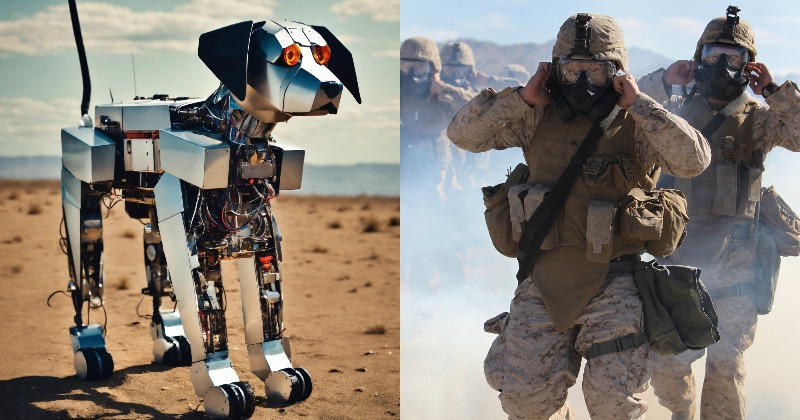
A Technological Marvel or a Cause for Concern?
The advent of robotic devices has revolutionized numerous industries, from manufacturing to medical care. Recently, China has taken a giant leap forward in emergency response technology with the debut of its first-ever robotic rescue dog. This innovation has sparked a whirlwind of reactions worldwide—both awe at the technological feat and concern over its implications. The robot, designed to assist in disaster zones, particularly in scenarios where human life is at immediate risk, exemplifies how automation can enhance rescue missions. Yet, alongside admiration, a robust debate has emerged about the ethical, practical, and societal impacts of deploying such autonomous rescue units on a large scale.
The Birth of China’s Robotic Rescue Dog: An Engineering Feat
Developed by leading Chinese robotics firms, this robotic service animal is equipped with advanced sensors, cameras, and mobility systems. Unlike traditional search and rescue teams relying solely on trained dogs or human responders, this machine offers several advantages:
- Unparalleled Durability: Capable of navigating through debris, tight spaces, and unstable structures where humans or live animals might risk injury.
- Enhanced Sensing Capabilities: Equipped with thermal imaging and acoustic sensors to detect signs of life in challenging environments.
- Remote Operation and Autonomy: While some functions are remotely controlled, others enable semi-autonomous operation, reducing response time.
This breakthrough was illustrated vividly during a recent simulated rescue operation where the robotic dog successfully located and signaled the presence of survivors trapped under collapsed structures, pulling off feats that traditional rescue techniques might struggle with.
The Global Reactions: A Mix of Awe and Fear
What the World Is Saying About This Innovation
The robot’s debut has been covered extensively across international media, with many describing it as a “game-changer” for disaster response efforts. “This thing pulled me from the rubble,” reports a rescue worker who witnessed the robot in action, emphasizing its ability to perform critical tasks in hazardous settings.
However, alongside admiration, voices of caution and concern have quickly emerged. Critics warn that reliance on robotic rescue dogs could lead to:
- Ethical Dilemmas: Questions about accountability if a robot malfunctions or incorrectly assesses a situation.
- Loss of Human Jobs: Fears that automation might replace trained rescue personnel, potentially leading to unemployment or reduced human oversight.
- Security Risks: The possibility of hacking or malicious interference with autonomous rescue systems, particularly in sensitive environments.
Humanitarian and Ethical Concerns
While the technological capabilities are impressive, many experts argue the importance of maintaining a human touch in rescue missions. Rescue efforts involve nuanced decision-making, such as prioritizing lives and handling unpredictable circumstances—areas where humans excel. Consequently, some apprehend that over-dependence on machine-operated rescue units might diminish the critical role of human responders, potentially compromising overall safety and ethical standards.
The Technical Advancements Behind the Rescue Dog
Innovative Features and Capabilities
The Chinese robotic rescue dog showcases numerous cutting-edge features designed explicitly for disaster scenarios:
- Multi-Modal Mobility: Ability to traverse uneven terrain, rubble, and debris using articulated limbs and adaptive grip mechanisms.
- Real-Time Data Transmission: Constant communication with command centers facilitates immediate decision-making.
- Environmental Analysis: Sensors analyze gas leaks, radiation levels, and structural stability, aiding emergency teams in assessing hazards.
- Modular Design: Components can be easily upgraded or repaired, extending operational lifespan in the field.
How This Tech Compares With Traditional Rescue Dogs
While real dogs have been invaluable in rescue operations due to their acute sense of smell and agility, robotic dogs have significant advantages:
- Resilience in Hazardous Conditions: Unlike living animals, robots aren’t affected by fatigue, fear, or environmental toxins.
- Controlled Deployment: Their operation can be precisely managed, and control can be retained remotely, mitigating risk to humans and animals.
- Operational Consistency: Robots do not suffer from emotional distress, fatigue, or injury, ensuring reliability during prolonged missions.
Potential Impacts and Future Directions
Revolutionizing Disaster Response
The deployment of robotic rescue animals like this Chinese innovation could revolutionize emergency response protocols. With further advancements, future models might include:
- Autonomous Navigation: Fully independent operation without human control.
- Enhanced Sensory Arrays: Greater sensitivity to environmental variables, enabling even quicker survivor detection.
- Integration with Drones and Other Robots: Coordinated multi-unit operations to cover larger or more complex disaster zones efficiently.
Challenges to Overcome
Despite promising prospects, several hurdles remain:
- Cost and Maintenance: High initial investment and ongoing upkeep may limit widespread adoption.
- Ethical and Legal Frameworks: Establishing regulations for autonomous robots’ deployment and accountability.
- Public Acceptance: Addressing fears and misconceptions about robots replacing human responders or malfunctioning during critical moments.
Conclusion: A Balancing Act
China’s first robotic rescue dog exemplifies the potential of technological innovation to save lives and transform disaster management. Yet, the journey toward fully integrating such machines into emergency services must be carefully navigated. Ensuring that these advancements serve humanity ethically, responsibly, and effectively is paramount. As the debate continues globally, one thing remains clear—a future where humans and machines work hand-in-hand could become the new norm in rescue operations, offering hope and safety in even the bleakest circumstances.
For more updated news please keep visiting Hourly Prime News.