

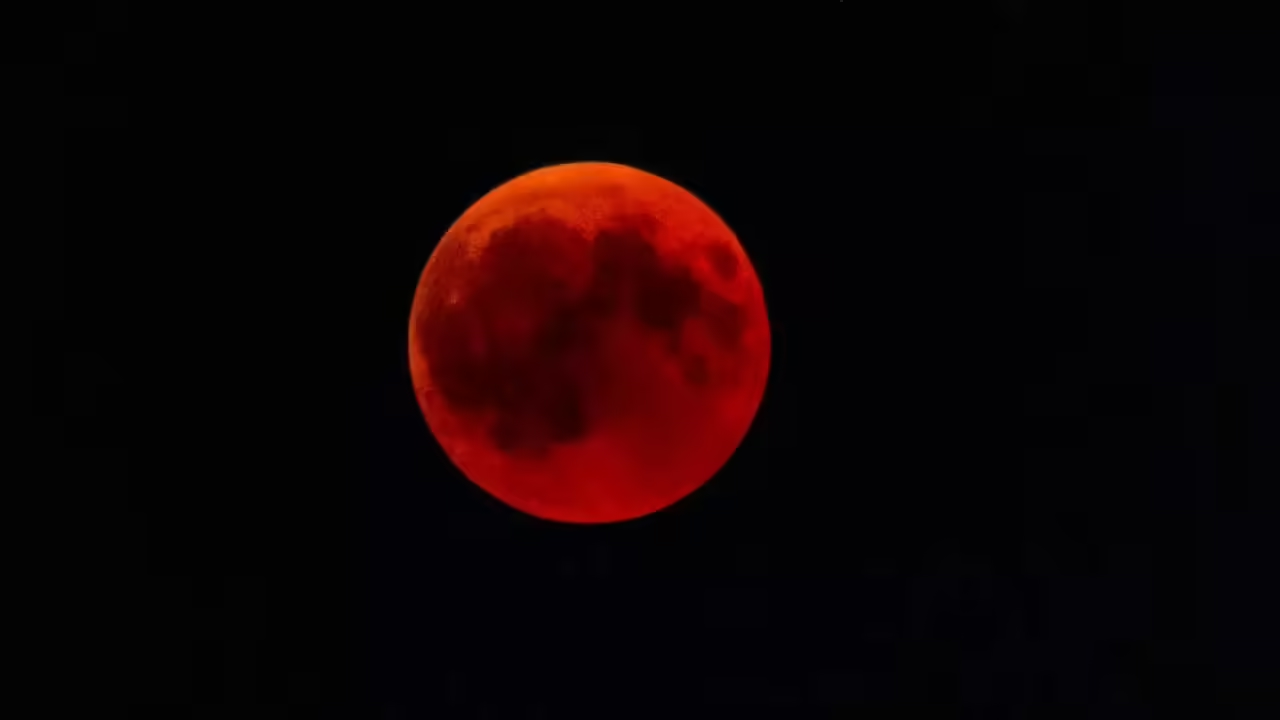
This upcoming Sunday night promises to be an awe-inspiring event for skywatchers across Asia. A rare celestial phenomenon known as the Blood Moon will grace the night sky as part of a total lunar eclipse. This event occurs when the Earth passes directly between the Sun and the Moon, casting its shadow and giving the Moon a striking crimson hue. The occurrence is not only a visual treat but also a significant astronomical event that draws the interest of scientists, sky enthusiasts, and the general public alike.
The Significance of the Blood Moon
The term Blood Moon is derived from the reddish appearance the Moon takes during the eclipse’s totality phase. During a total lunar eclipse, the Earth’s atmosphere filters sunlight, scattering shorter blue and green wavelengths and allowing the longer red wavelengths to reach the Moon’s surface. As a result, the Moon appears bathed in a deep red or crimson glow, creating an otherworldly spectacle that captivates observers.
Timing and Visibility Across Asia
This celestial event will be visible across various parts of Asia, including countries like India, Israel, China, Japan, and others. The eclipse is expected to begin late Sunday evening and extend into the night, with the total phase—when the Moon turns blood-red—lasting for several minutes to over an hour, depending on the observer’s location. Cities such as Delhi, Mumbai, Jerusalem, and Beijing will have an excellent vantage point to witness this fiery transformation of the lunar surface.
Why Is the Blood Moon Special?
The Blood Moon is not a common occurrence; total lunar eclipses happen roughly twice every few years. However, their visibility depends heavily on geographical location and weather conditions. The rarity and breathtaking visual appeal of the crimson-tinted Moon have made it a subject of cultural myths, folklore, and scientific interest for centuries.
Many cultures have historically perceived the Blood Moon as an omen or a sign of significant change, often intertwined with spiritual or supernatural beliefs. Today, scientists and astronomers see it as an excellent opportunity to study Earth’s atmosphere, moon geology, and the dynamics of lunar eclipses.
Scientific Insights from Lunar Eclipses
- Atmospheric Studies: The way Earth’s atmosphere filters sunlight during a lunar eclipse can provide insights into atmospheric composition and pollution levels.
- Moon Surface Observations: The eclipse offers a unique chance to study the lunar surface under different lighting conditions.
- Understanding Earth’s Shadow: The event highlights the mechanics of astronomical phenomena, helping scientists refine models of celestial motions.
Where and When to Watch
For those eager to observe the Blood Moon, here are key details:
- Visibility Time: The total lunar eclipse phase will occur during late Sunday night into early Monday morning, with prime viewing times around 2:00 AM to 4:00 AM local time in many Asian cities.
- Best Locations: Rural areas or locations with minimal light pollution will offer the clearest view of the event. Urban areas might experience some light interference, but the phenomenon remains visible.
- Additional Resources: Several websites and astronomy apps provide real-time tracking and live streams for those unable to view it in person.
Additional Perspectives from Around the World
While Asia gets a front-row seat for this celestial event, other parts of the world also have chances to witness the Blood Moon:
- Total lunar eclipse to turn the Moon red tonight: Visible in these cities – India Today
Why the Blood Moon Is Called So: Cultural and Scientific Explanation
The nickname Blood Moon has captured the imagination of many, thanks to its eerie and captivating appearance. But why is it called so? The answer lies in both science and folklore:
- Coloration: During the eclipse’s totality, the lunar surface takes on a deep crimson hue. This striking red color resembles blood, inspiring the name.
- Cultural Significance: Historically, many civilizations have regarded the Blood Moon with mystery, often associating it with ominous signs, mythological events, or spiritual phenomena.
- Modern Interpretation: Today, the term is popularized for its vivid imagery and is often used in media and popular science discussions to evoke fascination and curiosity about the event.
Preparing to Observe the Event
If you wish to witness this extraordinary sight, here are some tips:
- Check Local Timing: Confirm the local timing for the eclipse to ensure you don’t miss the key phases.
- Use Proper Equipment: Binoculars or a telescope can greatly enhance the viewing experience, but even the naked eye provides a spectacular view.
- Find a Good Viewing Spot: Seek out locations with minimal light pollution and clear horizons for the best experience.
- Stay Informed: Keep an eye on live streams or updates from astronomical societies for real-time coverage and insights.
The Cultural and Philosophical Reflection
The Blood Moon serves as a beautiful reminder of the universe’s grandeur and the intricate beauty of celestial mechanics. It also prompts reflection on our place within this vast cosmos. Diverse cultures have historically interpreted lunar phenomena as signs, warnings, or blessings, building a narrative that connects humanity with the universe. Witnessing such events can inspire awe, curiosity, and a deeper appreciation for the sciences and traditions that have tried to understand these cosmic displays over millennia.
Conclusion
This Sunday night, as the moon transforms into a fiery, blood-red orb, millions across Asia will bear witness to one of nature’s most mesmerizing spectacles. Whether you’re a seasoned skywatcher or a casual observer, the total lunar eclipse offers an unforgettable experience that blends science, culture, and cosmic beauty. Don’t miss this opportunity to gaze upward and marvel at the universe’s majestic display.
For more updated news please keep visiting Hourly Prime News.