

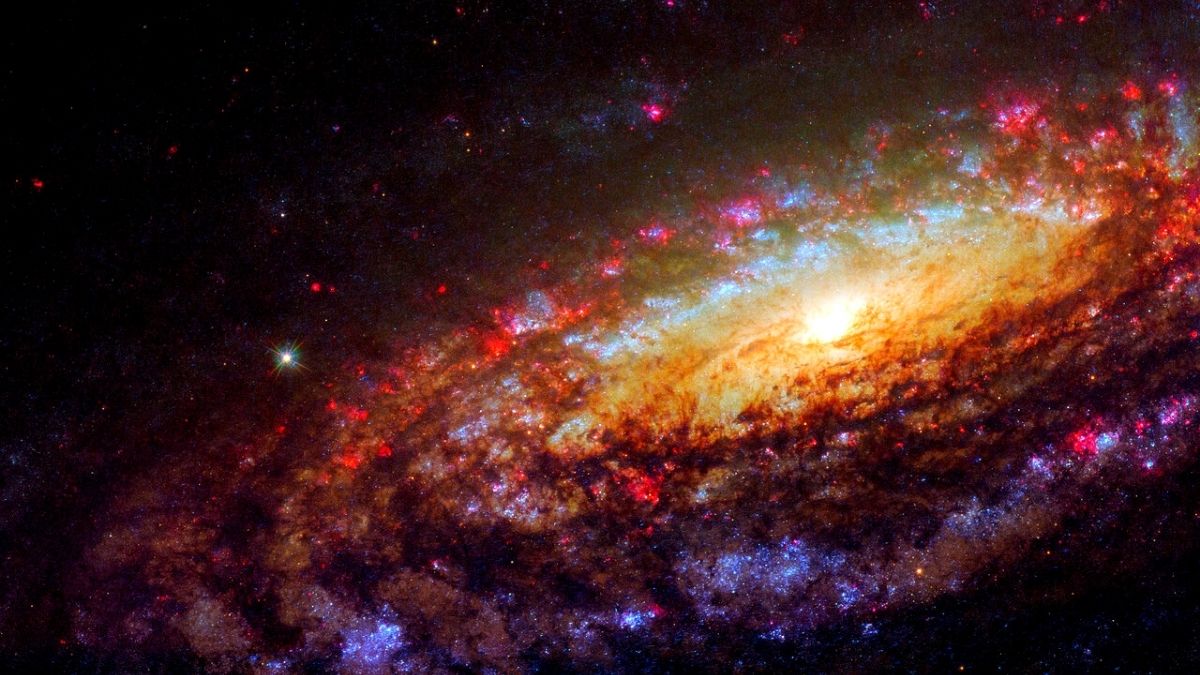
The universe has always been a subject of profound curiosity and relentless exploration. Among its many mysteries, the origins of our home galaxy, the Milky Way, have intrigued scientists and astronomers alike for centuries. Recent groundbreaking discoveries by the Akashganga project have shed new light on this cosmic enigma, potentially revolutionizing our understanding of how galaxies form and evolve.
The Significance of Akashganga’s Breakthrough
The Indian scientific initiative, Akashganga, has taken a giant leap forward by uncovering evidence that could finally answer the fundamental question: How did the Milky Way galaxy come into existence? According to recent reports, the findings suggest interactions and processes in the early universe that set the stage for the galaxy’s formation. This discovery not only fills gaps in current models but also opens new avenues for research into the universe’s infancy.
What Was Discovered?
Researchers involved with Akashganga have identified specific traces of primordial matter and ancient stellar formations that predate the current structure of the Milky Way. These clues point towards a dynamic and complex history involving:
- Collisions of early cosmic clouds: Massive gas clouds merging under gravity to form the first stars.
- Infall of intergalactic matter: Material from surrounding regions funneling into the galaxy’s core, fueling star formation.
- Interactions with neighboring galaxies: Early encounters with other proto-galaxies, influencing the shape and composition of the emerging galaxy.
The depth and precision of these observations suggest that the Milky Way’s birth was not a singular event but a process involving multiple complex interactions over billions of years, leading to the majestic spiral galaxy we see today.
How This Discovery Fits into the Broader Cosmic Puzzle
Understanding the origin of the Milky Way helps answer larger questions about cosmic evolution and the lifecycle of galaxies. Prior models primarily relied on simulations and indirect evidence, but Akashganga’s findings offer tangible clues that enable scientists to refine theories about galaxy formation.
In particular, the discovery aligns with the hypothesis that galaxies are built through hierarchical merging—smaller structures coming together to form larger systems. The detailed insights into early galactic interactions bolster this understanding, providing concrete data on how primordial matter coalesced into stars, clusters, and eventually, sprawling galaxies like our own.
Implications for Future Research
This breakthrough signifies a new era in astrophysics, with direct implications including:
- Refinement of existing models: Better understanding of the timeline and processes involved in galaxy formation.
- Guidance for observational campaigns: Targeted searches for relics of early galactic interactions in distant, high-redshift galaxies.
- Insights into dark matter and dark energy: Since these components influence galaxy evolution, studying early galactic structures can shed light on these elusive phenomena.
Scientists worldwide are now eager to collaborate with the Akashganga team, utilizing advanced telescopes and simulations to expand upon these findings and decode more cosmic clues.
The Broader Context: Cosmic Origins and Humanity’s Place
Deciphering the origins of the Milky Way not only satisfies scientific curiosity but also enhances our understanding of the universe’s history. It provides perspective on how the complex structures we observe today—stars, planets, and even life—came to be. As we delve deeper into the universe’s earliest chapters, we gain insights into the very fabric of cosmos and our place within it.
Connecting Discoveries: Binary Stars and the Universe’s Evolution
While Akashganga’s primary focus pertains to galaxy formation, recent discoveries related to binary stars also contribute significantly to our understanding of the universe’s narrative. The first step toward creating a detailed ‘movie’ of the universe’s evolution involves identifying and studying binary star systems, which serve as cosmic laboratories for understanding stellar life cycles. Phys.org recently highlighted how the discovery of binary stars is a crucial milestone in visualizing the universe’s history.
Binary star systems, where two stars orbit each other gravitationally, are invaluable for astrophysics. They allow scientists to measure stellar masses and evolution in ways single stars cannot. By studying these systems, researchers can better understand processes such as supernovae, black hole formation, and gamma-ray bursts—all of which are critical chapters in the story of the universe’s development.
The Synergy of Discoveries in Cosmic Science
Combining the insights from Akashganga’s galactic origin research and the detailed analysis of binary stars establishes a comprehensive framework for understanding our cosmos. Each discovery acts as a piece in the larger puzzle, enabling scientists to construct more accurate models of the universe’s past, present, and future.
The revelation about the early interactions and material flows that led to the Milky Way’s birth seamlessly integrates with ongoing work on stellar evolution, galaxy interactions, and cosmic structure formation. These interconnected studies collectively enhance our cosmic narrative, bringing humanity closer to understanding the grand design of the universe.
Looking Ahead: The Future of Cosmic Exploration
The findings from Akashganga mark a pivotal moment in cosmic research. With technological advancements such as next-generation telescopes, deep-space probes, and sophisticated simulations, scientists are poised to uncover even more secrets about the universe’s earliest moments.
Potential future endeavors include:
- High-resolution imaging of distant primordial galaxies to observe their fledgling stages directly.
- Enhanced models incorporating new evidence from Akashganga and similar missions.
- Further exploration of binary star populations in different galactic environments, providing clues about star formation pathways during galactic genesis.
These efforts promise to refine our understanding of cosmic origins, illuminating how the universe’s intricate tapestry was woven over billions of years.
Conclusion
The recent discoveries by Akashganga have opened a new chapter in our quest to understand the origins of the Milky Way galaxy. Revealing the complex interactions and processes that led to galactic formation underscores the dynamic and ever-evolving nature of the universe. These insights not only deepen our appreciation of cosmic history but also pave the way for future explorations that may finally answer some of the most profound questions about our universe and our place within it.
As science continues to push the boundaries of what we know, one thing remains certain: the cosmos holds countless secrets waiting to be uncovered, and humanity’s curiosity will drive us to explore every corner of the universe.
For more updated news please keep visiting Hourly Prime News.