

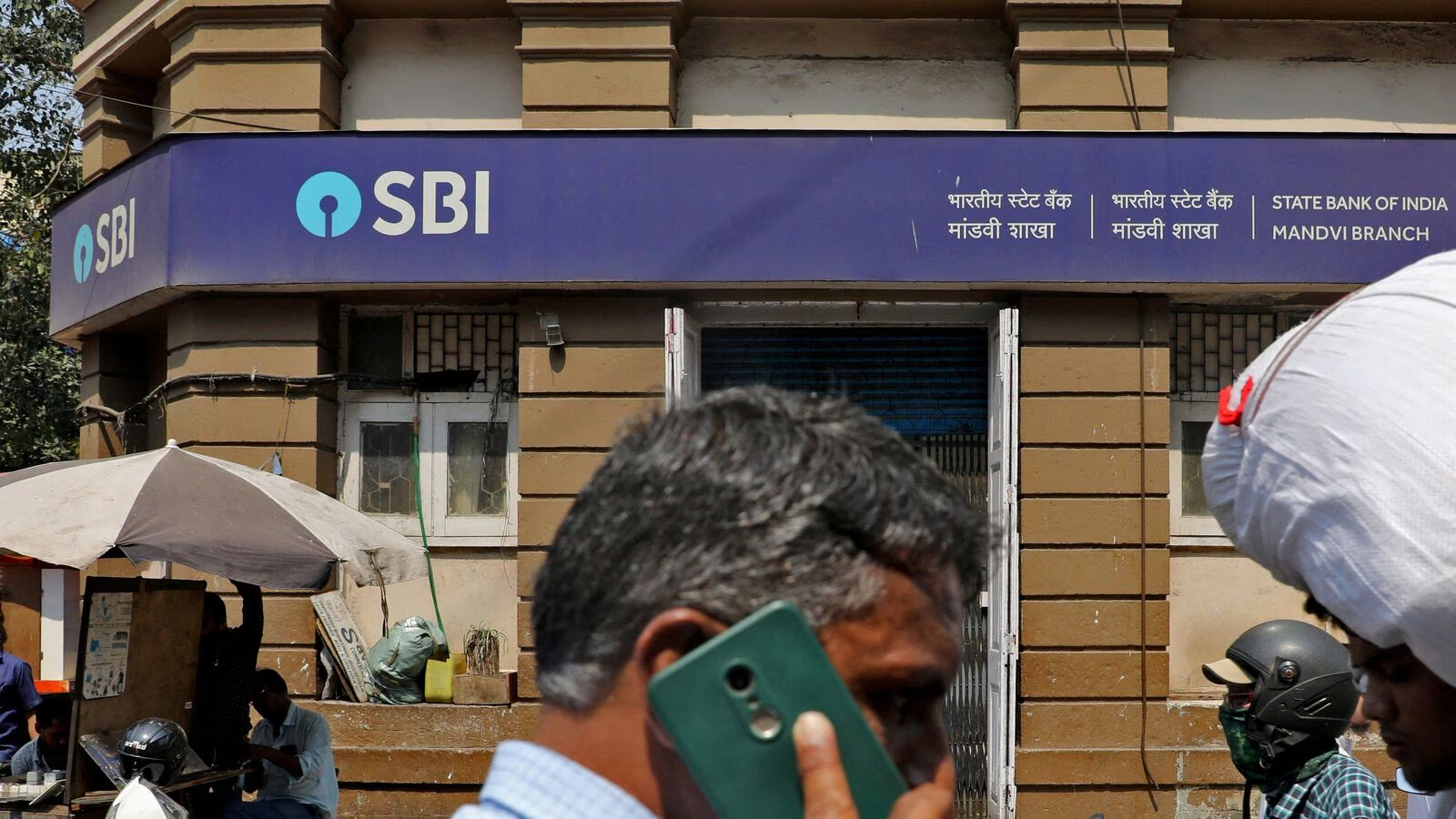
A Momentous Development in the Banking Sector
The State Bank of India (SBI), India’s largest and most influential public sector bank, is currently capturing the attention of investors and market analysts alike. Recent events have placed SBI’s stock under the spotlight due to its strategic move to raise capital through a significant Qualified Institutional Placement (QIP). The announcement to launch a ₹25,000 crore equity issue marks a pivotal moment for the PSU banking giant, signaling both confidence in its growth prospects and a strategic effort to bolster its financial foundation.
Details of the ₹25,000 Crore QIP and Market Impact
According to recent reports from Mint and other credible news sources, the bank’s plan to raise a monumental ₹25,000 crore through the QIP is underscored by robust investor demand, especially from leading institutions like LIC. The issue, which is the first of its kind since 2017, has already been over-subscribed three times, reflecting strong confidence in SBI’s growth trajectory and the banking sector’s resilience amidst global economic uncertainties.
The Strategic Significance of the Fundraising
Enhancing Capital Buffer and Supporting Future Growth
One of the primary reasons for this ambitious capital raise is to strengthen SBI’s capital adequacy ratio (CAR), which is vital for maintaining financial health and compliance with regulatory mandates. In an environment marked by evolving banking regulations, rising credit demands, and the need for digital transformation investments, liquidity is more crucial than ever. The ₹25,000 crore infusion will provide SBI with the necessary buffer to manage credit growth, expand its loan portfolio, and support its strategic initiatives across retail, corporate, and digital banking segments.
Positioning SBI in a Competitive Market
This sizable capital infusion also bolsters SBI’s positioning against emerging private competitors and new-age fintech firms. By enhancing its solvency, the bank is better prepared to capitalize on emerging opportunities, especially in retail loans, MSME financing, and infrastructure projects. Moreover, with increased financial strength, SBI can pursue acquisitions and partnerships that align with its long-term growth vision.
Market Response and Share Price Dynamics
The announcement of such a massive fund-raising initiative invariably stirs market interest. Typically, investors analyze the impact of equity dilution on existing shareholders and the bank’s capacity to leverage the raised capital for future earnings. In SBI’s case, preliminary market reactions have shown cautious optimism, with the stock’s price showing signs of resilience amid volatility. Analysts suggest that the successful completion of this QIP could lead to a positive re-rating of SBI’s stock, as investors anticipate improved fundamentals and growth prospects.
Broader Impact on the Banking Sector
SBI’s move sets a precedent for other public sector banks (PSBs), which are often urged to enhance their capital base through similar measures. It underscores a renewed confidence in the banking sector’s health and viability, especially at a time when global financial markets are navigating uncertainties like inflation, rate hikes, and geopolitical tensions. The deal also indicates a market sentiment that favors sector stability and growth, which benefits the entire banking ecosystem.
Future Outlook: What Lies Ahead?
Looking forward, SBI’s capital augmentation through the ₹25,000 crore QIP is expected to serve as a catalyst for its ongoing digital transformation and infrastructure development. The bank aims to harness new technologies like artificial intelligence, blockchain, and digital onboarding to enhance customer experience and operational efficiency. Additionally, the increased capital is likely to support SBI’s aggressive loan growth plans, including retail loans, agricultural financing, and international operations.
Furthermore, with the successful execution of this QIP, SBI may consider future capital raising initiatives to support large-scale projects or mergers and acquisitions, consolidating its leadership position in the Indian banking sector.
Conclusion: A Strategic Move with Long-Term Benefits
In conclusion, SBI’s decision to launch a ₹25,000 crore QIP is more than just a capital raising exercise; it is a strategic move crafted to sustain growth, reinforce financial stability, and secure a competitive edge in an increasingly complex banking landscape. Investors are keeping a close eye on the stock’s performance, eager to see how the infusion will translate into tangible growth and value creation. Undoubtedly, SBI’s market confidence and strategic initiatives will have a ripple effect across the public sector banking domain.
As the bank advances with this significant capital raise, market sentiment is poised to stabilize and maybe sway toward optimism—driving the share price and long-term investor confidence.
For more updated news please keep visiting Hourly Prime News.