

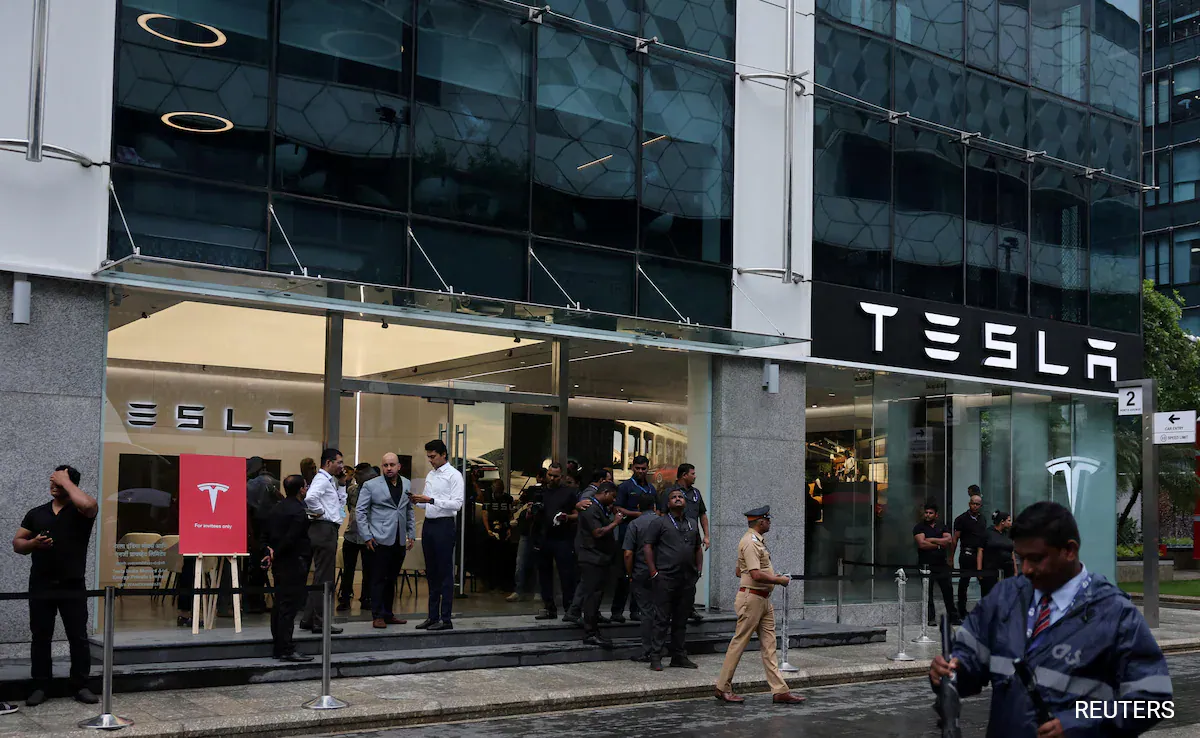
Tesla’s Strategic Entry into India’s Growing Automotive Market
The global electric vehicle (EV) industry is witnessing unprecedented growth, with Tesla leading the charge in innovation and luxury EV offerings. Recently, Tesla made a significant move into the Indian automotive landscape by launching its highly anticipated Model Y. Priced at approximately $70,000, this launch marks Tesla’s debut in one of the world’s fastest-growing vehicle markets. However, this move was not without its hurdles, primarily due to India’s steep import tariffs, which directly impact the product’s pricing and competitive positioning.
This article delves into the strategic considerations behind Tesla’s entry, the challenges posed by tariffs, and what this means for the future of electric mobility in India. Additionally, we explore the reactions from industry leaders like Anand Mahindra, along with the competitive dynamics with other luxury automakers like BMW, Mercedes, and BYD.
Tesla’s Entry Strategy in India
Tesla’s entrance into India has been the subject of much anticipation. Despite initial plans to produce domestically, current import duties have compelled the company to launch its vehicles through import routes initially. The Model Y, being a popular SUV in Tesla’s lineup globally, was chosen for its broad appeal and features suitable for Indian consumers craving luxury, performance, and environmental consciousness.
The pricing at $70,000 (roughly ₹60 lakh) is a reflection of the import tariffs and logistical costs. Tesla aims to compete within the premium segment, targeting affluent consumers interested in eco-friendly luxury vehicles. This aggressive positioning aligns with Tesla’s global brand image while acknowledging the unique challenges posed by the Indian market’s regulatory environment.
Impact of Steep Tariffs on Tesla’s Pricing and Market Penetration
India’s import tariffs on Fully Built Units (FBUs) are among the highest in the world—sometimes exceeding 100%. Such tariffs are implemented to promote local manufacturing but pose a significant challenge for foreign automakers aiming to introduce high-end vehicles. Consequently, Tesla’s Model Y launch at $70,000 is viewed as a strategic move to gauge market response while balancing the tariff impact.
The tariffs essentially inflate the vehicle’s cost, making it less competitive compared to locally assembled or domestically produced vehicles. As a result, Tesla’s initial offerings are priced at a premium, limiting mass-market penetration but positioning the Model Y as an aspirational luxury EV. Elon Musk and his team have shown a willingness to accept lower margins initially to establish brand presence, with plans potentially to localize manufacturing and reduce costs in the future.
Industry Reactions and Statements
The launch has triggered a ripple of reactions from Indian industry stalwarts. Anand Mahindra, Chairman of Mahindra & Mahindra, issued a notable message to Elon Musk, suggesting a potential collaboration or friendly rivalry that could accelerate EV adoption in India. Mahindra’s remarks, which hint at future partnerships or competitive coexistence, reflect the nuanced landscape of India’s auto industry, where traditional automakers are grappling with the influx of EV newcomers.
Meanwhile, Tesla’s entry signals a bold challenge to established luxury car makers like BMW, Mercedes-Benz, and local giants such as BYD. The company has dared to traverse the “luxury lane” with its innovative technology, distinctive design, and brand appeal. This move is viewed by analysts as a calculated risk that could reshape India’s EV ecosystem over the coming years.
Future Prospects: Market Opportunity and Challenges Ahead
Tesla’s strategy in India is undoubtedly ambitious. While the initial import route costs lead to high retail prices, the company is likely to explore local manufacturing options for the Model Y and beyond. It’s a long-term play aimed at reducing costs and expanding market share.
The Indian government, pushing aggressively for EV adoption through incentives, subsidies, and infrastructure development, presents a fertile environment for Tesla’s growth. However, hurdles such as inconsistent charging infrastructure, changing regulations, and price sensitivity among consumers remain significant.
Tesla’s success in India will depend on its ability to adapt to local consumer preferences, navigate regulatory frameworks, and perhaps most critically, establish a local supply chain that can bring down costs. If Tesla manages to localize production, the company’s vehicles could become more accessible, and the competitive landscape might dramatically shift.
Competitive Dynamics and Market Outlook
Tesla’s entry with Model Y is set to stir competition among luxury automakers in India. While brands like BMW, Mercedes, and Audi have established premium electric lines, Tesla brings its brand identity of innovation, performance, and sustainability. By challenging established players, Tesla could accelerate the adoption of EVs in the premium segment.
Moreover, other emerging players like BYD are eyeing the Indian market with competitive offerings. Tesla’s gamble at a relatively high price point creates a tiered market landscape, where aspirational luxury EVs become attainable for a select demographic, setting the stage for broader adoption later on.
Meanwhile, Tesla’s entry may pressurize other automakers to accelerate their EV plans or reduce prices to stay competitive. The broader outlook indicates a rapidly evolving scene where technology, regulation, and consumer preferences converge to dictate the future of electric mobility in India.
Conclusion: An Entry Marked by Innovation and Challenges
Tesla’s launch in India with the Model Y at $70,000 underscores both the potential and the hurdles of entering a market characterized by steep tariffs and nascent EV infrastructure. While Musk and his team are pragmatic about initial profitability, their strategic move signifies a long-term vision—a push to establish Tesla as a key player in India’s burgeoning electric vehicle segment.
The company’s approach balances aggressive branding with pragmatic adaptation to local policies. The support and signals from industry leaders like Anand Mahindra hint at a collaborative and competitive future, which could ultimately propel India towards a sustainable auto industry.
Tesla’s regional journey remains a work in progress, but the company’s bold move signifies a landmark shift in India’s automotive narrative—one where innovation meets challenge, and sustainability is the future.
Final Thoughts
Tesla’s entry into the Indian market is a testament to its relentless pursuit of global expansion despite regulatory hurdles. As the company looks to localize production and reduce costs, it could open new avenues for EV adoption across various segments. Whether Tesla can replicate its success in markets like China and the US remains uncertain, but its arrival has undeniably set a new benchmark in India’s luxury EV landscape.
For more updated news please keep visiting Hourly Prime News.