

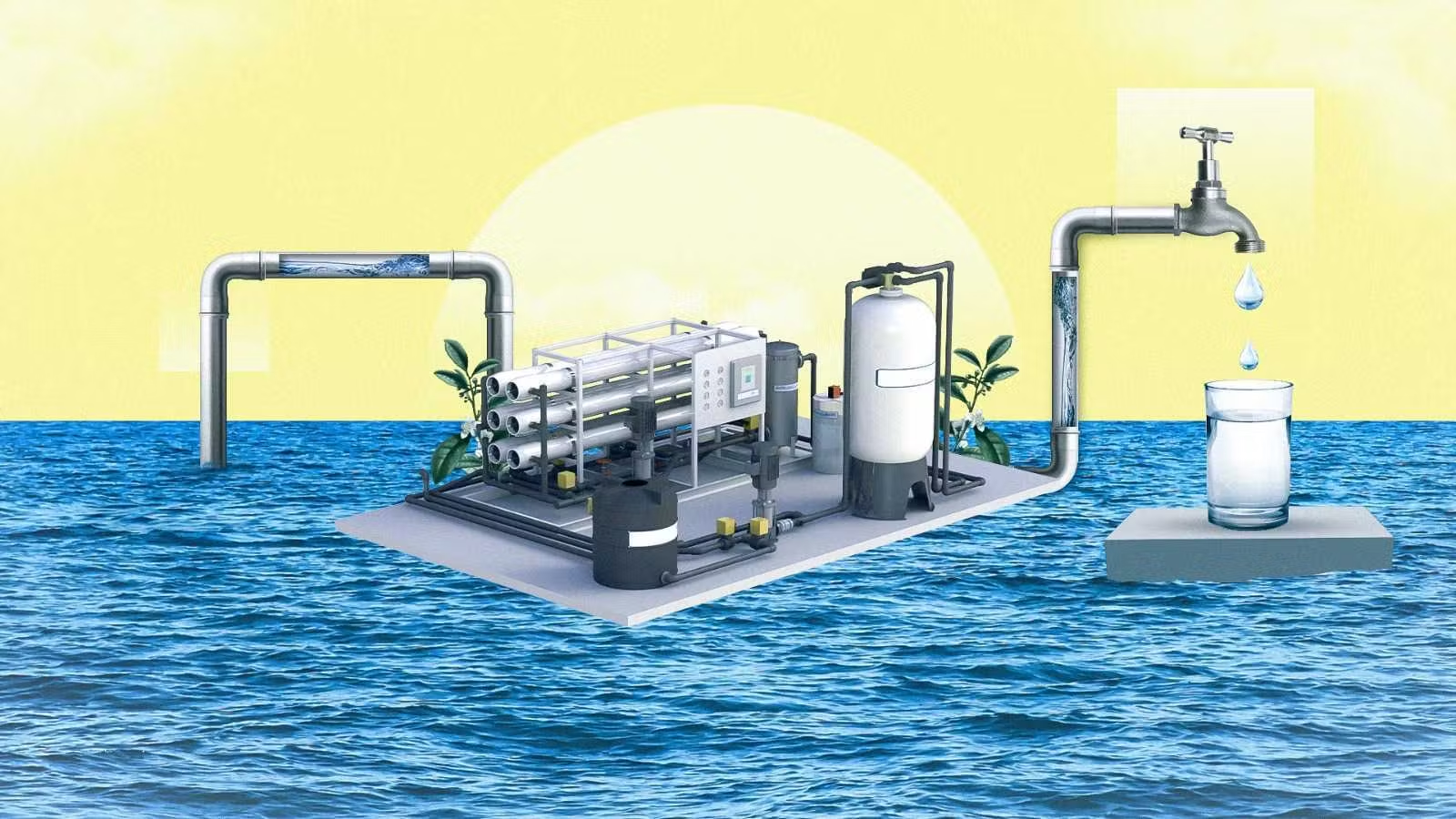
In recent years, the global demand for fresh water and critical minerals has surged dramatically, driven by population growth, industrialization, and the transition toward renewable energy sources. Traditional water sourcing methods are increasingly insufficient to meet these demands, prompting innovators and scientists to explore revolutionary technologies that could redefine the landscape of resource extraction. Central to this transformation is the advent of advanced desalination techniques intertwined with groundbreaking mineral extraction methods, notably for lithium—a vital component for batteries and energy storage. This article delves into the innovative world of desalination and mineral mining, revealing how technological advancements are shaping a sustainable and resource-rich future.
The Need for Advanced Desalination Technologies
Global Water Crisis and Its Implications
Water scarcity has become one of the pressing concerns of the 21st century. According to the United Nations, over two billion people worldwide lack access to safely managed drinking water services. Climate change, pollution, and overextraction of groundwater exacerbate this crisis, compelling nations to seek alternative solutions for securing potable water. Desalination— the process of removing salts and impurities from seawater— has emerged as a promising answer, especially for arid regions and island nations.
Limitations of Traditional Desalination Methods
Conventional desalination plants primarily rely on reverse osmosis (RO) technology, which, while effective, is energy-intensive and generates large quantities of brine waste. These drawbacks pose environmental concerns and limit the scalability of current systems. Moreover, the high operational costs impede widespread adoption, particularly in developing regions where water scarcity impacts livelihoods and economic growth.
Innovations in Desalination Technology
Energy-efficient Membrane Technologies
Recent advancements focus on developing **energy-efficient membranes** that reduce power consumption. Nanomaterials and novel membrane compositions enable more selective water filtration with less pressure requirements, significantly lowering energy use and operational costs.
Forward Osmosis and Capacitive deionization
Emerging techniques like **forward osmosis (FO)** use natural osmotic pressure gradients, offering lower energy consumption. Similarly, **capacitive deionization (CDI)** harnesses electrical fields to remove salts, providing an environmentally friendly alternative to traditional methods.
Integration with Renewable Energy Sources
To address energy concerns, many systems now integrate with renewable sources such as solar and wind power, making desalination more sustainable and cost-effective in the long run. This shift not only reduces carbon emissions but also enhances the feasibility of deploying desalination plants in remote or off-grid locations.
Brine Management and Resource Recovery
The Challenge of Brine Disposal
The disposal of brine, the concentrated saltwater byproduct of desalination, poses significant environmental risks. Improper disposal can harm marine ecosystems. Therefore, innovative approaches to brine management are paramount.
Transforming Brine into a Resource
Advances now enable the extraction of valuable minerals from brine, transforming a waste product into a resource. This concept aligns with the principles of circular economy, promoting sustainable water and mineral resource management.
Revolutionizing Lithium Mining through Brine Processing
The Lithium Boom
As the demand for electric vehicles and energy storage surges, lithium has become a critical mineral. Traditionally, lithium extraction involved mining spodumene ore, which is energy-intensive and environmentally disruptive.
Brine-based Lithium Extraction
Innovative methods now tap into lithium-rich brine pools, primarily located in salt flats and underground aquifers. Using advanced chemical and thermodynamic processes, lithium can be efficiently extracted directly from brine, drastically reducing environmental impact and operational costs.
Enhanced Lithium Recovery Technology
- Selective membranes and solvents: Technologies that selectively extract lithium ions while ignoring other salts.
- Electrodialysis and solvothermal methods: Techniques that improve extraction efficiency and purity.
- Sustainability considerations: Methods that minimize water use and energy consumption during the extraction process.
The Synergy Between Desalination and Mineral Extraction
Integrated Systems for Maximum Efficiency
Emerging models combine desalination and mineral extraction into integrated systems, optimizing resource utilization. For instance, desalination plants can be equipped with mineral recovery modules, enabling simultaneous water purification and mineral harvesting from brine effluents.
Advantages of Integrated Approaches
- Cost savings: Reduced operational costs through shared infrastructure and energy inputs.
- Environmental benefits: Lower brine disposal issues and minimized ecological footprint.
- Resource sustainability: Creation of secondary income streams from mineral sales.
Future Prospects and Challenges
Scaling Up and Global Adoption
While technological feats are promising, scaling these innovations to industrial levels remains a challenge. Ensuring economic viability and regulatory support will be key factors in widespread adoption.
Environmental and Social Impact
As more regions adopt advanced desalination and mineral recovery technologies, consideration must be given to ecological preservation and community engagement to ensure sustainable development.
Research and Development Priorities
- Improving membrane durability: To withstand harsh conditions and prolong equipment lifespan.
- Reducing energy footprint: Integration of renewables to achieve near-zero emissions.
- Enhancing resource recovery rates: Maximizing mineral extraction efficiency from brine.
Conclusion: A Sustainable Future in Water and Mineral Resources
The convergence of advanced desalination and mineral extraction technologies heralds a new era of resource management. Through innovative methods for energy-efficient water purification and the sustainable recovery of critical minerals like lithium, we are paving the way toward a world where scarcity and environmental concerns are mitigated by technological ingenuity.
As research continues and deployment scales up, these technologies have the potential to transform how we access vital resources, ensuring a sustainable, resilient future for generations to come.
For more updated news please keep visiting Hourly Prime News.