

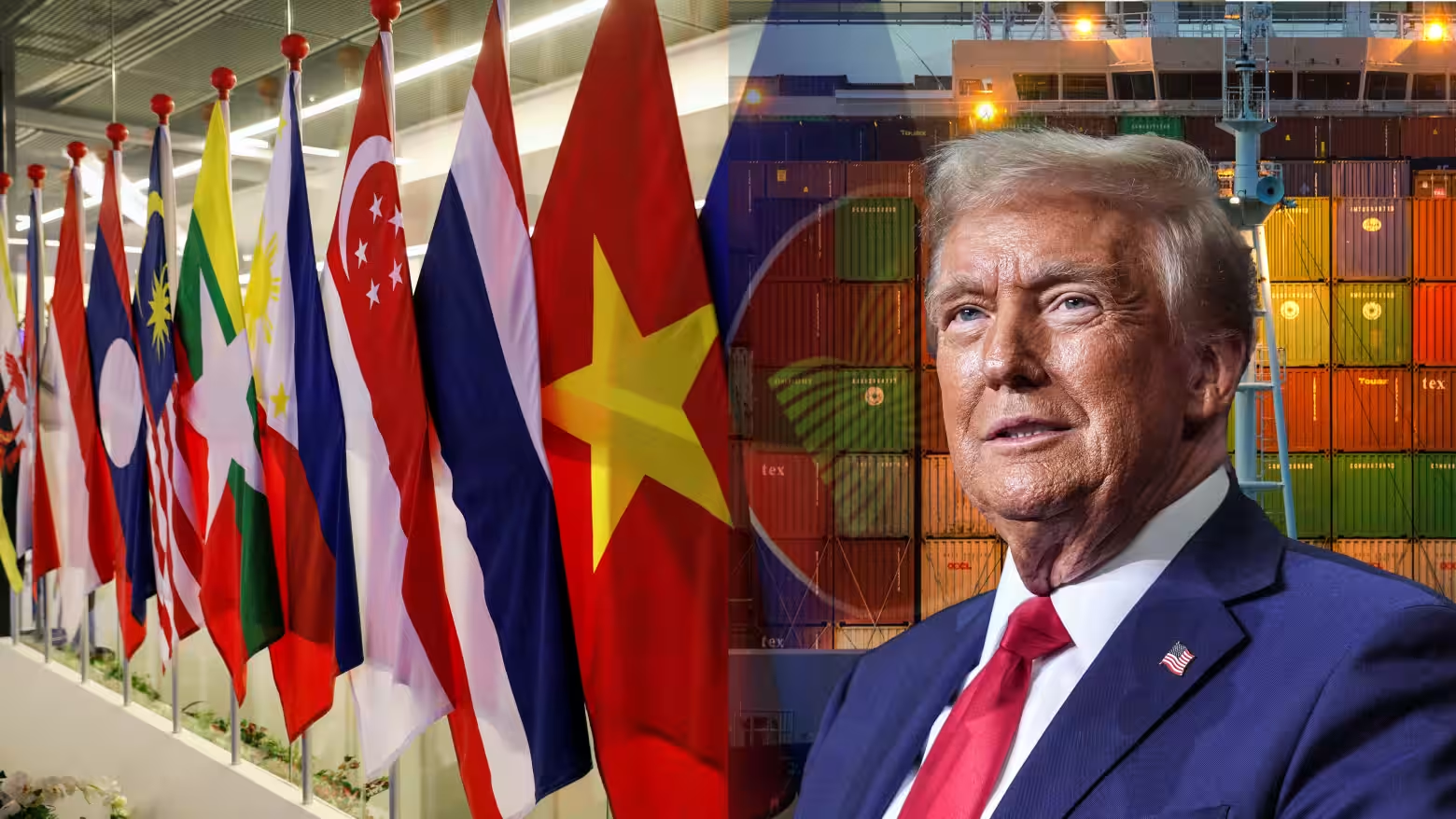
The imposition of tariffs is one of the most contentious strategies in international trade policy, and the recent tariffs introduced during President Donald Trump’s administration have reshaped economic dynamics across the globe, especially in Asia. While tariffs aim to protect domestic industries and rebalance trade deficits, the ripple effects extend far beyond the United States, dramatically affecting Asian economies, businesses, and consumers. Understanding who gains and who loses in this complex scenario offers crucial insights into the shifting landscape of global trade.
The Context of Trump’s Tariffs
During Trump’s presidency, a series of tariffs targeted primarily China, but also extended to other Asian countries and trade partners. The rationale was to address perceived unfair trade practices, intellectual property theft, and to reduce the U.S. trade deficit. However, these tariffs triggered a chain reaction across economies interconnected through global supply chains. According to a BBC’s analysis suggests that Asia has been reeling under these tariffs, experiencing economic slowdowns, disrupted supply chains, and uncertainty. Yet, amidst these overall setbacks, some entities seem to have managed to find opportunities or even gain advantages.
Winners in the Tariff War
1. Certain Exporters and Domestic Industries
Though many Asian industries faced setbacks due to tariffs, some exporters and domestic producers managed to turn challenges into opportunities:
- Alternative Markets: Businesses diverted exports to countries less affected by tariffs, such as Southeast Asian nations or regions outside the Asia-Pacific.
- Supply Chain Localization: Companies began to localize or diversify their supply chains to mitigate tariff impacts, thus strengthening regional resilience.
2. Countries Benefiting from Shifts in Supply Chains
Countries like Vietnam, Malaysia, and Thailand have filled some gaps left by disrupted Chinese manufacturing. They have become alternative manufacturing hubs for products formerly produced in China, attracting investment and expanding their export profiles.
- Vietnam: Seen as an emerging manufacturing powerhouse, Vietnam capitalized on tariffs to attract foreign direct investment, particularly in electronics and textiles.
- Malaysia and Thailand: These nations gained from increased demand for intermediate goods and assembly operations, nurturing their industrial sectors.
Losers in the Tariff Battle
1. Chinese Exporters and Manufacturers
China, as the primary target of many of Trump’s tariffs, experienced significant setbacks:
- Trade Disruptions: Tariffs increased costs for Chinese goods, making them less competitive globally.
- Decline in Exports: Several Chinese industries faced declining exports, leading to factory closures and job losses.
2. Asian Supply Chain Participants
Many economies involved in integrated supply chains suffered as tariffs increased costs, caused delays, and forced companies to reevaluate their operations:
- Higher Production Costs: Tariffs on intermediate goods led to increased manufacturing costs in countries reliant on imported components.
- Uncertainty and Investment Slowdown: The unpredictability of tariffs discouraged new investments and technological upgrades.
Broader Economic Impacts
Beyond immediate winners and losers, the tariffs contributed to a broader economic landscape marked by uncertainty, slowed growth, and strategic shifts. Countries heavily invested in manufacturing, such as South Korea and Japan, faced complex dilemmas balancing their export-driven economies against the pressures of U.S. trade policies.
According to the BBC article, “Asia is reeling but is anyone winning?” the overall impact has been mixed. While some nations and companies have adapted or gained competitive advantages, the majority are grappling with reduced growth prospects. The tariffs have also accelerated discussions about diversifying trade partnerships and boosting regional cooperation, including mechanisms like the Regional Comprehensive Economic Partnership (RCEP), aimed at reducing dependency on any single market.
The Future Outlook
As trade tensions persist or evolve, Asian economies will need to continue adapting strategic approaches:
- Strengthening Regional Alliances: Countries may focus on regional agreements to safeguard against future disruptions.
- Technological Innovation: Investment in automation, AI, and other advanced manufacturing techniques can help mitigate tariff impacts.
- Diversification of Markets: Expanding into new markets reduces overreliance on traditional trade partners and buffers against protectionist policies.
Meanwhile, the Biden administration’s approach post-Trump has shown some shifts towards multilateralism, but the scars left by tariffs remain. Asian countries will continue to navigate this complex landscape, balancing between adapting to new realities and seeking opportunities amid the challenges.
Conclusion
In summary, the tariffs introduced under Trump’s administration have had a profound and multifaceted impact across Asia. While many nations and companies have faced setbacks, some have also uncovered new opportunities by diversifying supply chains, penetrating new markets, or capitalizing on the disruption of traditional manufacturing hubs. The ongoing evolution of trade policies and geopolitical strategies will ultimately shape which players emerge stronger or weaker in this new era of global commerce.
Understanding these dynamics is crucial for policymakers, businesses, and consumers alike. The shifting trade landscape underscores the importance of resilience, adaptability, and strategic foresight in an increasingly interconnected world.
For more updated news please keep visiting Hourly Prime News.