

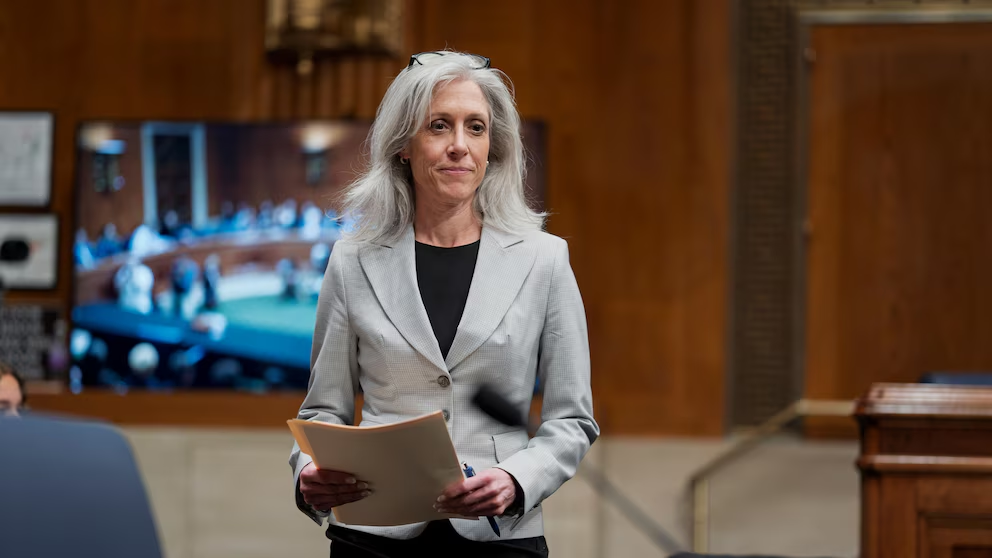
The political landscape of the United States is often marked by strategic moves that shape the future of health policies and administration. Recently, a significant development unfolded as the Senate Committee advanced Susan Monarez for the critical position of CDC Director under the Trump administration. This move has garnered widespread attention across media outlets and public health circles alike, signaling potential shifts in the Centers for Disease Control and Prevention’s (CDC) direction and focus.
The Background of the Nomination
The process of selecting a CDC Director involves rigorous evaluation and multiple layers of scrutiny, especially given the organization’s vital role in public health, disease control, and emergency responses. Susan Monarez’s nomination is unique due to her extensive background in health policy, her experience in federal health agencies, and her nuanced understanding of public health challenges.
The Senate Committee’s decision to advance her nomination indicates a level of confidence in her capabilities and the potential to steer the CDC through evolving health concerns, including pandemic preparedness, vaccine deployment, and health disparities.
What Makes Susan Monarez a Notable Candidate?
Susan Monarez’s professional journey is characterized by her commitment to health equity and her strategic approach to health policy. Her previous roles have provided her with vital experience that aligns well with the CDC’s mission to protect public health in a rapidly changing landscape.
Key Qualifications and Experience
- Extensive government experience: Monarez has held various positions within federal health agencies, offering her insight into inter-agency coordination and policy development.
- Focus on health disparities: Her work emphasizes reducing inequalities in health access and outcomes, a critical area as health disparities continue to challenge the nation.
- Strong policy background: Her background in crafting health policies that respond to emerging threats and pandemics positions her as a forward-thinking candidate.
- Consensus builder: Her ability to work across political lines could be instrumental in guiding the CDC through bipartisan support.
This combination of experience and expertise has led many analysts and stakeholders to see her nomination as a strategic move that could positively influence the CDC’s role in national health security.
Implications of the Senate Committee’s Decision
The advancement of Susan Monarez’s nomination carries several implications for the future of public health in the U.S.:
Potential Policy Directions
- Enhanced focus on health equity: Given her background, there might be a renewed emphasis on addressing health disparities among marginalized communities.
- Modernization of public health strategies: Her innovative approaches could lead to updated frameworks for disease surveillance and emergency preparedness.
- Strengthening vaccine initiatives: With ongoing pandemic challenges, her experience could bolster efforts in vaccine distribution and public education.
Partisan Perspectives
While some view her as a capable and seasoned leader, others are cautious about the political influences impacting health agencies. The debate underscores the importance of transparency and bipartisanship in choosing leaders for critical health roles.
Public and Political Reactions
Reactions to the Senate Committee’s move have been mixed. Supporters praise her qualifications and her potential to bring a fresh perspective to the CDC. Opponents, however, express concerns over political motivations and potential shifts in health priorities.
The media coverage, including the here, provides further insights into the political and administrative layers involved in her nomination process.
Looking Ahead: What to Expect?
If confirmed, Susan Monarez’s leadership could bring transformative changes to the CDC’s approach to public health crises. Her advocacy for health equity and innovative strategies could help bridge gaps in healthcare delivery, especially during emergencies like outbreaks and natural disasters.
Moreover, her appointment may influence the CDC’s collaborations with state and local health agencies, fostering more cohesive and responsive public health initiatives. As the nomination moves closer to final confirmation, stakeholders across sectors will be watching closely.
Challenges and Opportunities
- Challenges: Navigating political expectations and maintaining scientific independence in decision-making.
- Opportunities: Promoting data-driven policies, enhancing community outreach, and strengthening disease prevention measures.
Conclusion
The Senate Committee’s move to advance Susan Monarez as the potential CDC Director signifies an important step in shaping the future of public health policy in the United States. With her extensive experience and focus on health equity, she could bring much-needed perspectives to an agency vital for national well-being.
As her nomination progresses, stakeholders from healthcare professionals to policymakers will be keenly observing the developments, hopeful for leadership that emphasizes science, equity, and resilience.
For more updated news please keep visiting Hourly Prime News.