

Introduction: The Rising Tide of Protests and Political Responses
The socio-political landscape of Mexico has been increasingly tumultuous in recent months, marked by a series of protests, public outcries, and government commentary surrounding issues of tourism, local community sentiments, and governance. One of the most recent and significant developments is the backlash against the surge in mass tourism in popular Mexico cities like Cancun and Mexico City. While tourism has historically been a vital sector bolstering Mexico’s economy, rapid growth and insufficient regulation have led to social friction, environmental concerns, and cultural tensions.
Amidst this environment, Mexico’s President Andres Manuel López Obrador took a controversial stance by **labeling the march against mass tourism as xenophobic**. This statement was met with widespread criticism and debate, revealing underlying issues of governance, community rights, and economic dependency. Critics argue that the government’s failures in managing tourism infrastructure, local sentiments, and social justice have paved the way for these protests. In this article, we delve into the core events, political narratives, community perspectives, and the broader implications of this contentious situation.
The March Against Mass Tourism: A Reflection of Local Discontent
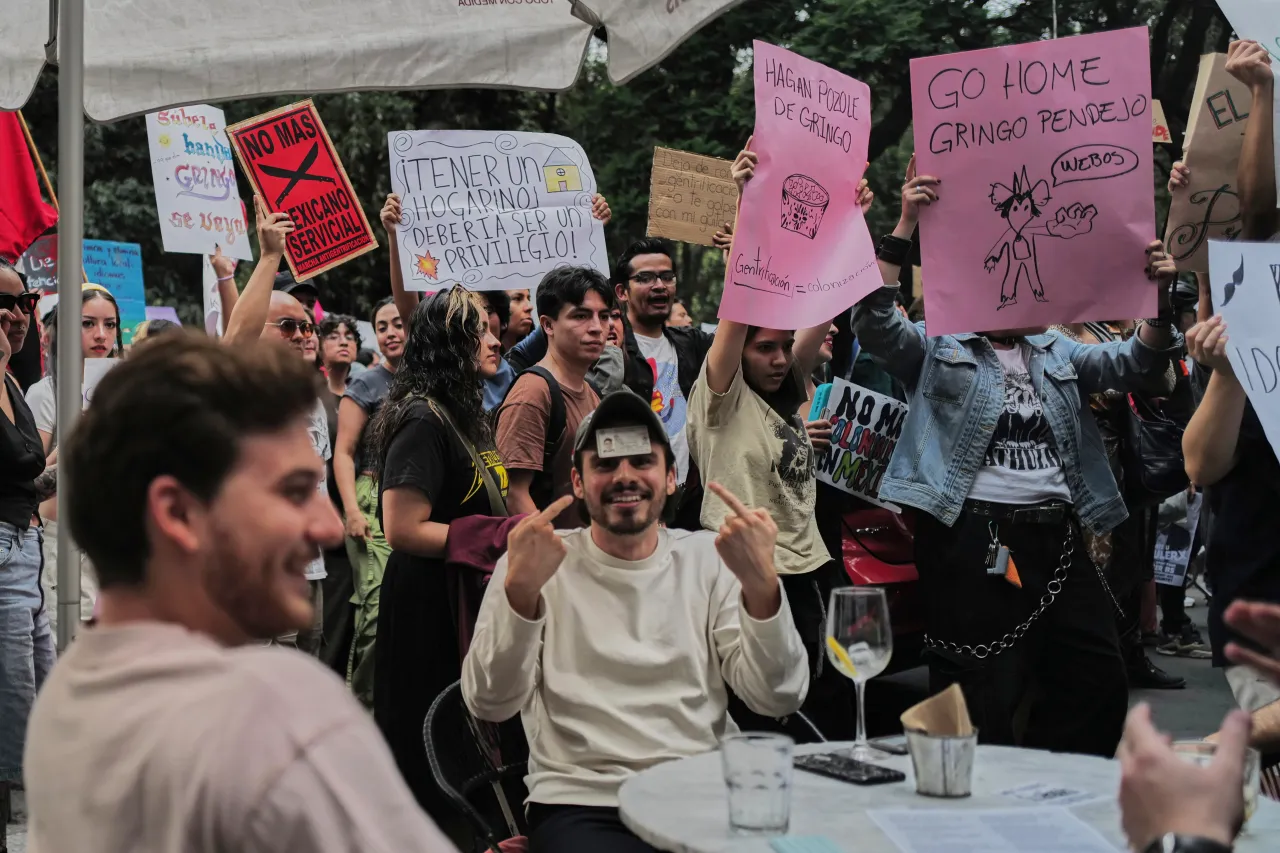
The protests across Mexico, especially prominent in **Mexico City** and tourist hotspots like Cancún, highlight a deep-rooted frustration among local residents. These demonstrations often include **harassment of tourists**, destruction of property, and calls for stricter regulation or even limits on mass tourism activities. One notable incident involved protesters smashing windows and harassing visitors, drawing global media attention to the confrontational nature of the movement.
Many protesters are driven by concerns over **overcrowding**, **environmental degradation**, and the loss of cultural identity. As city streets became battlegrounds, the protests reflected a complex sentiment: a desire to protect local communities from the adverse effects of unchecked tourism while also criticizing the government’s perceived neglect in addressing these issues.
Meanwhile, in Mexico’s cities, **”Mexico for Mexicans”** became a rallying cry among protestors, underscoring a nationalist and anti-foreigner sentiment rooted in the feeling that tourism development has prioritized foreign interests over local well-being. Reports indicate that **protesters feel harassed, their neighborhoods disrupted, and their cultural spaces invaded** by the surge of mass tourism, leading to clashes and an escalation of public outrage.
Government’s Response: Labeling the Protest as Xenophobic
In a surprising move, President Andres Manuel López Obrador publicly **dismissed the protests as xenophobic in nature**. He argued that the demonstrations were fueled by racism and intolerance rather than real grievances related to tourism management. The President insisted that such protests were an attack on Mexico’s economic sector and dismissed concerns over community well-being as exaggerated or unfounded.
This stance ignited widespread criticism. Many scholars, opposition politicians, and civil society groups argued that the government’s response **failed to acknowledge the genuine frustrations** of local communities. Critics emphasized that labeling legitimate protests as xenophobic was a tactic to dismiss and delegitimize community concerns, thereby ignoring the deeper issues at play—including **government failures** in regulating tourism and protecting local interests.
Furthermore, some analysts pointed out that the government’s narrative might be an attempt to **protect economic interests tied to tourism**, which remains a significant contributor to Mexico’s GDP and employment. This perceived prioritization of economic gains over social justice and environmental sustainability has fueled further unrest.
Underlying Causes and Government Failures
Examining the roots of the protests reveals multiple interrelated factors:
- Insufficient Regulation and Infrastructure: Rapid tourism growth has not been matched with adequate infrastructure development, leading to overcrowding, strain on local resources, and deterioration of public spaces.
- Environmental Concerns: Deforestation, pollution, and destruction of coastal ecosystems have become visible issues, alienating residents and environmental activists alike.
- Cultural Erosion: Local communities express fears that mass tourism dilutes authentic cultural expressions, turning vibrant neighborhoods into commercialized zones for foreigners.
- Economic Inequality: The wealth generated by tourism often doesn’t reach local residents equally, leading to disparities, unemployment in certain sectors, and resentment.
- Neglect in Policy Implementation: The government’s failure to effectively regulate tourism development and enforce community-centered policies has further exacerbated tensions.
Critics argue that these failures have created a **breeding ground for social unrest**, with communities demanding greater participation in decision-making and sustainable tourism practices.
Community Perspectives and Cultural Tensions
The protests reveal a **rising consciousness among local residents**, many of whom feel their quality of life has been compromised for the benefit of foreign tourists and large corporations. The phrase **”Mexico for Mexicans”** symbolizes an aspiration among protesters to preserve Mexican identity and sovereignty over their public spaces.
In some cases, the protests have turned violent, with incident reports of **vandalisms and harassment** towards tourists and business owners, revealing the depth of frustration and perceived marginalization. For many, the protests are not merely about limiting tourists but about asserting **community rights** and demanding **responsible tourism** that respects local customs, environment, and socio-economic realities.
Aside from economic concerns, cultural identity plays a central role. Residents worry about their neighborhoods being transformed into **tourist spectacle zones** that erode traditional practices and place community cohesion at risk.
**Meanwhile, remote workers and expats**, drawn to Mexico’s affordable lifestyle and scenic beauty, have found themselves in the middle of this conflict. Some protestors see the influx of digital nomads as part of the problem, further escalating tensions with locals who believe that the government is prioritizing foreign investment over community welfare.
International Reactions and Broader Implications
The situation in Mexico has garnered attention across international media outlets. Reports highlight the **complex balance between economic growth and social justice**, emphasizing the need for sustainable tourism reforms.
Organizations and foreign governments have expressed concern over the **potential for escalating violence**, which could harm Mexico’s image as a tourist destination. The protests also pose questions about the role of government in **protecting local communities** in the face of globalization and economic pressures.
Moreover, the protests have echoes beyond Mexico — similar patterns are being observed in other tourist-heavy countries where rapid development clashes with community needs, environmental sustainability, and cultural preservation.
Looking Ahead: Navigating Turbulent Waters
The controversy surrounding mass tourism protests in Mexico underscores **the necessity for nuanced policies** that involve local communities, environmental considerations, and sustainable growth. As the protests continue, policymakers face the challenge of **balancing economic benefits** with **social and environmental responsibilities**.
Some potential pathways include:
- Community-led tourism planning: Giving local residents a central role in decision-making processes.
- Regulation and enforcement: Implementing stricter controls on large-scale developments and ensuring environmental protections.
- Promotion of eco-tourism and cultural tourism: Encouraging responsible travel that benefits communities rather than exploiting them.
- Addressing economic disparities: Ensuring that the economic benefits of tourism are widely shared, reducing inequality and resentment.
Critics argue that if the government continues to dismiss community concerns and labels protests as xenophobic, it risks further alienating local populations and destabilizing a vital economic sector.
Conclusion: A Critical Crossroads for Mexico
The situation unfolding in Mexico serves as a stark reminder of the **complexities of modern tourism** and the importance of **inclusive, sustainable development**. While tourism undoubtedly brings economic advantages, its unchecked expansion can lead to social fragmentation, environmental degradation, and cultural loss.
The president’s controversial characterization of the protests as xenophobic reflects deeper struggles within Mexico’s approach to development and governance. The protests and community responses highlight the urgent need for **dialogue, respect for local voices, and responsible policies** that prioritize the wellbeing of Mexican communities.
As Mexico continues to navigate these turbulent waters, the path forward will depend on **balancing economic aspirations with social justice and environmental sustainability**. The coming months will be critical in shaping how the country addresses its tourism challenges and the rights of its local citizens.
For more updated news please keep visiting Hourly Prime News.