

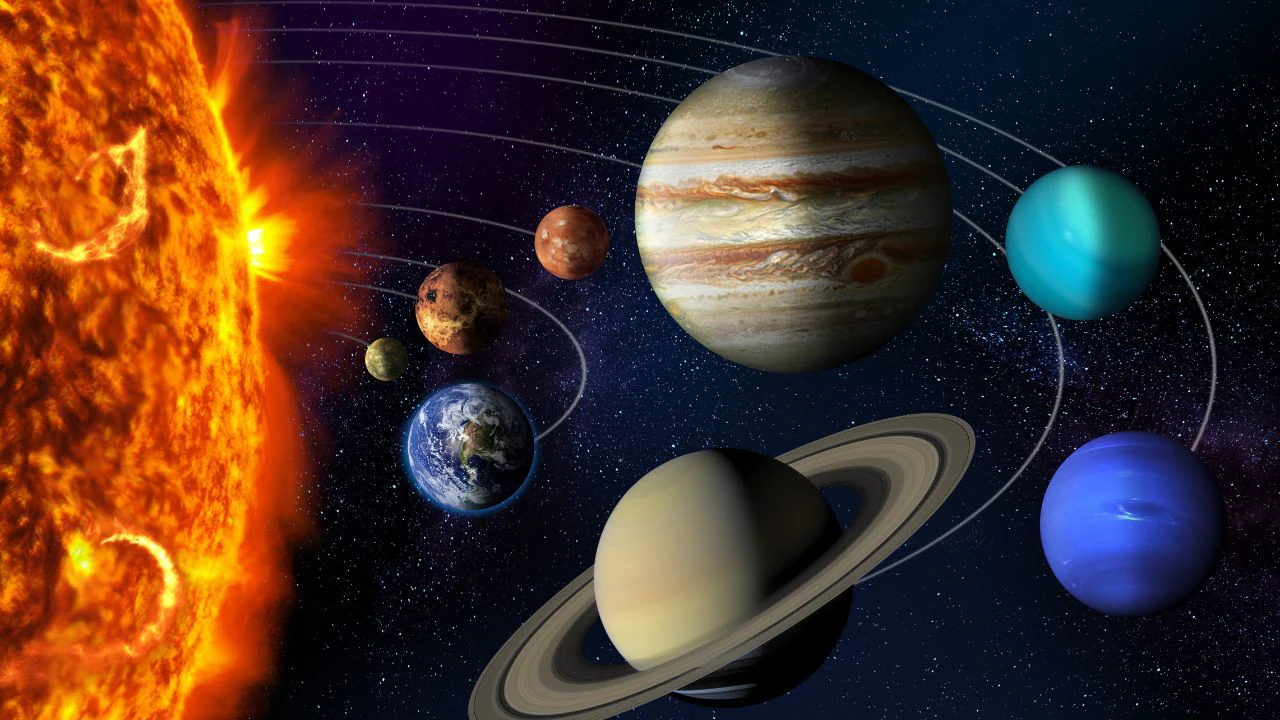
Recent findings by astronomers have sent shockwaves through the scientific community, revealing that our solar system may be racing through space at a rate far faster than previously believed. This discovery challenges longstanding assumptions embedded within the standard model of cosmology and raises profound questions about the mechanics of our universe. Evidence from multiple studies suggests that our solar neighborhood is not just drifting but hurtling through the cosmos at startling speeds, potentially up to three times faster than expected.
Unveiling the Movement of Our Solar System
Several recent reports indicate that the solar system’s velocity is significantly higher than the conventional estimates. As highlighted by astronomers, measurements suggest that our solar system moves through the galaxy at speeds approaching 1000 kilometers per second, a stark contrast to what earlier models predicted. These findings are based on the analysis of stellar motions, cosmic background radiation, and other astrophysical data that collectively point toward an unexpectedly high velocity.
This rapid pace of movement has crucial implications for our understanding of the universe’s structure. If our solar system is moving considerably faster than models predict, it could mean that fundamental assumptions about the distribution of mass and dark matter in our galaxy might need to be revisited. Moreover, such a velocity could influence our interpretation of cosmic microwave background data and the overall dynamics of the universe.
Implications for Current Cosmology
The implications of this discovery are profound. The standard cosmological model, which relies heavily on the framework of general relativity and the presence of dark matter and dark energy, assumes certain uniformity in the motions of celestial bodies at large scales. A faster-than-expected solar system challenges these assumptions and may point to as-yet-unknown phenomena or materials influencing cosmic dynamics.
Some theorists suggest that this could hint at the possibility of modifications to gravity on galactic scales or the existence of new, undiscovered forms of matter. Alternatively, it raises the question of whether our galaxy or even the entire universe is moving relative to some larger, unseen structure or frame of reference. These possibilities could necessitate a paradigm shift, potentially redefining our comprehension of the universe’s expansion, structure, and fundamental laws.
What Does This Mean for the Standard Model?
If the solar system indeed travels through space at such a remarkable pace, it might imply that we need to revisit and possibly revise the fundamental assumptions underlying the standard cosmological model. Critical questions arise: Are our current methods of measuring cosmic velocities accurate? Is our understanding of gravitational interactions complete? And do current models sufficiently account for all the forces and matter influencing large-scale movements?
Researchers are now examining these new findings alongside existing data, trying to reconcile the discrepancy. Some propose that the universe might be more dynamic and complex than the simplistic models have suggested. This development echoes similar surprises in the realm of dark matter and dark energy studies, where observations often challenge the theoretical constructs designed to explain cosmic phenomena.
The Next Steps in Astronomical Research
Astronomers worldwide are now prompted to undertake more precise measurements and develop refined models to understand these unexpected velocity values. Enhanced observations from telescopes and space missions could help determine whether the solar system’s rapid movement is an anomaly or a real indication of a fundamental aspect of cosmic structure.
This ongoing investigation underscores the importance of continually questioning and testing scientific assumptions. It also illustrates how new data can dramatically alter our perception of the universe, guiding us toward a deeper and more accurate understanding of cosmic laws.
Broader Philosophical and Scientific Questions
The discovery of such rapid movement raises intriguing philosophical questions about our place in the universe. Are we simply passengers on a cosmic journey shaped by forces beyond our current comprehension? How does this affect our understanding of the universe’s origins and ultimate fate?
Furthermore, this revelation prompts us to re-explore cosmic theories, potentially opening pathways to discoveries that could unify our understanding of gravity, quantum mechanics, and dark matter. The notion that the very fabric of space and time might be more dynamic and less well-understood than we thought propels scientific inquiry into new territories.
Conclusion
In sum, the recent findings about our solar system’s unnaturally high velocity challenge the core principles of cosmology and underscore the need for renewed investigation and open-mindedness. As technology advances and more data becomes available, scientists are poised to refine or even revolutionize our understanding of cosmic phenomena.
This landmark discovery exemplifies how the universe continues to surprise us and reminds us that our cosmic journey toward understanding is far from complete.
For more updated news please keep visiting Hourly Prime News.