

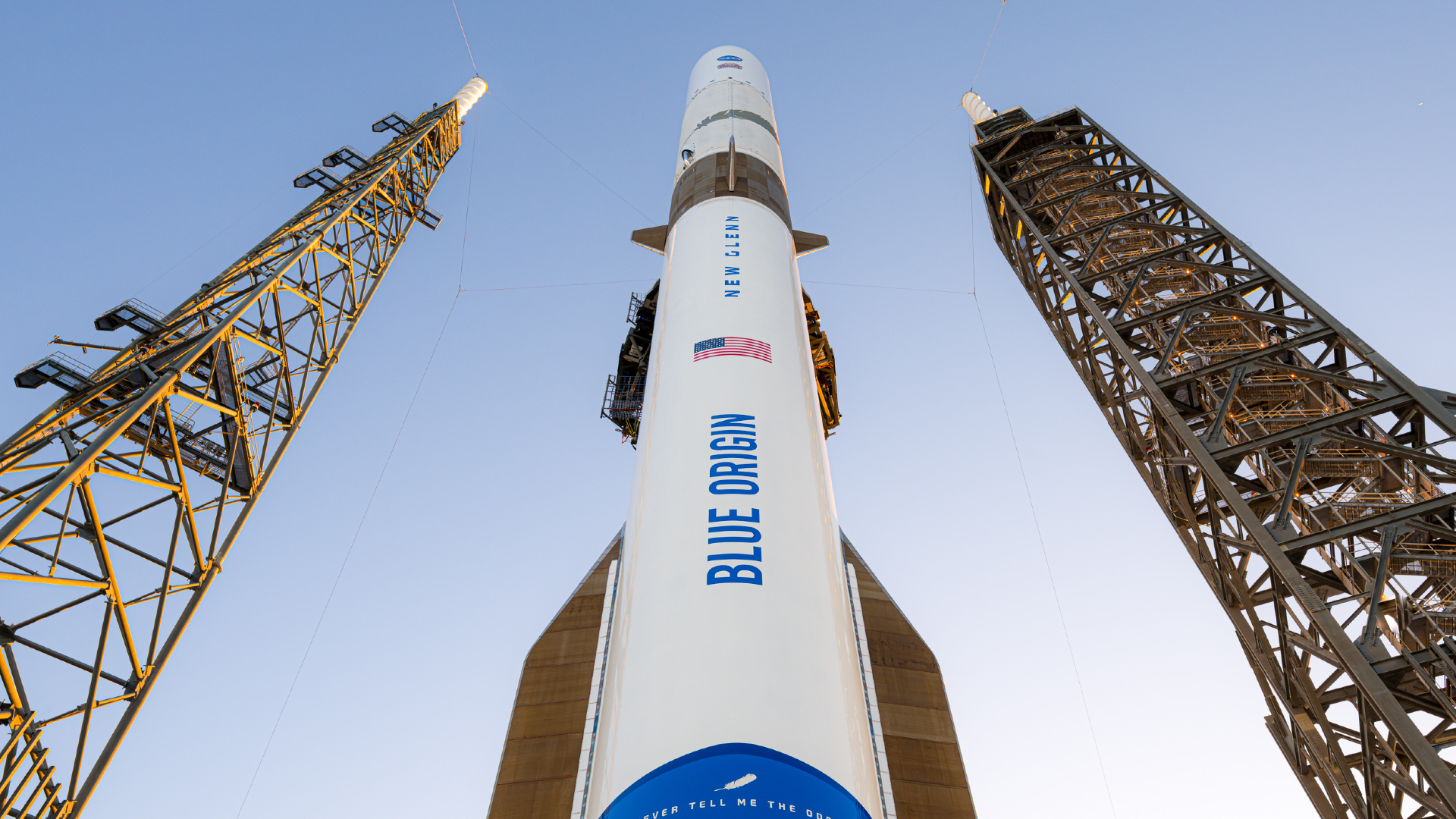
In a remarkable feat of modern aerospace engineering and space exploration, Blue Origin has once again demonstrated its prowess with the successful deployment of Mars-related satellites and a groundbreaking booster landing. The recent mission not only highlights the significant progress Blue Origin has made in its space endeavors but also signifies a pivotal step towards more ambitious Mars exploration missions in the future.
Deployment of Mars Satellites: Pioneering New Frontiers
One of the most notable achievements in Blue Origin’s recent sortie is the deployment of satellites aimed at studying Mars more comprehensively. According to reports from CGTN News, the mission involved deploying multiple satellites specifically designed for Mars research. These satellites are equipped with advanced sensors to gather critical data regarding Mars’ atmosphere, surface conditions, and potential signs of past or present life.
The importance of this deployment cannot be overstated. As the planet Mars continues to be a major focus for space agencies worldwide—including NASA, ESA, and private companies like SpaceX—having dedicated satellites in orbit will improve our understanding of Martian weather patterns, surface geology, and perhaps even aid future manned missions. Blue Origin’s initiative aligns with the broader goal of establishing a sustainable human presence on Mars, by providing essential reconnaissance data.
The Breakthrough of Booster Landing Technology
In addition to satellite deployment, Blue Origin achieved a historic milestone with the successful landing of their New Glenn booster. As reported by BBC, this marked the first time that Blue Origin successfully completed such a complex mission, showcasing the robustness and reusability of the New Glenn rocket.
The booster landing technology mirrors the advancements popularized by SpaceX but tailored with Blue Origin’s engineering innovations. The booster, after propelling the satellites into orbit, executed a precise descent, landing upright on a designated landing pad. This achievement not only signifies substantial cost savings by allowing booster reuse but also enhances the sustainability of future space launches.
Strategic Collaborations and Future Missions
Blue Origin’s recent activities have unfolded amidst a rapidly evolving commercial space landscape, with competitors like SpaceX team-mates and Elon Musk making headlines. According to The Times of India, strategic collaborations with space agencies and commercial partners are creating new opportunities for exploration missions.
In the upcoming months, Blue Origin plans to expand its payload capacity and refine its reusable rocket technology, aiming for more ambitious endeavors toward Mars and beyond. Such perseverance and technological refinement position Blue Origin as a formidable player in the space race, with a focus on making space more accessible and sustainable.
Blue Origin’s Role in Mars Exploration
Blue Origin’s involvement in exploring Mars doesn’t stop at satellite deployment and booster reusability. They are actively participating in critical missions like the NDTV, which focus on the ESCAPADE mission a collaboration with NASA to send spacecraft for Mars studies. These missions involve deploying sophisticated instruments capable of investigating the Martian magnetic field, surface composition, and atmosphere, aiding humanity’s goal to establish a sustained presence on the Red Planet.
Implications for the Future of Space Exploration
Blue Origin’s recent accomplishments serve as pivotal milestones that underscore the rapidly evolving landscape of space travel. The combination of satellite deployment, reusable rocket technology, and strategic international collaborations highlights the multifaceted approach needed for future exploration. By minimizing costs through reusable boosters and deploying targeted scientific payloads, the company is setting the stage for a new era where space missions become more accessible and economically sustainable.
The successful booster landing has profound implications, as traditional rocket stages are typically discarded after use, contributing to space debris and rising costs. Now, with the ability to land and reuse boosters reliably, Blue Origin is helping to reduce the environmental impact and cost barrier of space missions, fostering continual innovation and expansion of human presence beyond Earth.
Conclusion: A Bright Future for Space Exploration
As Blue Origin continues to push the boundaries of aerospace technology, the hybrid of robust engineering, strategic innovation, and international collaboration will drive new discoveries. The deployment of Mars satellites combined with the reusability showcased by the booster landing exemplifies a forward-looking approach that aims to make space more reachable and sustainable.
With ongoing developments and upcoming missions, Blue Origin stands as a beacon of progress in the realm of space exploration, inspiring a new generation of scientists, engineers, and explorers committed to unlocking the secrets of the cosmos.
For more updated news please keep visiting Hourly Prime News.