

The recent release of high-resolution images of black holes by the Event Horizon Telescope (EHT) has marked a pivotal moment in astrophysics, challenging and testing long-standing theories of gravity. Since Einstein formulated his general theory of relativity over a century ago, scientists have used increasingly sophisticated tools to examine its predictions in extreme environments. The EHT images serve as an unprecedented testing ground for Einstein’s theory of gravity, particularly in the vicinity of black holes where the fabric of spacetime is most profoundly warped. These images are more than just visual representations; they are crucial data that aim to verify, refine, or even challenge the fundamental principles underlying our understanding of the universe.
High-Resolution Black Hole Images and Their Significance
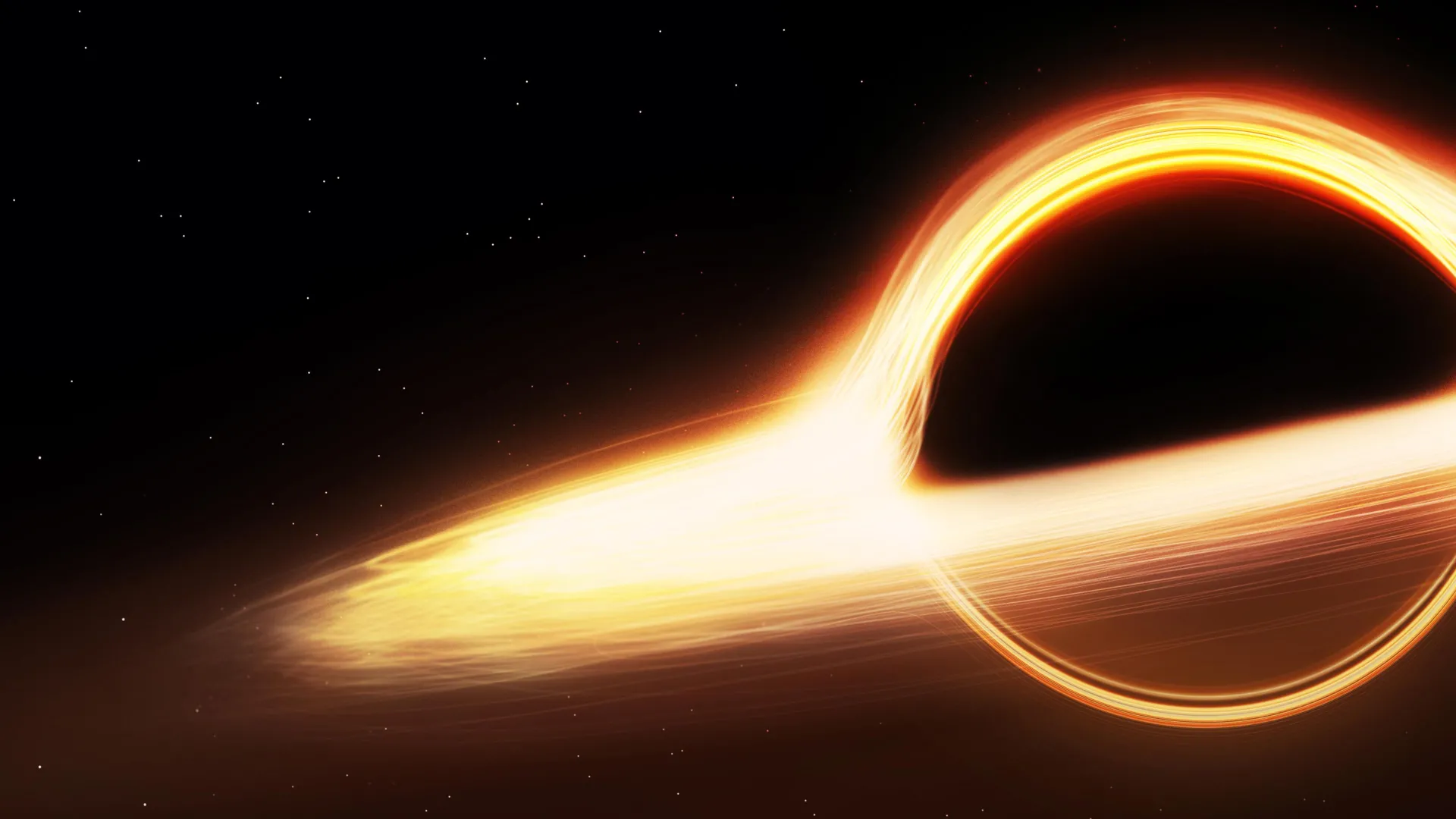
The groundbreaking imaging projects, such as those reported by AZoQuantum and others, have provided remarkable visual confirmation of the existence of black holes as Einstein predicted. The images showcase the shadow of the black hole’s event horizon, surrounded by the luminous accretion disk of infalling matter. These vivid pictures allow scientists to test the predictive precision of Einstein’s equations in the strong gravity regime, where curvature effects are immense.
Why are these images so critical?
- They offer a direct observational test of the spacetime geometry near the event horizon.
- They help verify the size and shape of the shadow predicted by general relativity.
- They provide insights into the behavior of matter under extreme gravitational influences.
In particular, the recent observations of supermassive black holes, such as M87* and Sagittarius A*, provide real-world laboratories to scrutinize Einstein’s theory against alternative models. From the shape of the shadows to the dynamics of the accretion disks, every feature can potentially reveal deviations or affirmations of the classical relativity framework.
Testing Einstein’s Theory: Current Findings and Future Prospects
Do the Observed Data Confirm Einstein’s Predictions?
Initial analyses of the EHT data reveal a remarkable consistency with Einstein’s predictions. The shape and size of the black hole shadows align closely with what general relativity forecasts, bolstering confidence in Einstein’s description of gravity in these regimes. However, scientists remain cautious and open to refinements, knowing that subtle deviations could emerge with more precise measurements.
Extending the Testing of Gravity with Black-Hole Shadows
Looking ahead, technological advancements are poised to increase the resolution and sensitivity of black hole imaging. As described by studies in Nature, the future ability to test theories of gravity with black-hole shadows will be significantly enhanced, potentially uncovering new physics beyond Einstein’s framework. Developing methods to observe smaller features and dynamic changes in black hole environs might unveil phenomena that challenge the current understanding of gravity.
The Broader Implications: Different Black Hole Types and New Challenges
Are There Different Types of Black Holes?
Scientific discoveries continue to widen our perspective on black holes. With innovative imaging methods and theoretical models, researchers have identified various types of black holes beyond the classical Kerr black holes predicted by Einstein. As reported by Phys.org, these include potentially exotic variants with differing properties, such as charged or higher-dimensional black holes, each offering unique tests for gravity theories.
New Methods Puts Einstein to the Test
The development of novel techniques has enabled scientists to probe these diverse black hole types more effectively. Researchers are now examining whether Einstein’s equations hold universally or if modifications are necessary in extreme or alternative scenarios. The possibility of discovering deviations may lead to new physics, possibly integrating quantum mechanics with gravity—a goal that remains central in theoretical physics.
High-Resolution Imaging and Challenges to Classical Theories
The high-resolution images have posed new challenges to Einstein’s relativity, primarily because they allow for precision tests that were not feasible before. As outlined in articles by AOL.com, recent images with higher resolution than earlier data further scrutinize the assumptions and predictions of Einstein’s theory, especially in relation to the behavior of spacetime near the event horizon.
These challenges stimulate the development of more refined models and alternative theories, such as modified gravity or quantum gravity theories. Ultimately, these ongoing investigations aim to answer fundamental questions: Does Einstein’s theory fully account for the phenomena observed, or are we on the brink of discovering a more comprehensive framework?
The Future of Gravitational Research Through Black Hole Imaging
The coming years promise exciting developments in gravitational physics. With next-generation telescopes and innovative imaging techniques, scientists anticipate even more detailed views of black hole environments. These advancements will deepen our understanding of gravity under extreme conditions, pushing the boundaries set by Einstein’s equations.
This progression not only tests Einstein’s legacy but also opens pathways to new theories that may reconcile gravity with quantum mechanics, a longstanding challenge in fundamental physics. The continuous refinement and testing of gravity theories through direct observations exemplify the synergy between theoretical work and cutting-edge technology, driving the field toward a more profound grasp of the universe.
Conclusion: A New Era for Einstein’s Gravity Theory?
The high-resolution images from the Event Horizon Telescope have dramatically enhanced our capacity to test Einstein’s general theory of relativity. While current data largely conforms to Einstein’s predictions, the quest for understanding gravity continues, fueled by advanced imaging and innovative methodologies. The exploration of black hole shadows, their diverse types, and the potential for deviations from classical theories could lead to paradigm shifts in physics.
As scientists extend their observational capabilities, the coming decades promise to address some of the most profound questions about the universe’s fundamental forces. Whether Einstein’s theory stands the test of new data or requires substantial modifications, this era marks an exciting chapter in the quest to understand the true nature of gravity and spacetime.
For more updated news please keep visiting Hourly Prime News.