

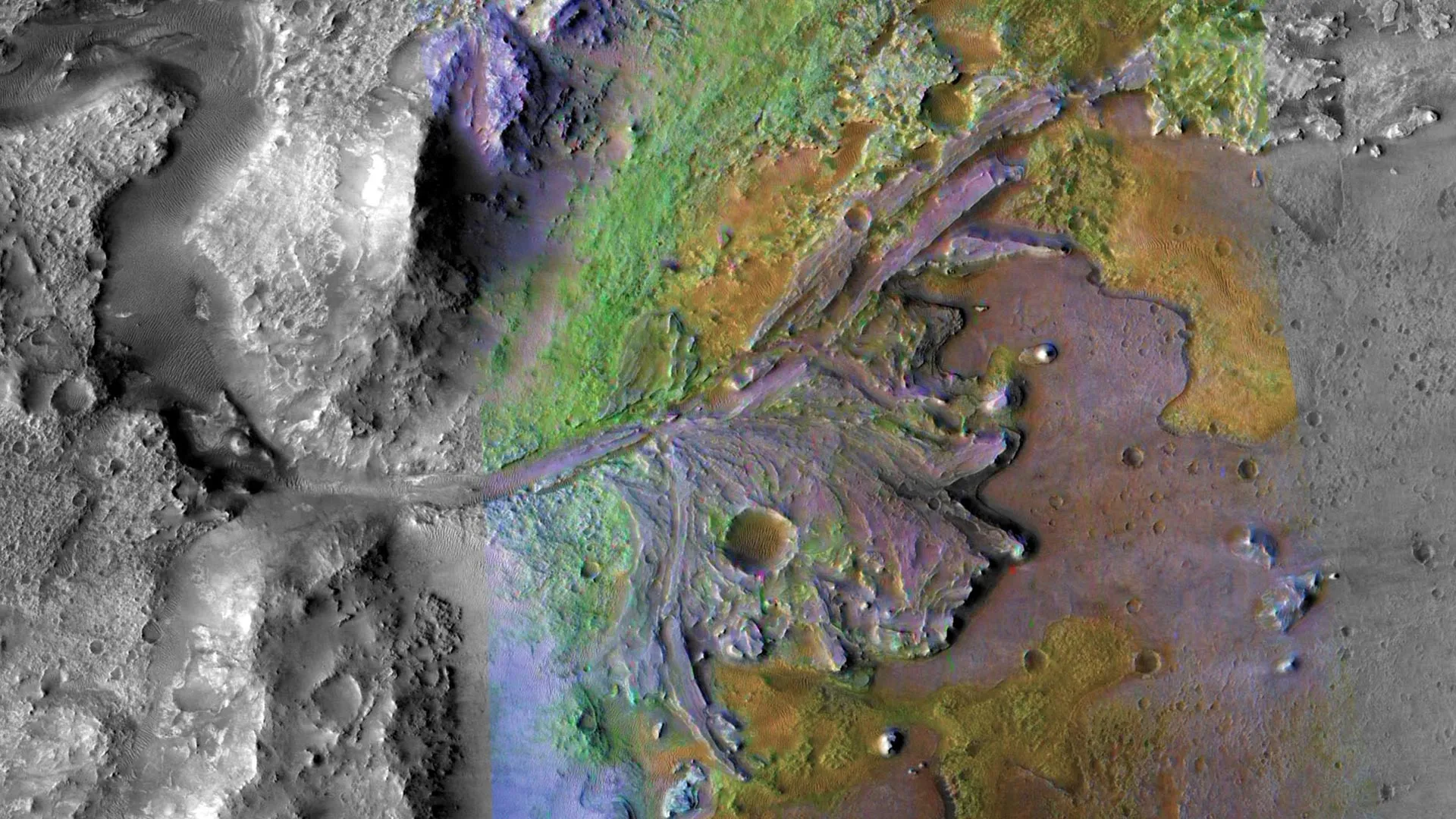
The exploration of Mars has been a captivating endeavor for scientists and space enthusiasts alike. The recent discoveries made by NASA’s Perseverance rover have opened new frontiers in our understanding of the Red Planet’s ancient environment and its potential to harbor life. Particularly, the data collected from Jezero Crater — the landing site of the rover — underscores the planet’s complex history with water, revealing multiple habitable water periods that suggest Mars might have been hospitable for life in several distinct eras.
Unveiling Mars’ Past Water Activity
The Perseverance rover has been meticulously analyzing rock formations, mineral deposits, and sediment layers within Jezero Crater. The rover’s instruments have detected evidence of multiple periods where liquid water existed on Mars’s surface — a crucial factor in assessing the planet’s habitability. These findings are cemented by the detection of various mineral phases, such as clays and sulfates, which form in the presence of water, indicating that Mars experienced fluctuating environmental conditions over millions of years.
One of the most compelling aspects of the data is the identification of layered sedimentary deposits. These layers point towards several independent water episodes, each with distinct chemical compositions and durations, painting a picture of a landscape that evolved over geologic timescales. This layered stratigraphy points toward a series of aqueous environments that could have supported microbial life if such life ever existed there.
Multiple Water-Hosting Episodes: Evidence and Implications
The evidence collected by the rover suggests that Jezero Crater was not just a transient water body but experienced several epochs of water activity, some potentially long enough to develop habitable conditions. These include:
- Early aqueous environments: Evidence indicates that during the crater’s initial formation, water was abundant enough to carve out the basin, creating rivers and lakes that could support life. Mineral signatures from this period show high net water-rock interaction, crucial for creating complex organic molecules.
- Intermediate water episodes: Subsequent periods appear to have seen lakes with varying chemistries, possibly influenced by volcanic activity or climate changes. These episodes are marked by mineral deposits that hint at altered pH conditions, perhaps creating niches suitable for microbial communities.
- Recent water activity: The rover’s observations also point toward more recent water episodes that led to the formation of evaporites and sulfate minerals, suggesting episodes of drying and wetting cycles, much like those in terrestrial salt flats and evaporative basins.
This multilayered evidence broadens the scope of Mars’s habitability, suggesting the planet was not just temporarily wet but experienced several windows of environmental stability conducive to life development.
Significance of the Findings for Astrobiology
The implications for astrobiology are profound. The presence of multiple habitable water periods enhances the possibility of finding biosignatures — measurable signs of past life. Organic molecules, which are the building blocks of life, have already been identified in some samples, reinforcing the hypothesis that Mars once hosted conditions favorable to life.
Furthermore, the diverse environmental conditions implied by these water episodes could have supported various microbial metabolisms. From neutral pH lakes to more acidic or alkaline environments, the variety of conditions strengthens the argument that if life ever existed on Mars, it might have found refuge in these changing niches.
Other Exciting Discoveries from Mars
In addition to the water history, recent findings have added to the compelling case for past life. For instance:
- : Researchers have uncovered bio-signatures on Mars that directly point to past biological activity — a discovery that has the potential to redefine our understanding of extraterrestrial life.
- : The landscape of Mars indicates a complex history of environmental change and possibly diverse habitats.
- : Evidence of organic compounds could be indicative of biological processes or the potential for life to have once thrived.
The Road Ahead: Future Missions and Research
The findings from Perseverance are only the beginning. Future missions like NASA’s planned sample return and other international initiatives aim to bring these promising samples back to Earth for extensive analysis. Such endeavors will help confirm whether the organic molecules and biosignatures detected are indeed signs of past life or simply the result of abiotic processes.
Scientists are also developing new models to better understand the climate evolution of Mars, tracking how its water stability fluctuated over time and what this means for habitability. The knowledge gained from Jezero Crater sets the stage for identifying other potential sites across the planet where habitable conditions may have persisted.
Conclusion
The recent discoveries about Mars’s Jezero Crater underscore that the planet’s history is far more dynamic and intriguing than previously thought. The evidence for multiple habitable water periods reveals a complex story of environmental change, with transient lakes and orienting conditions that might have supported life. As we continue to explore, these revelations move us closer to answering the fundamental question: Was life ever present on Mars?
The work of Perseverance symbolizes humanity’s relentless quest to understand our place in the universe, opening doors for future discoveries that could forever alter our perspective on life beyond Earth.
For more updated news please keep visiting Hourly Prime News.