

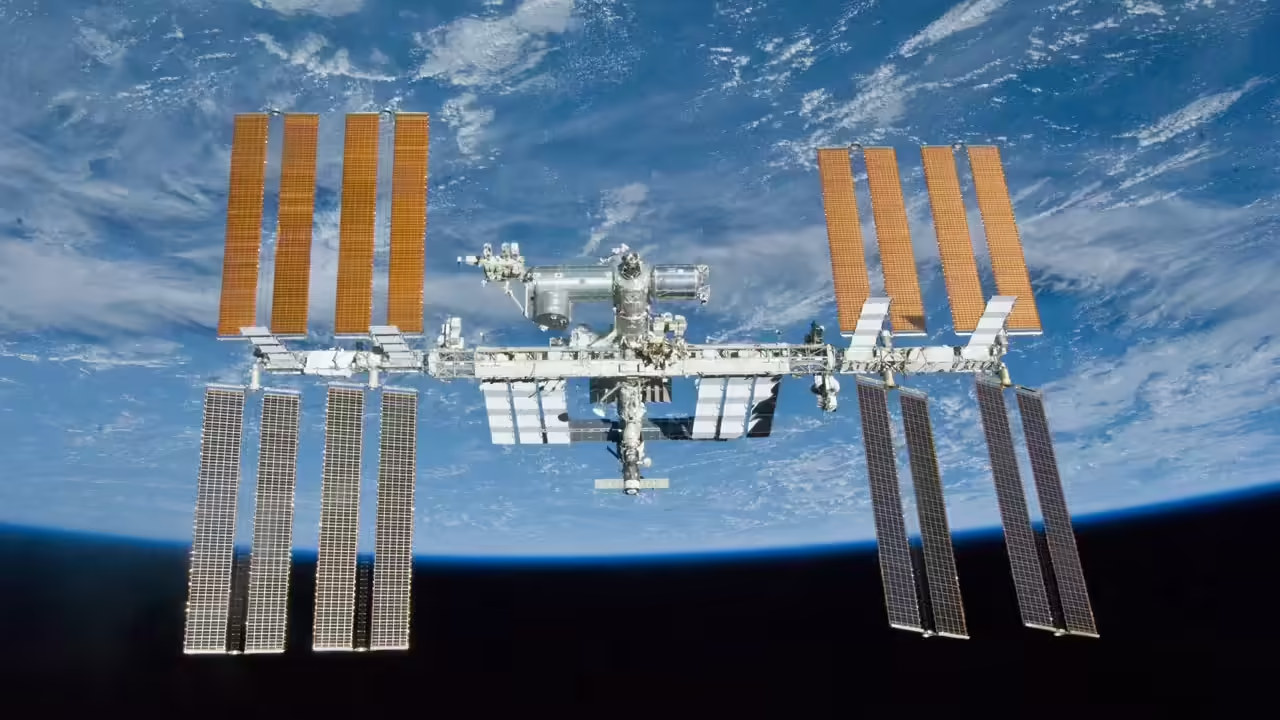
The International Space Station (ISS), an iconic symbol of international cooperation and human ingenuity, is scheduled to retire by 2030. This impending conclusion raises significant questions about what will fill the void in low Earth orbit (LEO) and how space agencies and private stakeholders will manage the resulting space debris. As humanity pushes further into space exploration, the retirement of the ISS not only marks the end of a pivotal chapter but also underscores the urgent need to rethink space debris management strategies.
The Retirement of the ISS: What’s Next in Orbit?
Details of the ISS Transition
According to recent reports, including ISS to retire in 2030: What comes next in orbit? by NewsBytes, the station’s decommissioning is a monumental event in space history. Post-retirement, the orbit will be increasingly cluttered with defunct satellites, spent rocket stages, and other remnants of human activity.
Emergence of Private Space Stations
One of the central debates surrounding the ISS’s retirement involves the role of private companies. Could private enterprises develop space stations to fill the gap? As discussed by Space: The Next Industrial Frontier?, private space stations are being considered as a viable alternative for research, tourism, and even manufacturing in orbit. Companies like Axiom Space and others have begun developing modular stations that could operate independently or alongside future government stations.
Managing Space Debris: A Critical Challenge
The Current State of Space Debris
In the current scenario, space debris has become a significant global concern. UNESCO estimates over 23,000 trackable objects are cluttering Earth’s orbit, with millions of smaller fragments creating a hazardous environment for active spacecraft. The retirement of the ISS could exacerbate this problem unless proactive measures are implemented.
Technological Innovations in Debris Removal
- Active Debris Removal (ADR): Techniques like robotic arms, nets, harpoons, and ion-beam methods are being developed to capture and deorbit debris. Notably, companies such as RemoveDEBRIS have successfully tested some of these technologies.
- Laser Ablation: Ground-based laser systems could be used to gently push debris into Earth’s atmosphere, where it will burn up harmlessly.
- Satellite Swarms: Deploying coordinated groups of small satellites to intercept and deorbit larger debris is a promising approach currently under exploration.
International Collaboration and Policy Frameworks
Effective debris management necessitates global cooperation. Agreements like the *Outer Space Treaty* and subsequent guidelines aim to promote responsible behavior, including debris mitigation and remediation. However, enforcement remains challenging, and with the ISS’s retirement, the need for stronger international frameworks becomes even more crucial.
The Role of Private Sector and Emerging Technologies
Private Initiatives for Space Debris Management
Private companies are at the forefront of developing innovative solutions. For example, Northrop Grumman and Astroscale have announced plans to deploy debris removal missions. These efforts are complemented by advancements in AI, machine learning, and robotics, which can enable autonomous debris tracking and capture.
Regulatory and Ethical Considerations
As private companies partake in debris removal, regulatory frameworks must evolve to address liability, ownership rights, and ethical implications. Ensuring that debris removal activities do not inadvertently create more hazards or infringe upon other nations’ or companies’ assets is vital.
Long-Term Outlook and Preparedness
Creating a Sustainable Space Environment
The eventual transition from the ISS to private and international endeavors underscores the necessity of establishing sustainable practices. This includes designing future satellites and stations with end-of-life plans, using debris-resistant materials, and adopting stricter manufacturing standards.
Future Infrastructure and Innovation
Looking ahead, the focus should also be on developing resilient space infrastructure capable of withstanding debris impacts. Initiatives like space weather forecasting, real-time debris monitoring, and debris mitigation simulations will play essential roles in safeguarding future missions.
Conclusion: Navigating the Next Phase of Human Presence in Space
The upcoming retirement of the ISS marks both a milestone and a challenge in space exploration. It invites us to reassess our approach to space sustainability, emphasizing innovative debris management solutions and international cooperation. The success of these efforts will determine our ability to maintain a safe, sustainable environment for future missions, commercial ventures, and humanity’s broader ambitions beyond Earth.
In summary: The future of space debris management after the ISS’s retirement in 2030 will depend heavily on technological innovation, collaborative policies, and responsible practices by both public and private sectors. The importance of creating sustainable space activities cannot be overstated, as we stand on the brink of a new era in space exploration and utilization.
For more updated news please keep visiting Hourly Prime News.