

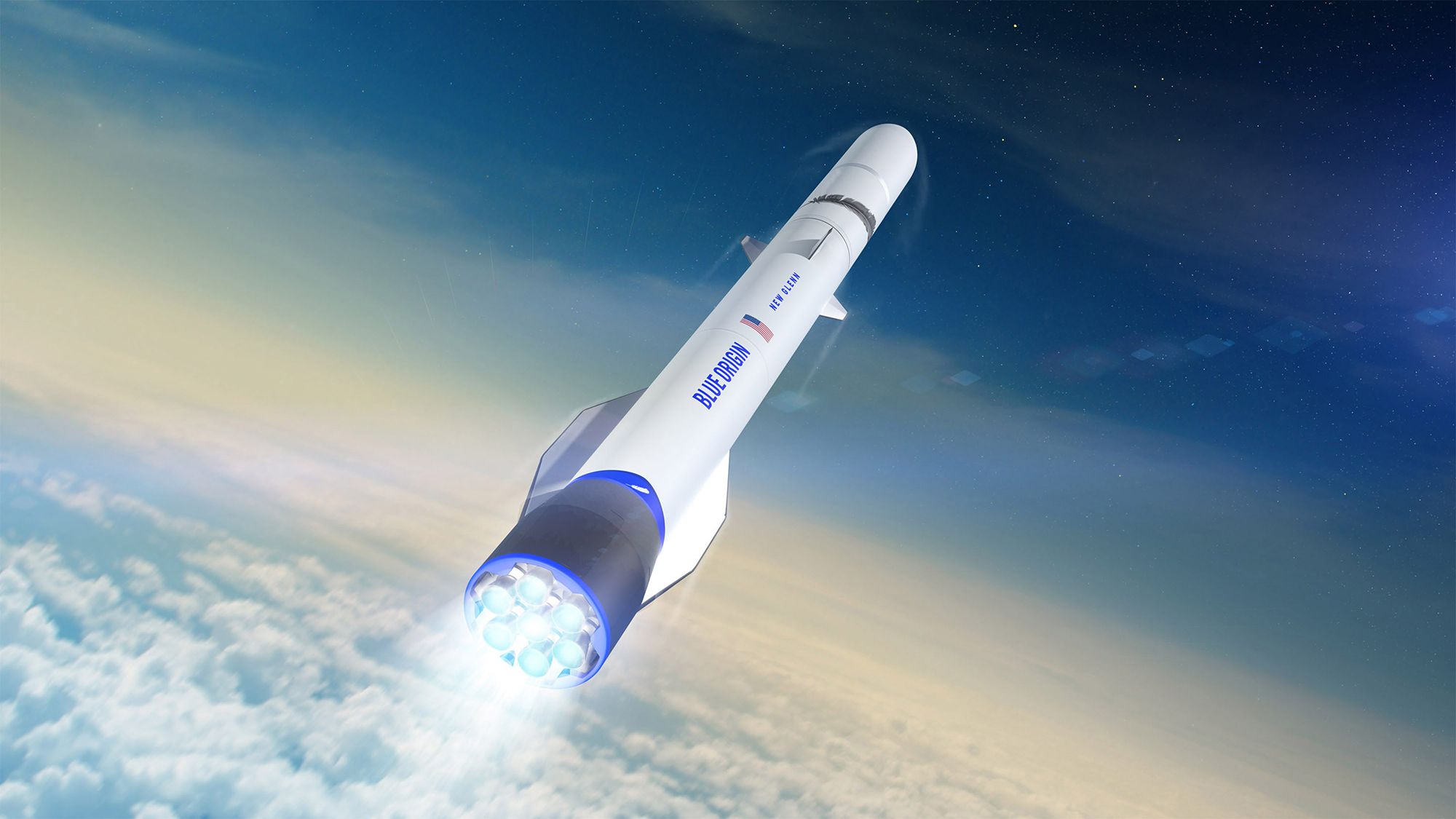
The race to explore the cosmos has never been more intense, with private industry giants and government agencies pushing the boundaries of space technology. Among these pioneers, Jeff Bezos’s Blue Origin has been making significant strides toward achieving groundbreaking missions, especially with its ambitious plans for Mars exploration. Recently, Blue Origin successfully conducted a series of tests on its flagship rocket, New Glenn, marking a pivotal step toward future interplanetary missions. This comprehensive overview explores the recent developments, technological innovations, and the strategic importance of these tests in the context of Mars exploration.
Recent Test Developments: A Significant Milestone
Firing Up the New Glenn Rocket
The fire test of the New Glenn rocket is a crucial component in validating its propulsion systems, structural integrity, and overall readiness for its upcoming missions. According to recent reports from India Today, the tests involved rigorous static fire procedures where Blue Origin’s engineers carefully ignited the rocket’s engines to observe their performance under live conditions.
Technological Innovations & Significance
- Powerful Engines: The New Glenn employs next-generation reusable rocket engines designed to deliver high thrust and efficiency, critical for carrying heavy payloads necessary for Mars missions.
- Reusability: A key feature tested during these procedures is the rocket’s ability to withstand multiple launches and re-entries, reducing costs and increasing mission frequency.
- Structural Robustness: The tests also assessed structural resilience against the extreme stresses of launch and flight, ensuring safety and reliability for long-duration interplanetary journeys.
- Payload Capacity: The New Glenn’s design enables it to carry significant payload mass—an essential factor for the complex equipment and supplies needed for Mars expeditions.
Preparation for Future Missions
Supporting NASA’s EscaPADE Mission
Blue Origin’s recent static fire test was not just an isolated technological check but part of broader preparations to support NASA’s EscaPADE (Escape and Plasma Acceleration Dynamics Explorers) mission. As detailed in reports from Spaceflight Now), the static fire tests aimed to validate the engine systems for upcoming launches planned to aid human exploration of Mars.
Strategic Implications
The consistent testing and validation of the New Glenn underscore Blue Origin’s commitment to establishing a reliable launch infrastructure for Mars. These tests are critical steps in reducing uncertainties associated with deep space travel. Moreover, they bolster Blue Origin’s competitive edge against other aerospace players, emphasizing the company’s ambition to be a leader in interplanetary travel. The ability to carry larger payloads, ensure safety, and achieve cost-effective reuse are vital objectives targeted through these recent test campaigns.
Upcoming Launches & Spotting on Cape Canaveral
Recent sightings on Cape Canaveral’s launch pads provide a visual testament to the progress Blue Origin is making. As reported by Florida Today, the New Glenn has been observed both on the launch pad and being prepared for its second launch attempt.
Visual Progress & Test Fire Highlights
- Rocket on Launch Pad: The recent images depict Blue Origin’s New Glenn standing tall, ready for its next liftoff, symbolizing the engineering milestones achieved.
- Test Fire Simulations: The successful engine test fires demonstrated that the rocket’s propulsion system can operate reliably under expected mission conditions.
- Safety & Reliability Validations: These procedures are designed not just to test engines but also to simulate the entire launch sequence, including abort scenarios if necessary.
Implications for the Future of Space Exploration
The successful testing of New Glenn signifies more than just technological achievement—it represents a strategic leap towards making human missions to Mars feasible and sustainable. As government agencies like NASA plan to collaborate with private companies to establish a permanent presence on the Red Planet, Blue Origin’s advancements are poised to play a pivotal role. The ability to launch heavy payloads, maintain reusable systems, and operate under rigorous safety standards are all essential components in this grand-scale endeavor.
Conclusion
In summary, Jeff Bezos’s Blue Origin has demonstrated considerable progress with its New Glenn rocket, successfully completing critical static fire tests and preparing for upcoming launches that could eventually carry humans to Mars. Through continuous technological refinement and strategic collaborations, Blue Origin is positioning itself as a formidable force in space exploration, poised to unlock new frontiers for humanity.
As the company advances its mission profiles, the upcoming months will be crucial in witnessing whether these tests translate into successful interplanetary missions. The journey from static fire to Mars is long and complex, but recent developments point to a promising future.
For more updated news please keep visiting Hourly Prime News.