

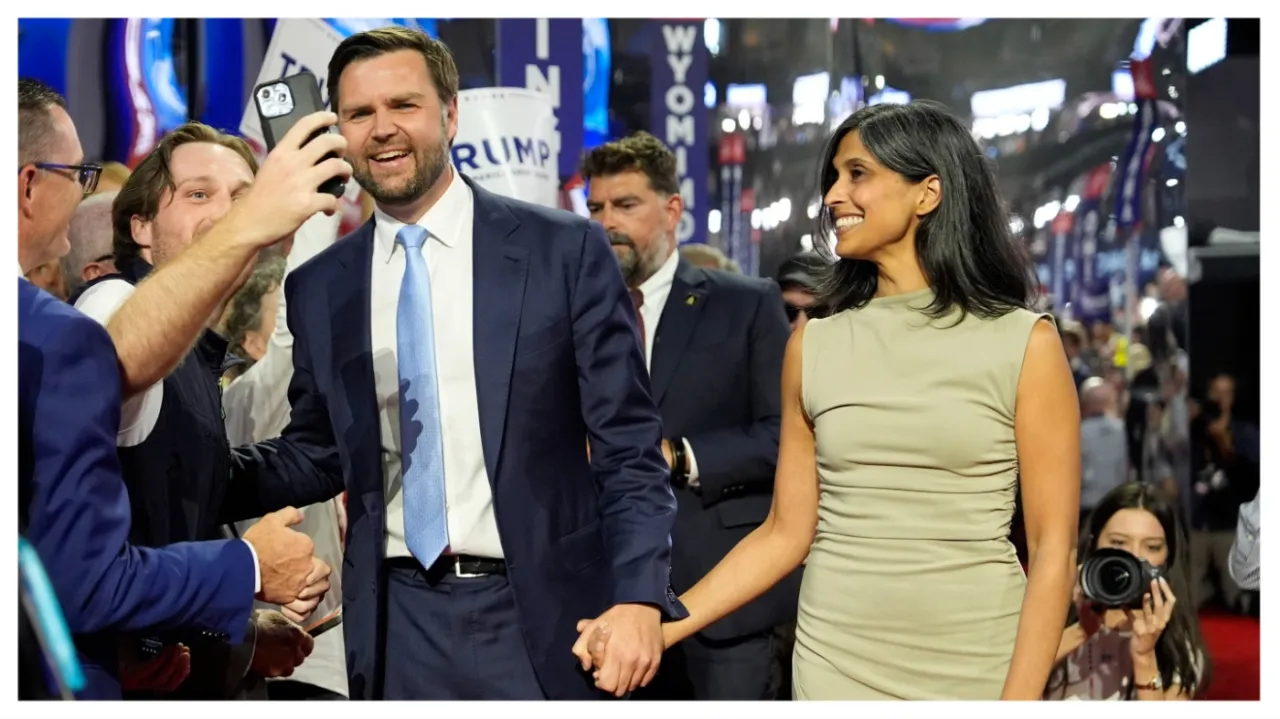
In recent weeks, a heated discourse has taken center stage in political and social debates surrounding JD Vance, a prominent conservative figure and U.S. senator. Central to these discussions has been a misrepresentation and subsequent clarification regarding Vance’s wife’s religious background. Amidst this, several remarks and exchanges have escalated tensions, especially concerning issues of race, religion, and identity.
Initially, critics and certain journalists alleged that JD Vance’s wife was Muslim, a claim that garnered widespread attention in online and mainstream media channels. This assumption was often used to frame Vance and his family inaccurately, sometimes mixing it with broader narratives around religious identity and political beliefs. However, these claims were swiftly challenged and clarified, emphasizing the importance of accurate information in political discourse.
JD Vance’s Public Response and Clarification
According to reports, JD Vance responded to such baseless claims forcefully. In a notable exchange, a Trump ally and Vance supporter snapped at a journalist who made a racially insensitive remark, falsely insinuating Vance’s wife’s religion. The supporter explicitly refuted the claim, stating firmly that his wife is not Muslim. This direct rebuttal was seen as a move to dismiss false narratives and combat misinformation that often circulates in political circles, especially online.
Explicitly, the supporter remarked, “My wife is not Muslim, and I won’t let your racist or ignorant comments undermine her or our family.” This statement set the tone for how Vance’s camp seeks to confront misinformation and racially charged rhetoric, emphasizing respect and factual accuracy.
Racial Comments and Heated Exchanges
The incident further ignited debates over racial and religious sensitivities. A journalist’s attempt to make a racial comment, specifically targeting “brown people,” was met with a sharp rebuke from Vance’s supporter. This instance underscores a broader issue: the rise of racially charged rhetoric in political journalism, which often exacerbates division and misleads the public.
In one of the referenced exchanges, a journalist made a quip about “brown people,” which was immediately challenged by Vance’s supporter, who called out the racist undertone and defended his family’s integrity. These moments highlight the ongoing struggles around racial stereotyping and misinformation in the digital age, especially when political narratives are weaponized for partisan gains.
Discussing Religious Identity and Racial Stereotyping
Several articles in the media have touched upon related themes of racial and religious stereotyping. For instance, Zohran Mamdani, a political activist, shared that during post-9/11 times, his aunt felt unsafe while wearing her hijab. In response, JD Vance’s critique of Mamdani’s comments about Islamophobia after 9/11 sparked further debate. This controversy illustrates how issues of racial and religious discrimination are still deeply embedded in societal conversations.
In another instance, Vance criticizes Mamdani’s remarks, implying that some narratives around Islamophobia have been exaggerated or misrepresented. Critics argue that such comments reveal underlying biases and highlight the importance of nuanced conversations about race, religion, and security.
The Impact of Misleading Narratives in Political Discourse
The controversy also included accusations against Vance’s wife being Muslim, used as a political tool to mock or discredit him. For example, a MAGA activist referred to Vance’s family in a derogatory manner, saying “She Isn’t Muslim,” to try to undermine his credibility. However, the facts remained clear: Vance’s wife is not Muslim, yet the false claim was often repeated to stir division or reinforce stereotypes.
This situation exemplifies how misinformation can be weaponized, especially in partisan battles. It impairs sincere dialogue and fosters divisiveness, which is why fact-checking and direct clarifications from Vance’s team are crucial in setting the record straight.
The Broader Narrative of Racial and Religious Tensions
The series of exchanges also shed light on broader societal issues. For instance, in his response to a journalist’s question about Islamophobia, Vance commented on the experience of Muslim communities in urban settings, mentioning that “to be Muslim in New York is to expect indignity.” Such statements reveal the ongoing struggles faced by Muslim Americans, yet are sometimes misinterpreted or taken out of context during political debates.
Furthermore, discussions around race and religion often intertwine, escalating tensions. The debate surrounding Vance’s family privilege, racial stereotypes, and the treatment of Muslim communities highlight the urgent need for respectful discourse. Misinformation, especially on social media, often fuels misunderstandings, creating echo chambers that deepen societal divisions.
The Role of Media and Public Figures in Addressing Misinformation
Public figures like JD Vance and his supporters have an essential role in combating misinformation. Their statements, whether clarifications or condemnations of racist remarks, influence public perception significantly. Vance’s official stance emphasizes the importance of truthfulness, condemning racial stereotypes and emphasizing respect for individual identity.
Meanwhile, the media’s responsibility remains vital in ensuring accurate reporting. Amplifying false claims damages public trust and exacerbates societal divides. Therefore, it is increasingly important for journalists to verify facts and avoid sensationalism, especially concerning sensitive issues like religion and race.
Conclusion: Moving Toward Respectful and Informed Discourse
The controversy surrounding JD Vance’s family exemplifies the complex dynamics of race, religion, and politics in America today. The false claim about his wife’s religion, followed by a forceful response from supporters, highlights the ongoing struggle against misinformation and racial prejudice.
Moving forward, there is a pressing need for respectful dialogue that respects individual identities and challenges misinformation actively. As society grapples with these issues, the importance of factual accuracy and understanding over sensationalism cannot be overstated.
For more updated news please keep visiting Hourly Prime News.