

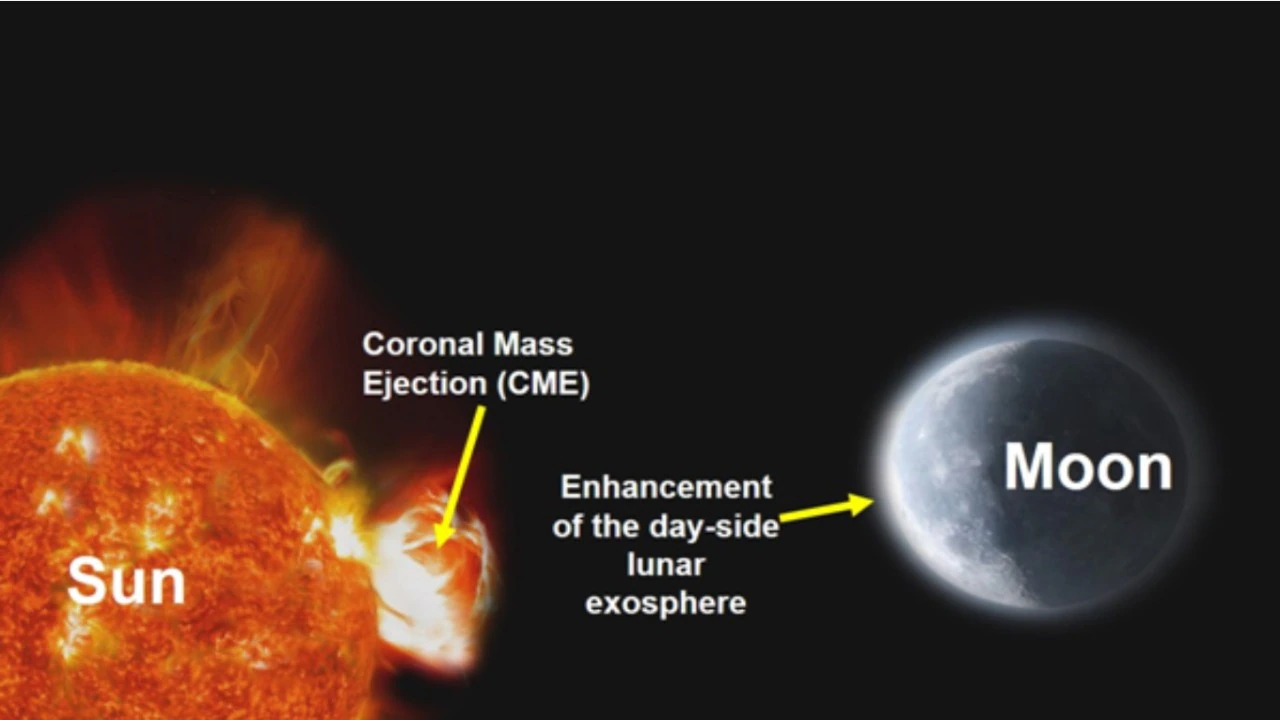
The Indian Space Research Organisation’s (ISRO) Chandrayaan-2 mission has once again demonstrated its remarkable capabilities by becoming the first to observe and record the Moon’s response to solar activity. This groundbreaking achievement offers invaluable insights into how our lunar neighbor interacts with solar phenomena, especially during solar storms and coronal mass ejections (CMEs). As humanity continues to explore deeper into space, understanding these interactions is essential for future lunar missions and the establishment of sustainable outposts on the Moon.
The Significance of Chandrayaan-2’s Observations
Chandrayaan-2, launched in July 2019, was designed to study the Moon’s surface and exosphere in unprecedented detail. Its suite of sophisticated instruments includes a payload specifically dedicated to detecting space weather effects, which has now successfully recorded the first response from the Moon to solar storms. This achievement marks a historic milestone in lunar and space research, opening new avenues for understanding how the Moon’s exosphere, a very tenuous atmosphere, reacts to external forces like solar wind and electromagnetic disturbances.
The recording of lunar responses to solar storms is particularly significant because such phenomena can have profound effects on future lunar explorers, robotic assets, and scientific instruments stationed on the surface or in orbit. By analyzing how the Moon’s exosphere reacts—be it through variations in particle density, composition changes, or electromagnetic disturbances—scientists can better prepare for and mitigate potential hazards associated with solar activity during extended lunar missions.
Understanding Solar Storms and Their Impact on the Moon
Solar storms are intense eruptions of solar plasma and magnetic fields that travel through space at high velocities. When these CMEs reach the Moon, they can interact with the lunar environment, causing particles to surface and altering the delicate balance of the exosphere. Unlike Earth, which benefits from a robust magnetic field and atmosphere to shield against solar radiation, the Moon’s surface is directly exposed to these energetic events, making its response a crucial area of research.
Recent observations carried out by Chandrayaan-2 have captured the effects of such solar activity—specifically, how the lunar exosphere temporarily thickens and the particle populations fluctuate due to incoming solar particles. These findings are vital for understanding space weathering processes, which influence the Moon’s surface evolution and the stability of surface assets during prolonged human presence.
Coronal Mass Ejections and Their Effects on the Lunar Environment
The payloads onboard Chandrayaan-2 were also able to observe the impact of coronal mass ejections (CMEs) – large expulsions of plasma and magnetic fields from the Sun’s corona. As these massive ejections interact with the lunar surface and exosphere, they can cause temporary enhancements in particle density, generate electromagnetic disturbances, and even affect the lunar surface chemistry.
In fact, the Indian spacecraft was able to record the effects of CMEs on the Moon’s exosphere for the first time, providing critical data on how these solar phenomena drive changes in the lunar space environment. Such data is crucial from a practical perspective, especially when planning for lunar surface operations, as it informs us about potential radiation hazards and the need for shielding provisions in future missions.
Chandrayaan-2’s Observational Breakthroughs
Some of the notable achievements by Chandrayaan-2 in this regard include:
- First-ever monitoring of the Lunar exosphere’s response to solar storms, revealing variations in particle density and composition.
- Direct observation of how solar interplanetary magnetic fields influence the lunar surface environment.
- Detection of the Sun’s effect on the Moon’s surface chemistry, which might influence the long-term stability of lunar resources.
- First payload-based measurements of the localized electromagnetic disturbances during solar storm events.
These groundbreaking observations build on the previous understanding of space weather effects and provide real-time data that can be used to model lunar space weather phenomena accurately.
Implications for Future Lunar Missions
The importance of Chandrayaan-2’s findings extends beyond academic curiosity. As nations and private entities plan for sustained lunar exploration and potential colonization, the knowledge gained from these observations becomes instrumental in designing safer and more resilient missions. For instance, understanding how solar storms influence the lunar environment helps engineers develop better shielding strategies for habitats, equipment, and even astronauts.
Furthermore, insights into the Moon’s response to space weather can assist in development of robust communication and navigation systems that are resilient to electromagnetic disturbances. It also provides essential data for the planning of lunar resource utilization, including extraction of water ice and other volatiles, which might be affected by solar activity.
Chandrayaan-2’s Broader Scientific Contributions
The Indian mission’s observations contribute significantly to planetary science, space weather research, and the understanding of the Moon’s exosphere, which remains one of the most fragile and least understood planetary environments. The data collected can also be correlated with findings from other missions such as NASA’s Lunar Atmosphere and Dust Environment Explorer (LADEE) and ESA’s Smart-1 spacecraft, enriching global knowledge.
As India sets its footprint in space exploration, Chandrayaan-2’s achievements in observing the Sun’s effects on the Moon symbolize the country’s advancing technological prowess and scientific curiosity. These efforts lay the groundwork for future missions, including lunar orbiters, landers, and even crewed missions, where safety and operational planning will benefit immensely from this new understanding.
Conclusion: A New Era of Lunar Space Weather Understanding
The successful observation of the Moon’s response to solar storms by Chandrayaan-2 marks a pivotal moment in lunar science. It not only enhances our understanding of space weather phenomena but also charts a path for safer, more informed lunar exploration. As researchers continue to analyze the data and develop models, we are moving closer to a comprehensive picture of how our Moon interacts with the dynamic conditions of space.
This remarkable achievement emphasizes the importance of continued space-based observations and collaborative research to unlock the Moon’s mysteries. With upcoming lunar missions from around the world, the role of Chandrayaan-2’s findings will be vital in shaping the future of lunar exploration and the quest for sustainable human presence on the Moon.
For more updated news please keep visiting Hourly Prime News.