

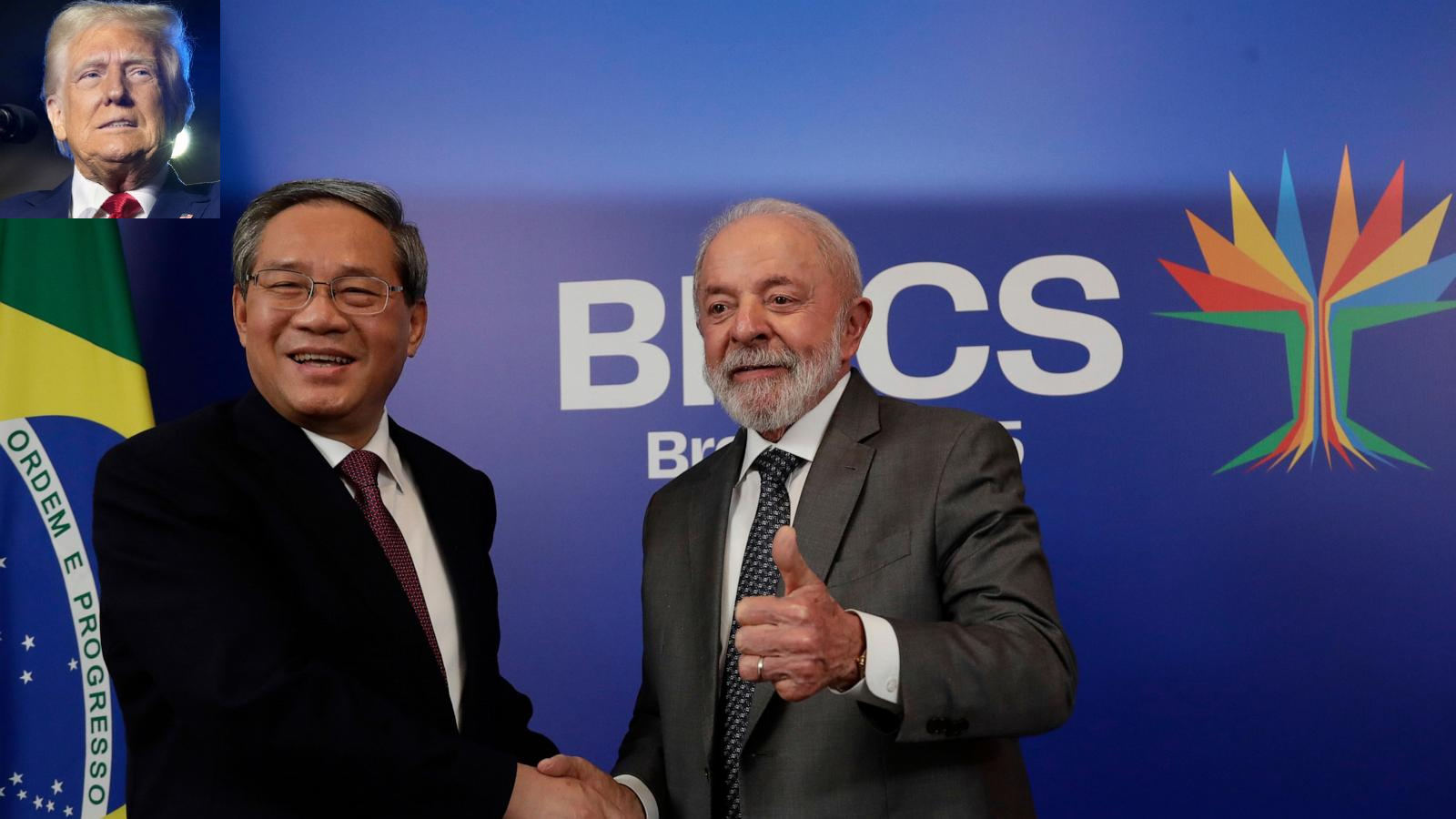
Introduction: The Growing Geopolitical Rift
In recent months, the international landscape has witnessed a shifting paradigm, with the BRICS alliance—comprising Brazil, Russia, India, China, and South Africa—taking increasingly confrontational stances against U.S.-led policies. This alignment has not gone unnoticed by former U.S. President Donald Trump, who has issued stern warnings about potential tariffs targeting countries that align with BRICS’ anti-American narratives. As geopolitical tensions escalate, understanding the implications of these developments becomes crucial for global economic stability and diplomatic relations.
The Foundations of Trump’s Tariff Warnings
Historical Context of Tariffs and Trade Wars
Trade tariffs have long been tools employed by nations to protect domestic industries and exert economic influence. Trump’s administration notably used tariffs as leverage during the U.S.-China trade war, imposing significant duties to pressure China into negotiations. His recent warnings signal a continuation and intensification of this strategy, especially directed at countries perceived to be conspiring with or supporting BRICS’ anti-American policies.
Official Statements and Key Warnings
According to “Times of India”, Trump emphasized that any country perceived to be aligning with BRICS’ anti-American stance would be subjected to additional tariffs, citing threats of a 10% tariff increase on such nations.
Implications of BRICS’ Anti-American Policies
Economic Decoupling and Shifts in Global Trade
The alliance aims at creating a bloc resistant to Western sanctions and influence, promoting economic sovereignty. Countries within BRICS are increasingly diversifying their trade partners, reducing dependence on the U.S. dollar, and advocating for alternative global financial systems. These moves challenge the traditional dominance of Western-led institutions like the International Monetary Fund (IMF) and the World Bank.
Strategic Alliances and Diplomatic Maneuvers
BRICS’ stance signifies a push to establish multipolarity in global governance. Their policies revolve around resisting Western sanctions, promoting regional stability, and fostering cooperation among emerging economies. This trend alarms Western nations, especially the U.S., who view it as a challenge to their geopolitical influence.
U.S. Response and Potential Consequences
Tariff Escalation and Economic Tensions
Trump’s threat of additional tariffs effectively signals a move towards trade protectionism, which could trigger retaliatory measures from BRICS nations. The imposition of tariffs may lead to increased prices for consumers, disruptions in supply chains, and a possible slowdown in global economic growth.
Diplomatic Fallout and Strategic Realignment
Economically driven tariffs could deepen diplomatic rifts, complicating negotiations on key issues such as climate change, security, and technology transfers. Countries aligned with BRICS might establish more independent trade networks, diminishing the influence of Western economic institutions.
Market Reactions and Global Financial Markets
Following Trump’s tariffs warnings, market analysts observed mixed reactions in Asia-Pacific markets. The uncertainty regarding trade policies intensified concerns about a potential slowdown in global economic recovery, especially amid ongoing geopolitical tensions. Stock indices fluctuated as investors grappled with the prospects of increased tariffs and economic decoupling.
For instance, CNBC reported that markets experienced volatility after Trump shifted the “goalposts” concerning tariffs, highlighting a climate of unpredictability that impacts investment flows globally.
Similarly, the Hindustan Times pointed out that concerns of a 10% tariff increase on countries aligned with BRICS could impose significant additional costs on international trade, further fueling uncertainty.
Future Outlook: Risks and Opportunities
Potential for a New Cold War
Analysts warn that a continued escalation of tariff threats and anti-globalization rhetoric risks ushering in a new form of economic Cold War. Countries might double down on regional alliances, de-prioritize multilateralism, and reinforce their own economic sovereignty.
Prospects for Diplomatic Negotiation
However, there remains hope for dialogue and de-escalation. Diplomatic negotiations, incentives, and multilateral engagements could prevent full-scale economic confrontations. Countries advocating for global cooperation may work to neutralize tensions through diplomatic channels, but the challenge remains formidable amidst rising nationalism and protectionism.
Conclusion: The Road Ahead
The warnings issued by Trump reflect a broader strategic contest playing out on the global stage. As BRICS countries forge a new pathway aligned with their counterbalance to Western dominance, the U.S. signals its readiness to defend its interests through tariffs and trade pressures. Both sides face significant repercussions—economic, diplomatic, and strategic—in this evolving geopolitical landscape.
Ultimately, the world stands at a crossroads, where cooperation or conflict could define the next decade. The aggressive stance on tariffs serves as both a warning and a symptom of deeper tectonic shifts in global power, which will require careful navigation from all stakeholders.
Final Thoughts
As global tensions rise, the importance of diplomacy and multilateral engagement becomes even more critical. Nations must find common ground to prevent conflicts from escalating into wider economic or geopolitical confrontations. The ongoing saga surrounding BRICS’ anti-American policies and U.S. responses underscores the volatility and complexity of 21st-century geopolitics.
For more updated news please keep visiting Hourly Prime News.