

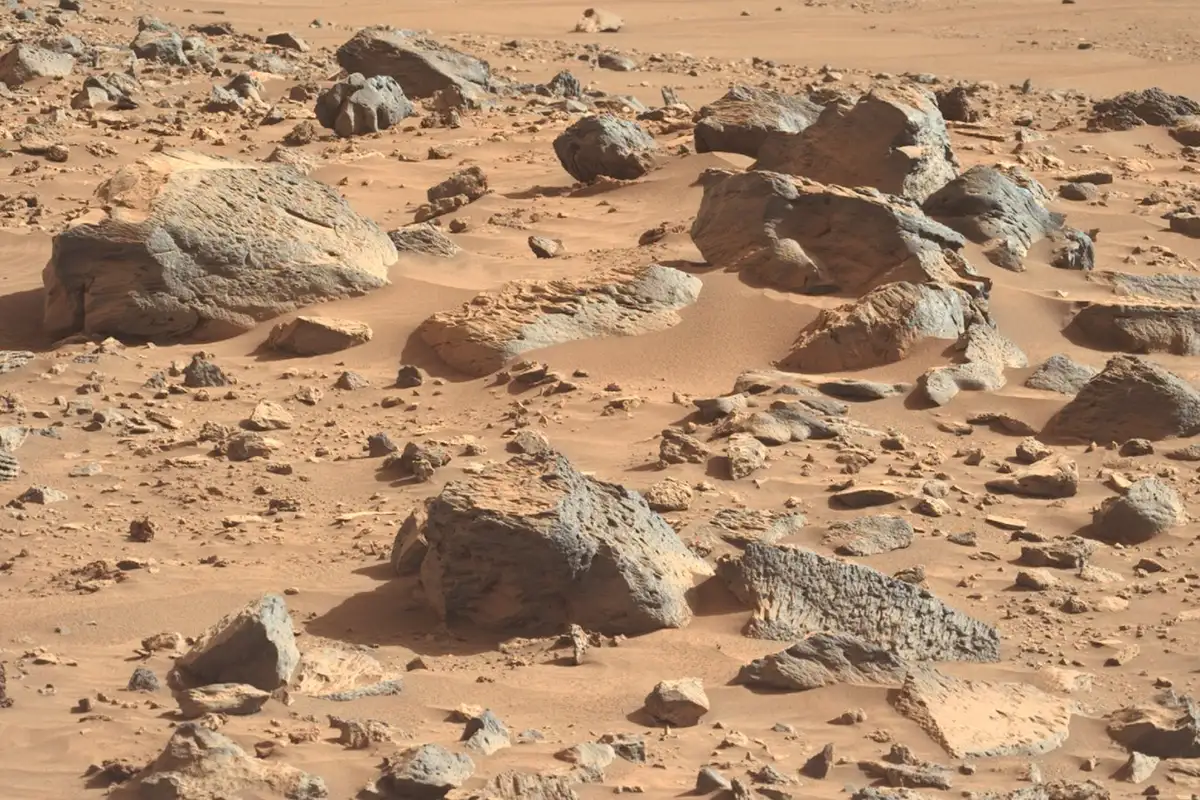
For decades, Mars has remained a tantalizing puzzle for scientists eager to understand whether life ever existed beyond Earth. One of the most promising clues lies hidden beneath the planet’s icy exterior—literally. Recent research and experiments conducted by NASA suggest that the ice covering significant portions of the Martian surface may serve as a natural vault, preserving evidence of ancient life forms and biological signatures that once thrived billions of years ago.
This discovery could revolutionize our understanding of the Red Planet, shifting the paradigm from mere planetary geology to a potential archive of biological history. The brim of this icy vault might contain pristine records, offering a unique window into Mars’ distant past and the possibility that life once flourished there.
NASA’s Revolutionary Experiment and Its Implications
According to recent experiments highlighted by Gadgets 360, the experiment demonstrated that ice on Mars could act as a biological time capsule, trapping and preserving biological material in a manner similar to Earth’s permafrost.
This is especially relevant because the stability and longevity of ice make it a perfect medium for storing biological signatures that could otherwise degrade in harsh planetary conditions. The experiment simulated Martian ice environments and exposed DNA and microbial remnants to conditions mimicking those found beneath the Martian surface, revealing that such biological markers could survive for millions of years.
The Search for Evidence of Past Life
Why Ice Is a Natural Preservative
Ice inherently functions as a preservative due to its low temperatures, which inhibit microbial activity and chemical reactions that lead to decay. On Mars, where surface temperatures average around -80°F (-62°C) and sometimes plummet further, any biological material trapped within the ice could potentially remain intact for extensive periods, even in the face of radiation and other degrading agents.
Scientists theorize that ancient microbial life, if it existed, might be preserved in pockets beneath the Martian surface, shielded from radiation and cosmic rays. The recently discovered vortexes and frozen regions are believed to harbor these icy repositories, which could even contain preserved remains of once-living organisms or their DNA signatures.
Implications for Extraterrestrial Life Detection
Identifying preserved signs of life on Mars would be a groundbreaking achievement, confirming that the planet was once habitable and perhaps even inhabited. This possibility raises exciting questions: Could there be a frozen “library” of microbial genomes tucked away in Mars’ ice sheets? If microbes or their fragments are found, it would mark a milestone akin to discovering Earth’s own latest fossil record.
Furthermore, the existence of preserved biological material opens new avenues for planetary exploration. Robots equipped with drilling capabilities could target these icy zones, extracting cores for analysis and potentially uncovering molecular evidence of past life. Such discoveries would also have profound implications for understanding life’s resilience and adaptability beyond Earth.
The Role of Future Missions
NASA and other space agencies are actively developing missions aimed at drilling beneath the Martian surface and analyzing sub-surface ice. For example, NASA’s upcoming rover missions aim to reach these icy vaults, employing sophisticated instruments to detect organic compounds, microbial signatures, and other biosignatures.
Some scientists believe that sampling from beneath the ice, especially in regions with minimal radiation exposure, could provide the best chance of uncovering pristine relics of past life. The insights gained from such missions could not only confirm past habitability but also reveal whether life, like in Earth’s deep biosphere, could exist in extreme underground environments.
The Broader Significance of Martian Ice Preservation
The discovery that Martian ice may harbor signs of ancient life extends beyond planetary science—it resonates with our understanding of life’s resilience and the potential for life elsewhere in the universe. The icy regions of Mars, much like icy moons around Jupiter and Saturn, could serve as concept models for extraterrestrial habitats where life might survive in hidden, protected environments.
This fuels the search for life in other icy worlds and emphasizes the importance of studying icy environments not only on Mars but across the solar system. By understanding how biological signatures are preserved in such settings, scientists can better design future missions to detect life or its remnants elsewhere.
The Significance of Preserved Biosignatures in Exploring Humanity’s Cosmic Origins
The potential discovery of preserved biosignatures on Mars provides a critical link in unraveling the story of life’s origin and distribution in the universe. If microbial life once existed on Mars, it could share common ancestry with terrestrial life or represent a separate evolutionary event. This possibility raises profound questions about the universality of life’s building blocks and the processes that fostered its emergence on rocky worlds.
By analyzing preserved genetic material or chemical markers, researchers hope to reconstruct the environmental conditions that supported life, offering insights into whether life is a rare cosmic occurrence or a common outcome of planetary evolution. Such understanding could ultimately inform theories about the origins of life on Earth and our place in the cosmos.
The Scientific and Philosophical Impact
The implications of finding ancient biological signs preserved in Martian ice are both scientific and philosophical. It challenges humanity to reconsider our uniqueness and cosmic solitude, emphasizing that life might be more widespread than previously assumed. The search for ancient life on Mars is not just about discovering fossils; it is about understanding whether we are part of a broader universal biological community.
Furthermore, confirming that biological signatures can survive icy conditions for millions of years sparks interest in astrobiology, planetary protection protocols, and future human exploration. It calls for responsible handling of extraterrestrial resources to avoid contaminating pristine environments and ensures that discoveries are preserved for scientific study.
Conclusion: A New Chapter in Space Exploration
The recent revelations about the potential for Mars’ ice to preserve signs of ancient life mark an exciting chapter in space exploration. As scientists continue to probe beneath the icy surface and analyze the molecular remnants locked within, we edge closer to answering age-old questions about life beyond Earth.
Future missions equipped with advanced drilling and analytical tools promise to uncover these hidden biosignatures, potentially transforming Mars from a barren red planet into a cosmic archive of its biological history. The pursuit of these icy relics could not only redefine our understanding of Mars but also expand our perception of life’s resilience and its cosmic distribution.
In conclusion, NASA’s findings underscore the importance of icy environments as natural preservation chambers for ancient life signatures. The search for extraterrestrial life is entering a new and promising phase, with icy vaults on Mars acting as the key to unlocking our cosmic past.
For more updated news please keep visiting Hourly Prime News.