

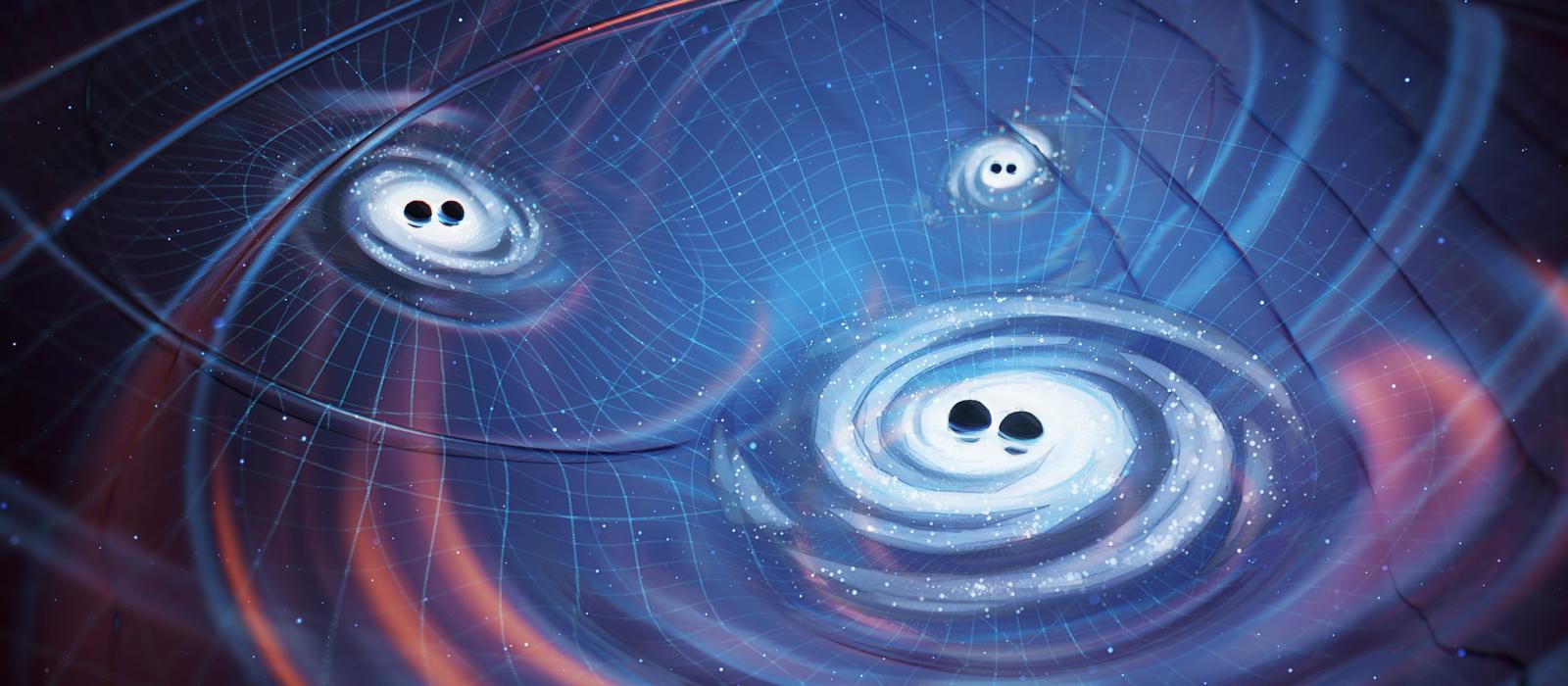
In recent years, scientists have been unveiling some of the universe’s deepest secrets by studying celestial phenomena like pulsars. These dense, rotating neutron stars emit beams of electromagnetic radiation with remarkable regularity, earning them the nickname “cosmic lighthouses.” Their predictable signals serve as natural, ultra-precise clocks that can be used to detect ripples in spacetime—known as gravitational waves—that are otherwise incredibly challenging to observe directly.
Understanding Pulsars and Their Significance
Pulsars are remnants of massive stars that have undergone supernova explosions, compressing matter into incredibly dense objects. As they spin rapidly—sometimes hundreds of times per second—they emit beams of radio waves from their magnetic poles. If these beams sweep past Earth, we observe them as periodic pulses. Thanks to their stability, pulsars act as cosmic metronomes, enabling astronomers to detect minute disturbances in spacetime.
- Precision Clocks in Space: The consistency of pulsar signals rivals that of atomic clocks on Earth, making them invaluable tools in the search for gravitational waves.
- Natural Detectors: Variations in their timing can hint at the influence of passing gravitational waves, which stretch and squeeze spacetime itself.
Listening for Gravitational Waves in Pulsar Signals
The concept of using pulsars as detectors for gravitational waves hinges on monitoring their signals over long periods. When a gravitational wave passes between Earth and a pulsar, it slightly alters the distance between us and the pulsar, leading to detectable shifts in the timing of pulses. These minuscule changes—on the order of a few nanoseconds—compose what scientists call Pulsar Timing Arrays (PTAs).
According to Listening For Gravitational Waves In The Rhythm of Pulsars, Universe Today elaborates on how astronomers are fine-tuning their methods to detect these faint signals. The process involves precise measurements over years, with data analyzed for correlated timing deviations that could signal a ripple in spacetime caused by phenomena like supermassive black hole mergers.
The Role of Advanced Technology
To achieve such precise measurement, astronomers utilize arrays of radio telescopes such as the North American Nanohertz Observatory for Gravitational Waves (NANOGrav) and the European Pulsar Timing Array. These collaborations aim to monitor dozens of millisecond pulsars, seeking evidence of gravitational waves from the most colossal cosmic events.
Recent Discoveries and Cosmic Signatures
Recently, scientists have reported evidence of what they call a cosmic “heartbeat,” observable in pulsar signals. As detailed in Science Daily, astronomers have detected pulsar signal variations consistent with gravitational wave interactions. These subtle patterns validate theoretical models and mark significant progress toward confirming the existence of low-frequency gravitational waves—those generated by massive objects like black hole binaries.
The Use of Spinning Dead Stars in Spacetime Ripples Detection
Another intriguing approach involves studying “spinning dead stars,” or white dwarfs, and their potential to assist in gravitational wave detection. As discussed in How scientists are using spinning dead stars to find ripples in spacetime. These dense, rapidly spinning stellar remnants can influence and be influenced by passing gravitational waves, potentially revealing signals that align with those detected via pulsar timing arrays.
Potential and Challenges of Detecting Gravitational “Beats”
One of the most exciting prospects is the idea of directly identifying “beats”—oscillatory patterns—in pulsar timing data that directly correspond to gravitational waves. As outlined in Detecting Gravitational-Wave “Beats” in Pulsar Rhythms: Is It Possible?. While the task remains complex, advancements in signal analysis and data processing continue to improve the prospects of confirming these phenomena.
Future Directions and Significance
The ongoing research in gravitational wave astronomy signifies a new era of cosmic exploration. Unlike traditional telescopes that observe electromagnetic radiation, detectors based on pulsar signals provide unique insight into the most massive, energetic processes in the universe—such as black hole mergers, cosmic strings, or even signals from the early universe itself. As technology advances and long-term observations accumulate, the hope is that we will soon be able to craft a detailed “gravitational wave map” of the cosmos.
This approach, often described as “listening” to the universe’s whispers, represents a paradigm shift—transforming how we understand the fabric of spacetime. It’s a testament to human ingenuity that, from the rhythmic ticking of distant celestial bodies, we can infer the grand movements of cosmic giants and decode their gravitational symphony.
Conclusion
In summary, the detection of gravitational waves through pulsar rhythms offers an elegant and promising frontier in astrophysics. By harnessing the natural precision of pulsars and sophisticated data analysis, scientists are opening avenues to observe phenomena previously hidden from view. This confluence of astrophysics, particle physics, and advanced technology continues to propel us toward a deeper understanding of the universe’s most profound mysteries.
Discovering gravitational waves through pulsar signals not only expands our knowledge of the cosmos, but also exemplifies how nature’s most precise clocks can unlock the universe’s secrets.
For more updated news please keep visiting Hourly Prime News.