

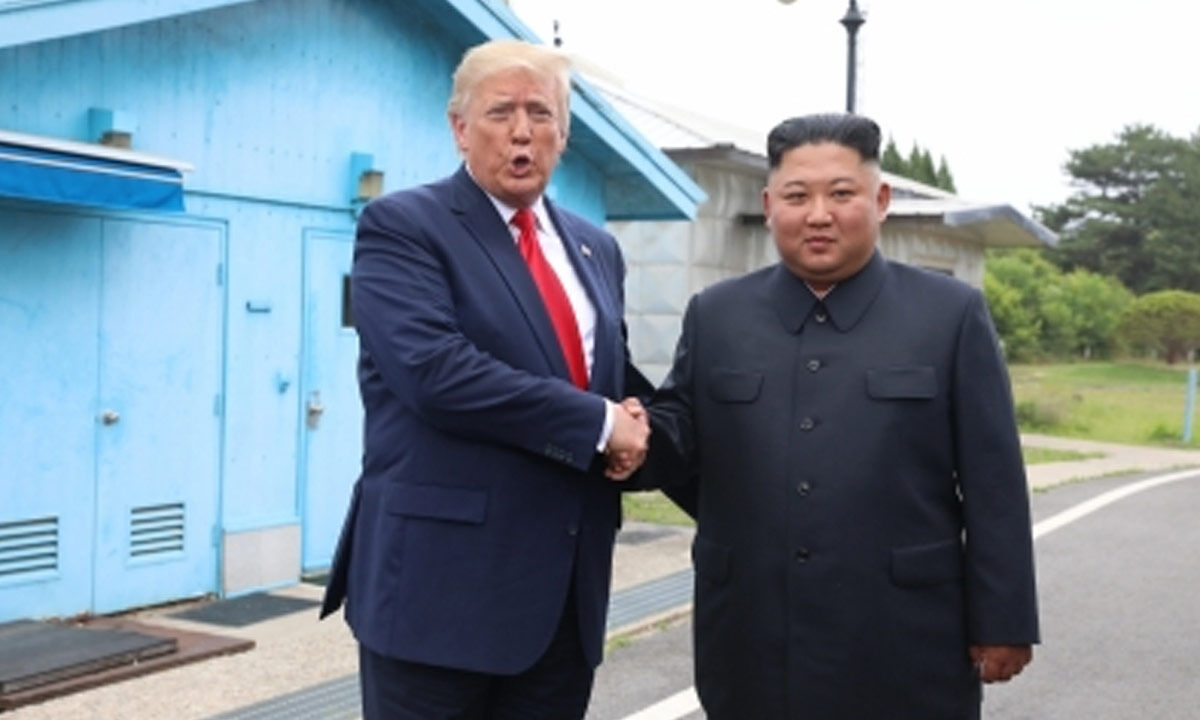
In a development that has caught global attention, senior officials within the Trump administration are reportedly exploring the possibility of establishing a direct dialogue with North Korea’s Supreme Leader, Kim Jong-un, during President Donald Trump’s upcoming trip across Asia. Multiple news outlets, including IANS LIVE, CNN, Firstpost, Hindustan Times, and The Indian Express, have highlighted ongoing discussions at high levels of the US government about arranging a potential meeting, signaling an interest in diplomacy amidst heightened tensions on the Korean Peninsula.
Background and Context
The relationship between the United States and North Korea has long been characterized by periods of tension, negotiations, and moments of tentative diplomacy. Since the escalation of North Korea’s missile and nuclear tests in the past decade, the North Korean leadership has maintained a hardened stance, while the US has often responded with sanctions, military posturing, and diplomatic pressure. However, moments of dialogue, such as the historical meetings between Kim Jong-un and former US President Donald Trump in 2018 and 2019, demonstrated a willingness—albeit cautious—for engagement.
In recent months, there has been speculation about whether the US government would pursue a renewed or new approach toward North Korea, especially as the geopolitics in Asia evolves. President Trump’s upcoming visit to the continent, which includes stops in countries like South Korea and Japan, presents a strategic opportunity for US officials to seek a direct channel of communication with North Korea, possibly to address issues like denuclearization, security guarantees, or regional stability.
Details of the US Preparations and Discussions
High-Level Talks and Confidential Discussions
As reported by multiple sources, including CNN and Firstpost, discussions have been taking place quietly within the US administration about the prospect of a meeting with Kim Jong-un. The talks are described as “deliberate and discreet,” suggesting that both sides are testing the waters for potential dialogue without making it a public spectacle.
Some officials are said to weigh the benefits of such a meeting—whether it could serve to de-escalate recent tensions, clarify North Korea’s intentions, or open new diplomatic avenues—against the possible risks of legitimizing Kim Jong-un’s regime or complicating existing diplomatic efforts. The debates within the US government reflect the complexity of engaging with a regime that has historically been isolated and unpredictable.
Possible Timeline and Political Implications
The reports indicate that the discussions are in the preliminary stages, with the possibility of a face-to-face meeting occurring during President Trump’s Asia tour next month. If realized, this would be a significant diplomatic breakthrough, marking a return to high-level talks after years of stagnation.
Such a summit could potentially influence the broader geopolitics of the region, impacting South Korea’s security calculus, Japan’s strategic considerations, and China’s role as a regional power broker. For the Trump administration, it might also be a move to demonstrate a commitment to diplomatic solutions, contrasting with previous confrontational approaches.
Global Reactions and Regional Impact
International reactions to the contemplated US-North Korea meeting are mixed. While some analysts see it as a positive step toward peace and stability, others warn of the risks involved in engaging with Kim Jong-un without clear and verifiable commitments. Regional players like South Korea, Japan, and China are closely monitoring these developments, understanding that a successful engagement could alter the security dynamics of East Asia.
South Korea, in particular, has historically played a mediating role and might view a direct US-North Korea summit as a potential step toward reducing hostilities on the peninsula. Japan’s government, meanwhile, remains cautious, emphasizing the importance of denuclearization and security guarantees before any formal dialogue is endorsed.
Historical Significance and Future Outlook
The prospect of President Trump meeting Kim Jong-un during an official Asia trip would resonate historically, marking one of the rare instances of high-level engagement between an American leader and North Korea’s head of state. It could signal a shift in the US policy approach from maximal pressure to diplomacy and direct negotiation.
Looking forward, the success of such a meeting would depend on the clarity of objectives laid out beforehand, the willingness of North Korea to come to the negotiating table for meaningful talks, and the regional cooperation that might facilitate or hinder progress.
Potential Challenges and Criticisms
- Trust issues: North Korea’s history of strategic deception and missile tests could undermine hopes for fruitful negotiations.
- Verification concerns: Ensuring that any agreement on denuclearization is verifiable remains a formidable challenge.
- Political risks: Whether the US political climate (domestic and international) supports negotiations or prefers a hardened stance could influence the outcome.
- Diplomatic precedence:This meeting might set a precedent for future negotiations with other isolated regimes, raising questions about legitimacy and strategic stability.
Conclusion
The discussions about a possible meeting between President Trump and Kim Jong-un during the upcoming Asia trip underscore the dynamic and often unpredictable nature of international diplomacy regarding North Korea. While possibilities are still being explored, the mere fact that such conversations are ongoing highlights a willingness on both sides to consider diplomacy as an option—a move that could reshape the future of peace and stability on the Korean Peninsula if executed successfully.
As the world watches these developments unfold, the outcome remains uncertain, but the potential for a diplomatic breakthrough brings hope for a de-escalation of one of the most volatile regions in the world today.
For more updated news please keep visiting Hourly Prime News.